FastApply Logo

Best Temporary & Part-Time Job Platforms in NYC + AI Auto-Apply Tools (2026)

· Calculating... · FastApply Team
Best Temporary & Part-Time Job Platforms in NYC + AI Auto-Apply Tools (2026)

New York City’s private sector employs 4.33 million workers. The minimum wage hit $17/hour in 2026. And the gap between that minimum and a living wage ($33.89/hour in Manhattan) means most New Yorkers need to work smarter, not just harder.

This guide covers every platform, app, and AI tool that actually works for finding temporary and part-time work in NYC. You’ll learn which gig apps pay best in each borough, which staffing agencies aren’t wasting your time, and which AI auto-apply tools help versus hurt your job search.

NYC Job Market Statistics 2026

You’re in New York City, the most competitive job market in the United States. The city where 4.3 million people work in the private sector alone, where the minimum wage just hit $17 per hour in 2026, and where landing a part-time gig can feel like applying to Harvard Business School.

Maybe you’re a student at NYU or Columbia juggling coursework and rent that would make your parents cry. Perhaps you’re a freelancer who needs steady cash flow between projects. Or you’re one of the thousands of New Yorkers who got caught in the 2024-2025 tech layoffs and need bridge income while you figure out your next move.

Whatever brought you here, you’re looking for answers. Real answers—not the recycled SEO fluff that dominates page one of Google.

This guide exists because I spent six months deep in the trenches of NYC’s temporary and part-time job market. I tested the platforms. I signed up for the apps. I analyzed the AI auto-apply tools that promise to change everything. And I talked to dozens of hiring managers, staffing agency recruiters, and gig workers who actually make this stuff work.

Here’s what you’ll walk away with:

  • The platforms that actually work in NYC’s five boroughs (not the ones that sound good but leave you hanging)
  • AI auto-apply tools decoded—which ones save time, which ones destroy your chances, and how to use them without getting flagged
  • Real pay rates across gig apps, staffing agencies, and freelance platforms (updated for January 2026)
  • Borough-by-borough breakdowns of where the jobs actually are
  • Tactical strategies that separate successful part-time job seekers from everyone else

Fair warning: This isn’t a quick read. If you want the 500-word version, close this tab. If you want to actually understand how to navigate NYC’s part-time job market in 2026—including the AI tools that are reshaping everything—keep going.

Why This Guide Is Different

Most job search advice is written by people who haven’t applied for a job in a decade. They tell you to “network” and “update your LinkedIn” and call it a day.

That’s not what you need.

You need to know which gig apps actually have demand in Bushwick versus the Upper West Side. You need to understand why Instawork might be better than Wonolo for your specific situation—or why neither might be the right choice. You need the unvarnished truth about AI auto-apply tools: which ones recruiters can detect, which ones get your account flagged, and which ones actually increase your interview rate.

That’s what this guide delivers.

Let’s start with the numbers that define NYC’s job market right now.


NYC Job Market Overview: Numbers That Matter

Before you pick a platform or download another app, you need to understand the terrain. NYC’s job market in 2026 is a study in contradictions—record Wall Street profits alongside rising unemployment in certain communities, a healthcare hiring boom next to tech sector stagnation.

The Big Picture: January 2026

According to the New York State Department of Labor, private sector employment in New York City reached 4,332,300 jobs as of December 2025. That’s an increase of 33,400 jobs over the year—but the growth story is far more nuanced than that headline number suggests.

Here’s what’s actually happening:

Sectors That Are Hiring:

  • Private education and health services: +71,100 jobs (this sector is carrying the entire NYC job market right now)
  • Healthcare and social assistance: Account for essentially all net job growth
  • Construction: Despite overall losses, green building and infrastructure projects are creating pockets of high demand

Sectors That Are Struggling:

  • Natural resources, mining, and construction: -8,600 jobs
  • Trade, transportation, and utilities: -7,200 jobs
  • Financial activities: -6,300 jobs (yes, even with record Wall Street profits)
  • Leisure and hospitality: -5,100 jobs
  • Professional and business services: -2,300 jobs
  • Information: -500 jobs

The unemployment rate in NYC sits at 5.6% as of December 2025—unchanged from a year ago but slightly higher than the state average of 4.6%. But these numbers mask significant disparities. The Black unemployment rate in NYC reached 9% during summer 2025, creating a 6-percentage-point gap with white unemployment that wiped out years of progress.

Minimum Wage: What You’ll Actually Earn

Effective January 1, 2026, minimum wage rates in New York are:

LocationMinimum Wage
NYC, Long Island, Westchester$17.00/hour
Rest of New York State$16.00/hour
Home care workers (downstate)$19.65/hour
Home care workers (upstate)$18.65/hour
Tipped service employees (NYC)$14.17 cash wage + $2.83 tip credit
Tipped food service workers (NYC)$11.33 cash wage + $5.67 tip credit

For context, a living wage in Manhattan is estimated at $33.89/hour according to Economic Policy Institute analysis. In Queens, it’s $31.31/hour. Even in The Bronx—the most affordable borough—a living wage exceeds $27/hour.

This gap between minimum wage and living wage is why so many New Yorkers piece together multiple part-time gigs. And it’s why understanding which platforms pay above minimum is crucial.

The Gig Economy’s NYC Footprint

An estimated 76 million Americans (36% of the workforce) now do some form of freelance or gig work. In NYC, that percentage skews even higher due to the city’s concentration of creative professionals, healthcare workers, and service industry employees.

The gig economy in NYC spans:

  • Food and grocery delivery (DoorDash, Uber Eats, Instacart, Grubhub)
  • On-demand staffing (Instawork, Wonolo, ShiftGig, Shiftsmart)
  • Rideshare (Uber, Lyft)
  • Freelance services (Upwork, Fiverr, TaskRabbit)
  • Healthcare staffing (specialized agencies and platforms)

Each category operates differently. Some pay same-day. Some require background checks that take weeks. Some have abundant work in Manhattan but nothing in Staten Island. Understanding these differences is what separates people who make $200/day from people who make $50.

The 2026 Hiring Outlook

The NYC Independent Budget Office projects modest job growth of 43,000-55,000 jobs in 2026. The Adams administration is more optimistic at 70,000 jobs. Either way, the pace has slowed dramatically from the 100,000+ annual job gains seen during the post-pandemic recovery.

Key trends shaping 2026:

  1. Healthcare dominance continues: If you’re not working in healthcare or healthcare-adjacent roles, the job market feels significantly tighter
  2. AI disruption creates uncertainty: Employers are cautious about headcount expansion while figuring out how AI changes their operations
  3. Remote work stabilizes: NYC workers have returned to offices more than any other major city, but hybrid remains the dominant model
  4. Wage growth moderates: After years of strong wage gains, increases are slowing to 3-4% annually

What does this mean for part-time job seekers? Two things:

First, healthcare-adjacent roles (home health aides, medical assistants, care workers) have the most consistent demand. If you have any healthcare experience or are willing to get certified, that’s where the action is.

Second, competition for non-healthcare part-time roles is intensifying. More people are applying for fewer positions. This is exactly why AI auto-apply tools have exploded in popularity—and why understanding how to use them correctly matters more than ever.


Understanding Your Options: Types of Part-Time Work in NYC

Not all part-time work is created equal. Before diving into specific platforms, let’s map out the landscape. Understanding these categories will help you pick the right platforms for your situation.

Category 1: Traditional Part-Time Employment

This is what most people picture when they think “part-time job”—a set schedule with an employer, often 15-30 hours per week, sometimes with limited benefits.

Characteristics:

  • Regular schedule (though often variable in retail/hospitality)
  • W-2 employment (employer handles taxes)
  • May include partial benefits after certain hours threshold
  • Found through job boards, company websites, and staffing agencies

Common NYC sectors:

  • Retail (Uniqlo, Apple, Target, local boutiques)
  • Food service (restaurants, cafes, bars)
  • Hospitality (hotels, event venues)
  • Healthcare (clinics, hospitals, home care)
  • Education (tutoring centers, after-school programs)

Typical hourly range: $17-$25/hour for entry-level, $25-$40+ for skilled positions

Category 2: Gig Economy / On-Demand Staffing

This is the fastest-growing category. You’re an independent contractor who picks up shifts through an app. No guaranteed hours, but maximum flexibility.

Characteristics:

  • 1099 contractor status (you handle your own taxes)
  • Work when you want (theoretically)
  • No benefits
  • Payment often same-day or within days
  • Found through specialized apps and platforms

Common NYC gig types:

  • Restaurant/hospitality shifts (Instawork, Qwick)
  • Warehouse and general labor (Wonolo, Shiftsmart)
  • Event staffing (multiple platforms)
  • Delivery (DoorDash, Uber Eats, Instacart)

Typical hourly range: $15-$30/hour depending on role, time, and tips

Category 3: Freelance / Project-Based Work

You sell skills or services on a per-project or per-hour basis to multiple clients. This works best if you have marketable skills in areas like writing, design, development, or professional services.

Characteristics:

  • True independent contractor status
  • Set your own rates (within market constraints)
  • Highly variable income
  • Build client relationships over time
  • Found through freelance platforms, networking, and direct outreach

Common NYC freelance work:

  • Writing and content creation
  • Graphic design and video editing
  • Web development and programming
  • Marketing and social media
  • Consulting and professional services

Typical hourly range: $25-$150+/hour depending on skill level and specialization

Category 4: Temp Staffing Agency Placement

Traditional staffing agencies still play a major role in NYC’s employment ecosystem, especially for office, administrative, and professional roles.

Characteristics:

  • Agency is your employer of record during placement
  • Assignments range from one day to several months
  • May convert to permanent hire
  • Agency handles payroll and some benefits
  • Found by registering with agencies directly

Common NYC temp roles:

  • Administrative and reception
  • Accounting and finance
  • Legal support
  • Creative and marketing
  • IT and technical

Typical hourly range: $20-$50+/hour depending on role specialization

Category 5: Task-Based / Odd Jobs

Individual tasks ranging from furniture assembly to waiting in line. Highly flexible but inconsistent.

Characteristics:

  • One-off tasks, not ongoing work
  • Wide variety of work types
  • Income very inconsistent
  • Set your own availability
  • Found through TaskRabbit, Thumbtack, and similar platforms

Common NYC tasks:

  • Furniture assembly (IKEA is a goldmine)
  • Moving help
  • Home repairs and handyman work
  • Cleaning
  • Errands and personal assistance

Typical range: $20-$60+/hour depending on task type and skills

Choosing Your Mix

Most successful part-time workers in NYC don’t rely on a single category. They might:

  • Work 20 hours at a traditional retail job for baseline income
  • Pick up Instawork shifts during their days off
  • Do occasional TaskRabbit gigs when something lucrative pops up

The platforms you choose should match your:

  • Schedule flexibility: How predictable does your availability need to be?
  • Income needs: Do you need a guaranteed minimum, or can you handle variability?
  • Skills: Do you have marketable specialized skills, or are you looking for general labor?
  • Timeline: Do you need money today, or can you wait for better opportunities?

With this framework in mind, let’s dive into the specific platforms that work in NYC.


Top Gig Economy Platforms for NYC Workers

The gig economy has exploded in NYC, but not all platforms are created equal. Some have strong demand in the city while others leave you refreshing the app waiting for work that never comes. Here’s the breakdown of platforms that actually deliver in the five boroughs.

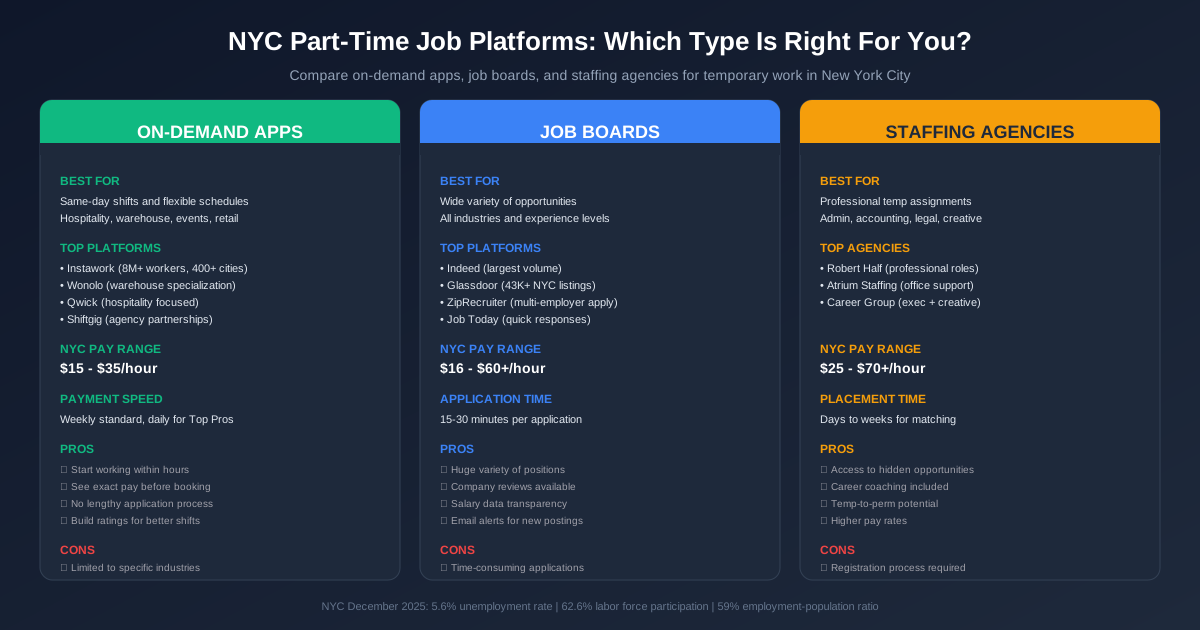
Top Gig Platforms for NYC Workers 2026 Compare pay rates, payment speed, and NYC coverage across top gig platforms

Instawork: The Hospitality Powerhouse

What it is: On-demand staffing platform connecting workers with short-term shifts in hospitality, food service, and warehouse roles.

NYC Performance: Excellent. Instawork has strong relationships with restaurants, hotels, and event venues throughout Manhattan, Brooklyn, and Queens.

How it works:

  1. Download the app and create a profile
  2. Complete verification (usually takes 1-3 days including background check)
  3. Browse available shifts in your area
  4. Book shifts that fit your schedule
  5. Complete the work and get paid

Pay range: $17-$28/hour depending on role and time. Higher rates for:

  • Late night/overnight shifts
  • Specialized positions (bartenders, experienced servers)
  • Last-minute bookings

Payment speed: Same-day or next-day via Instapay (for qualifying workers) or within a few business days for standard direct deposit.

Pros:

  • Strong hospitality focus means lots of NYC opportunities
  • Review system helps you build a reputation that unlocks better shifts
  • Same-day pay option
  • Variety of shift lengths (4 hours to full day)

Cons:

  • Competition for premium shifts can be fierce
  • Inconsistent availability depending on your area
  • Need to build ratings before getting access to best opportunities

Best for: Anyone with restaurant, hotel, or event experience looking for flexible hospitality work in Manhattan, Midtown, or Downtown Brooklyn.

NYC-specific tip: Shifts at major event venues (Madison Square Garden area, Barclays Center, convention centers) tend to pay premium rates but book fast. Enable notifications and check the app frequently during event seasons.

Wonolo: The Warehouse Workhorse

What it is: Platform for finding temporary jobs in warehouse, logistics, general labor, and light industrial settings.

NYC Performance: Good, especially in outer boroughs and New Jersey-adjacent areas with warehouse concentration.

How it works:

  1. Download the app and create a worker profile
  2. Enter your experience and availability
  3. Apply for jobs that match your profile
  4. Get selected and work the shift
  5. Payment processed within 1-5 days (or faster with Wisely paycard)

Pay range: $15-$22/hour for most roles. Entry-level warehouse work often pays minimum wage plus a dollar or two. Specialized positions pay more.

Payment speed: Standard is 1-5 business days via direct deposit. Sign up for the Wisely paycard to receive payment within 6-12 hours of shift completion.

Pros:

  • Variety of jobs from warehouse to event staffing
  • Don’t need a resume to apply
  • Quick payment option available
  • Works well in areas with distribution centers

Cons:

  • Much of the work is physically demanding
  • Pay on the lower end compared to hospitality platforms
  • Less availability in Manhattan proper
  • Job quality and work conditions vary widely by employer

Best for: Workers open to physical labor in warehouse, distribution, or manufacturing settings, especially in Brooklyn, Queens, and areas near major logistics hubs.

NYC-specific tip: Wonolo has strong relationships with Amazon distribution centers and other major logistics operations. During peak seasons (holidays, Prime Day), demand spikes dramatically. Position yourself early.

Shiftsmart: The Versatile Option

What it is: Flexible work platform offering shifts across multiple industries including retail, hospitality, contact centers, and promotional work.

NYC Performance: Good. Stronger in retail and promotional categories than pure hospitality.

How it works:

  1. Download the app and complete registration
  2. Verify your identity and complete any required assessments
  3. Browse available shifts matching your profile
  4. Claim shifts and complete the work
  5. Get paid typically within 24-48 hours

Pay range: $16-$25/hour depending on role type. Promotional and brand ambassador work can pay higher.

Payment speed: Most workers report payment within 24-48 hours of shift completion.

Pros:

  • Good variety of work types
  • Includes work that’s less physically demanding than warehouse
  • Some remote/work-from-home opportunities
  • Consistent user interface and booking process

Cons:

  • Need to pass skills assessments for some job categories
  • Availability can be spotty in certain NYC neighborhoods
  • Less well-known than competitors, meaning smaller employer network in some areas

Best for: Workers who want variety beyond hospitality and warehouse, especially those interested in retail or promotional opportunities.

Qwick: Restaurant Industry Specialist

What it is: Platform specifically focused on food service and hospitality professionals.

NYC Performance: Excellent for experienced hospitality workers. Strong network of restaurant and catering company partners.

How it works:

  1. Apply and create a professional profile
  2. Complete verification and any required certifications
  3. Browse available shifts at restaurants, catering companies, and venues
  4. Accept shifts and complete work
  5. Get paid within 24 hours

Pay range: $18-$30/hour. Qwick positions itself as a premium option with higher pay rates than general gig platforms.

Payment speed: Within 24 hours of shift completion.

Pros:

  • Higher pay rates than general platforms
  • Focus on professional hospitality means better working conditions
  • Tips often included on top of hourly rate
  • Strong NYC restaurant network

Cons:

  • Requires hospitality experience (not beginner-friendly)
  • More selective about who they accept on the platform
  • Smaller overall inventory of shifts compared to Instawork

Best for: Experienced bartenders, servers, line cooks, and hospitality professionals who want premium assignments.

NYC-specific tip: Qwick has particularly strong relationships with upscale Manhattan restaurants and catering companies. If you have fine dining experience, this platform can command significantly higher rates than mass-market alternatives.

Steady: The Job Aggregator

What it is: Not a direct employer platform, but an app that aggregates gig opportunities from multiple sources and helps match them to your profile.

NYC Performance: Variable. The app itself works well, but results depend on which underlying platforms have NYC availability.

How it works:

  1. Download the app and complete a questionnaire about your skills and availability
  2. Steady matches you with gig opportunities from various platforms
  3. Apply to opportunities that interest you through the original platform
  4. Track your income across multiple sources

Why it’s useful: Steady users report earning an average of $5,500/year in additional income by finding gigs they wouldn’t have discovered otherwise.

Pros:

  • Aggregates multiple platforms in one place
  • Income tracking across gig sources
  • Personalized recommendations
  • Free to use

Cons:

  • You still have to register with each underlying platform
  • Not a direct source of work
  • Quality of recommendations varies

Best for: Workers who want to explore multiple gig platforms without manually searching each one.

ShiftGig: The Staffing Agency Hybrid

What it is: Platform that works with staffing agencies to connect workers with temporary positions.

NYC Performance: Moderate. Works as a middleman between workers and traditional staffing agencies.

How it works:

  1. Download the app and create a profile
  2. Browse and apply to jobs through ShiftGig’s staffing agency partners
  3. Get placed in positions that match your profile
  4. Work through the staffing agency with ShiftGig as intermediary

Pay range: $15-$25/hour for most positions. Weekly pay is standard (deposited every Friday).

Pros:

  • Access to positions you might not find on your own
  • More traditional job types beyond gig economy staples
  • Regular weekly payment schedule

Cons:

  • Extra layer between you and the employer
  • Less flexibility than direct gig platforms
  • Application process can be slower

Best for: Workers who want more traditional temp positions but want to find them through an app rather than walking into staffing agency offices.

BlueCrew: The Benefits-Oriented Option

What it is: On-demand staffing platform that distinguishes itself by offering some benefits to workers.

NYC Performance: Good, particularly for warehouse and light industrial positions.

How it works:

  1. Sign up and complete profile
  2. Pass screening and verification
  3. Browse and claim available shifts
  4. Work and get paid

Notable feature: BlueCrew offers benefits including health insurance options and other perks that most gig platforms don’t provide.

Pay range: $16-$24/hour for most positions.

Pros:

  • Benefits access (unusual for gig platforms)
  • Consistent payment
  • Worker-friendly positioning

Cons:

  • Smaller network than major competitors
  • Fewer position types
  • Benefits may have eligibility requirements

Best for: Workers who want gig flexibility but also want some benefits structure, especially for ongoing/repeated work.

Platform Comparison Chart

PlatformBest ForTypical PayPayment SpeedNYC Strength
InstaworkHospitality$17-28/hrSame day⭐⭐⭐⭐⭐
WonoloWarehouse/Labor$15-22/hr1-5 days⭐⭐⭐⭐
ShiftsmartVariety/Retail$16-25/hr24-48 hrs⭐⭐⭐
QwickRestaurant Pro$18-30/hrWithin 24 hrs⭐⭐⭐⭐
ShiftGigTrad. Temp Jobs$15-25/hrWeekly⭐⭐⭐
BlueCrewBenefits-Seekers$16-24/hrWeekly⭐⭐⭐

The Multi-Platform Strategy

Here’s what successful NYC gig workers actually do: they don’t rely on one platform.

Recommended stack for maximum coverage:

  1. Primary platform: Instawork or Qwick (hospitality focus) OR Wonolo (warehouse focus)
  2. Secondary platform: Shiftsmart for variety
  3. Aggregator: Steady to discover opportunities across platforms
  4. Specialty: One or two delivery apps for fill-in work

Time investment: Plan on 1-2 hours to set up each platform including verification. The background check wait (usually 2-7 days) means you should set up platforms before you desperately need work.

Managing multiple platforms:

  • Use a calendar app to track shifts across platforms
  • Never double-book (platforms can and will ban you)
  • Build strong ratings on your primary platform before spreading across many
  • Check apps at specific times rather than constantly (reduces stress and app addiction)

Traditional Staffing Agencies That Actually Deliver

While gig apps dominate conversations about flexible work, traditional staffing agencies remain a major force in NYC’s employment landscape. For certain roles—especially administrative, professional, and specialized positions—agencies still offer advantages that apps can’t match.

Why Staffing Agencies Still Matter

Staffing agencies provide:

  • Access to exclusive positions that aren’t posted on job boards
  • Professional matching by recruiters who understand both candidate skills and employer needs
  • W-2 employment during placements (they handle taxes and some benefits)
  • Temp-to-perm pathways that can lead to full-time positions
  • Higher-level positions than most gig platforms offer

For part-time and temporary work in professional fields, agencies often find opportunities that pay $25-50+/hour—significantly higher than typical gig platform rates.

Top NYC Staffing Agencies for Temporary Work

Robert Half

The industry giant

Robert Half is the world’s first and largest specialized staffing firm, with decades of NYC experience. They consistently rank among Fortune’s Most Admired Companies.

Specializations:

  • Finance and accounting
  • Technology and IT
  • Administrative and customer support
  • Legal
  • Marketing and creative

What they offer:

  • Contract (temp) assignments
  • Contract-to-hire positions
  • Permanent placement
  • Executive search

NYC presence: Multiple offices including Midtown Manhattan and Brooklyn coverage.

How to work with them:

  1. Submit your resume through their website or visit an office
  2. Interview with a recruiter who assesses your skills
  3. Get matched with appropriate positions
  4. Complete assignments through Robert Half as your employer of record

Compensation: Wide range depending on role. Administrative roles start around $20-25/hour; specialized finance or tech positions can reach $50-100+/hour.

Best for: Professionals with experience in finance, accounting, or technology seeking higher-level temp opportunities.

Atrium Staffing

The NYC specialist

Atrium is a women-owned staffing agency that has served the NYC market since 1995. Their deep local knowledge gives them an edge for NYC-specific placements.

Specializations:

  • Accounting and finance
  • Information technology
  • Lifestyle and fashion
  • Healthcare
  • Human resources
  • Administrative support

What makes them different:

  • 93% of their placements are rated as “excellent” by clients
  • Candidates placed through Atrium stay 3x longer than industry average
  • Proprietary “Applicant-Centric” approach designed from the candidate’s perspective
  • Database of over 73% referral candidates (passive talent you won’t find on job boards)

NYC presence: Headquartered in NYC with deep borough coverage.

Advanced services:

  • IC compliance
  • Employer of Record (EOR) payrolling
  • Direct sourcing
  • Early talent administration
  • Workforce intelligence data

Best for: Candidates seeking placements in fashion, lifestyle, or creative industries alongside traditional business roles. Atrium’s NYC focus makes them particularly strong for Manhattan opportunities.

Randstad

The global powerhouse with local touch

Randstad is one of the world’s largest staffing companies, combining global resources with dedicated NYC market expertise.

Specializations:

  • Finance and accounting
  • Technology
  • Engineering
  • Healthcare
  • Administrative
  • Manufacturing and logistics

Key features:

  • AI and data analytics-enhanced recruitment
  • Mobile app for worker access
  • Temp, permanent, and contract-to-hire options
  • Focus on employee engagement and satisfaction

NYC presence: Office at 140 Broadway and coverage throughout all five boroughs.

The Randstad App: Their new self-service app connects workers with jobs and handles everything from applications to payment. Useful for workers who want agency backing with app convenience.

Best for: Workers seeking consistent temp placements across multiple industries, especially those who appreciate technology-enabled job matching.

The Execu|Search Group

The multi-industry specialist

Execu|Search provides comprehensive staffing across multiple industries with specialized teams for each sector.

Specializations:

  • Healthcare
  • IT
  • Accounting and finance
  • Human resources

What they offer:

  • Temporary staffing
  • Temp-to-perm
  • Direct hire
  • Specialized industry expertise

Approach: Client-centric with focus on understanding specific needs for tailored solutions.

Best for: Candidates in healthcare or IT seeking both temporary and pathway-to-permanent opportunities.

Adecco

Global reach, local focus

Adecco is one of the world’s largest staffing agencies with strong NYC presence across multiple sectors.

Specializations:

  • Office and administrative
  • Industrial
  • Technical
  • Creative

Key features:

  • Temporary, permanent, and temp-to-hire solutions
  • Career resources including resume writing tips and interview coaching
  • Global expertise combined with NYC market knowledge

Best for: Candidates seeking entry-level to mid-level professional positions with career development support.

Michael Page

The professional recruitment specialist

Michael Page focuses on mid to senior-level placements with a consultative approach.

Specializations:

  • Finance
  • Marketing
  • Sales
  • Legal
  • Technology

Approach: Deep sector expertise with dedicated teams for each industry. Works closely with both clients and candidates to ensure strong matches.

Best for: Mid-career professionals seeking higher-level temp or contract positions.

How to Maximize Staffing Agency Success

Register with multiple agencies Unlike gig platforms where spreading too thin hurts your ratings, registering with 3-5 staffing agencies increases your chances. Each has different client relationships and you’re not penalized for slow periods.

Treat the recruiter interview seriously Your interview with the agency recruiter determines which positions you’re submitted for. Prepare as you would for an employer interview.

Stay in contact Check in periodically (weekly or bi-weekly) to stay top of mind. Recruiters work with many candidates; proactive communication keeps you on their radar.

Be flexible on assignment details The more flexible you are on location, hours, and duration, the more opportunities become available.

Perform excellently on every assignment Your reputation with the agency accumulates. Great performance on small assignments leads to better opportunities over time.

Understand the temp-to-perm path Many temp positions have permanent potential. Ask recruiters about this possibility when discussing assignments, and treat every placement as an audition for a full-time role.

Staffing Agency vs. Gig Platform: When to Use Each

Use staffing agencies when:

  • You want professional/office positions
  • You need W-2 employment (vs. 1099 contractor)
  • You’re open to longer assignments (weeks to months)
  • You want human support in your job search
  • You’re targeting temp-to-perm opportunities

Use gig platforms when:

  • You need maximum scheduling flexibility
  • You want work today or this week
  • You’re pursuing hospitality, warehouse, or delivery work
  • You prefer app-based self-service
  • You want to control exactly when and where you work

Many successful NYC workers use both: staffing agencies for more substantial professional temp work, and gig platforms for fill-in shifts and supplemental income.


Delivery and On-Demand Work Platforms

Delivery apps are the most visible face of the gig economy. In NYC, where car ownership is low and demand for delivery is astronomical, these platforms offer accessible income opportunities—but with important caveats.

The NYC Delivery Landscape

NYC is arguably the best market in the country for delivery gig workers:

  • High population density means more orders per hour
  • Many deliveries can be completed by bike, e-bike, or on foot (no car needed)
  • Restaurant and grocery concentration creates consistent demand
  • Tips tend to be higher in affluent neighborhoods

However, competition is intense. Thousands of delivery workers compete for orders, and algorithm changes can dramatically impact earnings overnight.

DoorDash: The Market Leader

Market position: Largest food delivery platform with 60%+ U.S. market share.

NYC performance: Excellent. High order volume across all boroughs.

How it works:

  1. Sign up at Dasher sign-up portal
  2. Complete background check (3-7 business days)
  3. Get the app and start accepting deliveries
  4. Choose your own schedule—work when you want

Delivery modes in NYC:

  • Car (all areas)
  • Bike (most areas)
  • E-bike (most areas)
  • Walking (select dense urban zones)
  • Scooter (some areas)

Earnings:

  • Average: $15-27/hour including tips
  • Top performers in peak times: $30+/hour
  • Base pay varies by delivery
  • 100% of tips go to driver
  • Peak Pay bonuses during high-demand periods

Payment:

  • Weekly direct deposit (free)
  • Daily “Fast Pay” for $1.99 fee
  • DasherDirect debit card for instant access

Pros:

  • Highest order volume of any platform
  • Flexible scheduling—no minimum hours
  • Shop & Deliver option (grocery/retail) for variety
  • Peak Pay and challenge bonuses boost earnings
  • Good support and insurance options

Cons:

  • Intense competition can reduce available orders
  • Algorithm changes can impact earnings unpredictably
  • No benefits beyond basic coverage
  • Wear and tear on vehicle/bike

NYC-specific tips:

  • Manhattan below 96th Street and downtown Brooklyn have highest order density
  • Learn the subway map—you can sometimes beat traffic on foot for short deliveries
  • E-bikes are the secret weapon: fast enough to compete with cars, no parking hassles
  • Peak hours (11am-2pm lunch, 5pm-9pm dinner) are when real money is made

Uber Eats: The Flexible Alternative

Market position: Second-largest U.S. food delivery platform with 23% market share.

NYC performance: Excellent. Particularly strong in Manhattan and trendy Brooklyn neighborhoods.

Key differences from DoorDash:

  • Shows trip details (including pay and destination) before you accept
  • Easy switching between Uber Eats and Uber Rides if you’re also a rideshare driver
  • Integrated with broader Uber ecosystem

Earnings:

  • Average: $18-21/hour including tips
  • Pay includes base fare, trip supplement, and tips
  • Surge pricing during high demand
  • Promotions and quests (complete X deliveries for bonus)

Delivery modes: Car, bike, scooter, walking (in select areas)

Payment:

  • Weekly direct deposit
  • Instant Pay available for eligible drivers

Pros:

  • Transparent trip information before accepting
  • Strong brand recognition
  • Can combine with Uber Rides
  • Generally good tips in NYC

Cons:

  • Tips not shown upfront (only base estimate)
  • Lower overall market share means potentially fewer orders
  • Support can be inconsistent

NYC-specific tips:

  • Uber Eats tends to be stronger in areas where Uber Rides is popular
  • Airport-adjacent areas see less Uber Eats activity (drivers doing rides instead)
  • Late night can be lucrative—bars and restaurants closing means food orders spike

Instacart: The Grocery Specialist

What it is: Primarily grocery shopping and delivery, not restaurant food.

NYC performance: Good, particularly in areas with Whole Foods, Costco, and other major grocery partners.

How it works:

  1. Sign up as an Instacart Shopper
  2. Complete background check
  3. Two roles available:
    • Full-service shopper: Shop AND deliver groceries
    • In-store shopper: Shop only (no delivery—employees, not contractors)

Earnings:

  • Average: $15-25/hour
  • Instacart claims shoppers in major metros can earn $26-32/hour
  • Pay includes batch pay + tips
  • Tips are significant part of earnings (often 15-25% of order)

Payment:

  • Weekly direct deposit
  • Instant cashout available

Why it’s different:

  • Requires more time per “delivery” (shopping + delivery vs. just pickup and deliver)
  • Tips tend to be higher (customers tip on higher-value orders)
  • Physical component: lifting groceries, navigating stores
  • Better suited to workers who don’t mind the shopping component

Pros:

  • Higher tips on larger orders
  • Batch ordering means efficient delivery of multiple orders
  • In-store shopper option for those who don’t want to deliver
  • Strong demand in affluent NYC neighborhoods

Cons:

  • Requires lifting (30+ pounds)
  • Shopping takes time—affects orders per hour
  • Need to know store layouts for efficiency
  • Some batches aren’t worth the time

NYC-specific tips:

  • Whole Foods deliveries in Manhattan often have excellent tips
  • Learn which stores are well-organized (Trader Joe’s) vs. chaotic (certain locations)
  • Multiple deliveries (“batches”) are key to good earnings
  • Morning hours (8am-11am) often see strong grocery demand

Grubhub: The Established Player

Market position: Third-largest food delivery platform, particularly strong in legacy markets.

NYC performance: Good. NYC was one of Grubhub’s original markets, so they have deep restaurant relationships.

Key features:

  • Scheduled blocks available (reserve time slots to receive orders)
  • Strong presence with independent restaurants (not just chains)
  • Long-standing NYC partnerships

Earnings:

  • Average: $12-18/hour before tips
  • Tips are significant portion of earnings
  • Block scheduling can help guarantee minimum activity level

Payment: Weekly direct deposit, instant cashout available.

Pros:

  • Schedule blocks provide more predictable order flow
  • Strong independent restaurant network
  • Loyal customer base in NYC

Cons:

  • Smaller market share means fewer total orders
  • Some report declining order volume vs. competitors
  • Interface less refined than DoorDash/Uber Eats

NYC-specific tips:

  • Grubhub has particularly strong relationships with NYC’s independent restaurants
  • Scheduled blocks during lunch and dinner are key to consistent earnings
  • Certain neighborhoods with older demographics favor Grubhub

Amazon Flex: The Package Option

What it is: Delivery of Amazon packages, not food.

NYC performance: Good, but different from food delivery.

How it works:

  1. Apply through Amazon Flex app
  2. Complete background check and verification
  3. Reserve “blocks” (scheduled delivery windows, typically 3-5 hours)
  4. Pick up packages from delivery station
  5. Complete all deliveries within your block

Earnings:

  • Guaranteed: $18-25/hour for your block
  • Can sometimes finish early and still receive full block payment
  • Occasional surge pricing for hard-to-fill blocks

Payment: Direct deposit, twice per week.

Key differences from food delivery:

  • Scheduled blocks vs. on-demand orders
  • Multiple package deliveries per block vs. single order deliveries
  • Need vehicle for most routes (though some walking routes exist in NYC)
  • Deliver packages, not food

Pros:

  • Guaranteed payment for block completion
  • Can finish early and keep full pay
  • No tips to worry about—guaranteed rates
  • Predictable earnings

Cons:

  • Must reserve blocks (competitive)
  • Less flexible than food delivery on-demand
  • Need a vehicle for most routes
  • Can’t just “turn on” the app and work

NYC-specific tips:

  • NYC has walking delivery routes in dense areas—no car needed
  • Prime Now/Fresh deliveries are separate from standard packages
  • Blocks fill fast—check app frequently and reserve early
  • Downtown Manhattan and Brooklyn have most walking route availability

Shipt: Target’s Delivery Partner

What it is: Shopping and delivery service, primarily for Target but also other retailers.

NYC performance: Moderate. Growing presence but not as dominant as Instacart.

How it works: Similar to Instacart—shop for customers and deliver.

Earnings: Average $16-22/hour including tips.

Pros:

  • Strong Target partnership means consistent demand
  • Tips can be generous
  • Know where everything is (if you shop at Target regularly)

Cons:

  • Smaller overall volume than Instacart
  • Earnings heavily dependent on tips
  • Same physical demands as Instacart

The Multi-App Delivery Strategy

Top NYC delivery workers don’t rely on one app. Here’s the strategy:

Stack 2-3 apps:

  • Primary: DoorDash (highest volume)
  • Secondary: Uber Eats (good tips, upfront info)
  • Fill-in: Grubhub or Instacart

How to multi-app effectively:

  1. Run multiple apps simultaneously
  2. Accept the best offer that appears across apps
  3. Decline low-value orders
  4. Use slow periods on one app to accept orders on another

Caution: Never accept orders from multiple apps at the same time and make one wait. This destroys your ratings and gets you deactivated. The strategy is having options, not double-booking.

Peak hour focus:

  • Lunch: 11am-2pm
  • Dinner: 5pm-9pm (especially 6pm-8pm)
  • Weekend brunch: 10am-1pm
  • Late night: 10pm-1am (bars, late restaurants)

Working outside peak hours dramatically reduces earnings per hour.

Delivery Platform Comparison

PlatformBest ForVehicle NeededAvg. HourlyPayment Speed
DoorDashVolumeBike/Car/Walk$15-27Daily option
Uber EatsFlexibilityBike/Car/Walk$18-21Daily option
InstacartTipsCar preferred$15-25Instant option
GrubhubSchedulingBike/Car$12-18Instant option
Amazon FlexPredictabilityCar (usually)$18-252x weekly
ShiptTarget fansCar$16-22Weekly

Freelance Platforms for Part-Time Income

If you have marketable skills—writing, design, development, marketing, or professional services—freelance platforms can generate part-time income that far exceeds hourly gig work. The tradeoff: you need to build a client base, and income is less predictable initially.

Upwork: The Professional Marketplace

What it is: The largest freelance platform connecting businesses with professionals across virtually every skill category.

NYC relevance: Highly relevant. Many NYC-based companies hire through Upwork, and being in the NYC timezone is valuable for client communication.

How it works:

  1. Create a profile highlighting your skills and experience
  2. Browse job postings and submit proposals
  3. Clients review proposals and select freelancers
  4. Complete work through the platform
  5. Get paid via escrow (Upwork holds payment until work is approved)

What you can do:

  • Writing and content creation
  • Graphic design and video
  • Web and mobile development
  • Marketing and advertising
  • Customer service
  • Virtual assistance
  • Accounting and finance
  • Legal services
  • And hundreds more categories

Earning potential:

  • Beginners: $15-30/hour
  • Experienced: $50-100/hour
  • Specialists: $100-200+/hour

Platform fees: 10% of billings (decreases to 5% after $10,000 with a single client)

Pros:

  • Huge variety of work
  • Secure payment through escrow
  • Can build long-term client relationships
  • Work from anywhere (including your NYC apartment)
  • Declining fees reward loyalty

Cons:

  • Highly competitive, especially for beginners
  • Must spend unpaid time writing proposals
  • Fees cut into earnings
  • Takes time to build reputation and reviews

Success strategy for NYC:

  • Highlight your NYC location for clients wanting local timezone workers
  • Start with smaller projects to build reviews
  • Specialize rather than trying to do everything
  • Follow up on proposals within 24 hours
  • Consider Upwork’s “Rising Talent” and “Top Rated” programs

Fiverr: The Gig-Based Alternative

What it is: Marketplace where freelancers create “gigs” (service packages) that clients can purchase directly.

Key difference from Upwork: Instead of applying to client posts, you create gig listings and clients come to you.

How it works:

  1. Create gig listings describing your services
  2. Set your own prices (starting at $5, but most successful gigs are $25+)
  3. Clients browse, find your gig, and purchase
  4. You deliver the work
  5. Get paid after order completion and clearance period

What works well on Fiverr:

  • Logo and graphic design
  • Video editing
  • Voiceover
  • Social media content
  • Writing and editing
  • Programming and tech tasks
  • Marketing services

Earning potential:

  • Varies wildly based on niche and reputation
  • Successful sellers often charge $50-500+ per gig
  • High-volume sellers can earn $5,000-10,000+/month

Platform fees: 20% of every transaction

Pros:

  • You create the offerings (not chasing client posts)
  • Can systemize service delivery
  • Passive income potential once established
  • No proposals—clients come to you

Cons:

  • High platform fee (20%)
  • Lots of competition in popular categories
  • Takes time to get discovered
  • Platform favors established sellers

NYC advantage: Offer services tied to NYC expertise—local market research, NYC-specific content, location-based services.

TaskRabbit: The Local Services Platform

What it is: Platform connecting local “Taskers” with clients who need help with physical tasks and errands.

NYC performance: Excellent. NYC is one of TaskRabbit’s strongest markets.

How it works:

  1. Sign up and pay $25 one-time registration fee
  2. Pass background check
  3. Create profile with services you offer
  4. Set your own hourly rates
  5. Accept or decline tasks in your area
  6. Complete tasks and get paid

Popular NYC TaskRabbit services:

  • Furniture assembly (IKEA is huge)
  • Moving help
  • Mounting and installation (TVs, shelves, art)
  • Cleaning
  • Home repairs
  • Personal assistance
  • Delivery and errands
  • Organization

Earning potential:

  • Set your own rates
  • NYC averages: $25-60/hour depending on task type
  • Furniture assembly: $30-50/hour typical
  • Moving help: $25-40/hour typical
  • Handyman work: $40-75/hour typical

Payment: Keep 100% of what you earn (no percentage fee), paid via direct deposit.

Pros:

  • No percentage fees—keep what you earn
  • Set your own rates
  • Control which tasks you accept
  • Physical work, no screen time
  • Tips common on top of rates

Cons:

  • $25 upfront registration fee
  • Requires showing up in person
  • Physically demanding
  • Competition in popular categories
  • Need tools for some tasks

NYC-specific tips:

  • IKEA furniture assembly is extremely high-demand in NYC
  • Small apartment moves are constant (no one owns a truck)
  • TV mounting is lucrative—most NYC apartments can’t drill easily
  • Earn reviews aggressively early—they determine visibility
  • Being available on short notice commands premium rates

Thumbtack: The Service Pro Network

What it is: Platform connecting service professionals with local customers who need everything from cleaning to photography.

How it’s different: You pay for leads (customer contact information) rather than a percentage of earnings.

How it works:

  1. Create a professional profile
  2. Set your service area and offerings
  3. Receive leads when customers post relevant requests
  4. Pay for leads you’re interested in
  5. Contact customer and pitch your services
  6. Close the deal and handle payment directly

Popular NYC services:

  • Photography
  • Personal training
  • Tutoring
  • Home cleaning
  • Event planning
  • Music lessons
  • Home repair

Cost model: Pay per lead (not per completed job). Lead costs vary by service type and market.

Pros:

  • Once you close a customer, handle payment directly
  • Good for ongoing service relationships
  • Can convert one lead into repeat customer

Cons:

  • Pay for leads even if you don’t close them
  • Competitive bidding environment
  • ROI depends on your close rate

Best for: Professionals with established skills who can convert leads into paying clients.

PeoplePerHour: The UK-Influenced Option

What it is: Freelance platform with both gig-style “Hourlies” and traditional project bidding.

Why include it: Growing U.S. presence and some users find less competition than Upwork.

How it works: Hybrid of posting your own services (“Hourlies”) and bidding on client projects.

Pros:

  • Less saturated than biggest platforms
  • Both active and passive approaches to finding work
  • Good for creative professionals

Cons:

  • Smaller market than Upwork/Fiverr
  • Fewer U.S.-based clients

Freelance Platform Comparison

PlatformModelBest ForFeesIncome Potential
UpworkProposalProfessionals10%$15-200+/hr
FiverrGig listingsCreatives20%$5-500+/gig
TaskRabbitLocal tasksPhysical work$0 (flat $25)$25-75/hr
ThumbtackLead-basedService prosPer leadVariable
PeoplePerHourHybridCreatives15-20%$20-100+/hr

Building Freelance Income While Working Part-Time

The best approach is combining freelance work with more stable income:

  1. Start while employed: Build freelance clients on the side before relying on it
  2. Pick one platform to master: Spreading across all platforms means building reputation on none
  3. Specialize: “I’m a freelance writer” loses to “I write conversion-focused landing pages for SaaS companies”
  4. Price appropriately: NYC rates should be higher than rural rates—charge accordingly
  5. Build repeat clients: One good client who returns monthly beats ten one-time projects

AI Auto-Apply Tools: The Complete Breakdown

Here’s where things get interesting—and controversial.

AI auto-apply tools promise to transform job searching by automatically submitting applications to dozens or hundreds of jobs while you sleep. In theory, they multiply your job search capacity. In practice, the reality is more nuanced.

Let me be direct: some of these tools work. Some are actively harmful to your job search. And most fall somewhere in between. Understanding the differences is crucial.

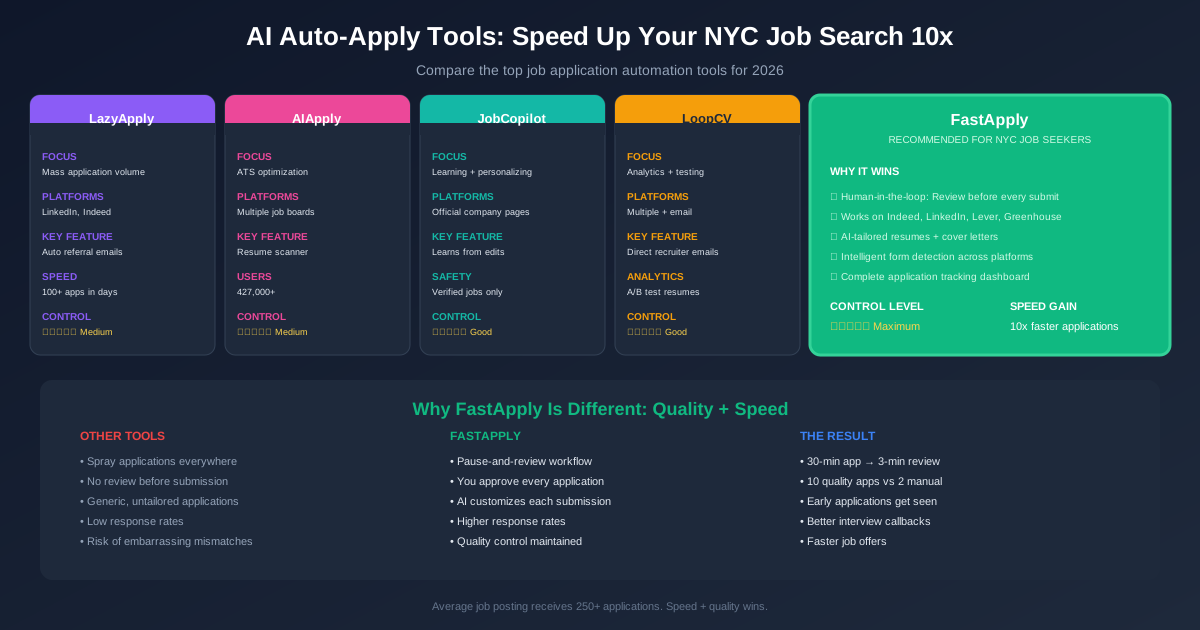
AI Auto-Apply Tools Decoded The truth about AI auto-apply tools: risks, recommendations, and best practices

What AI Auto-Apply Tools Actually Do

Despite the “AI” branding, most auto-apply tools are primarily workflow automation with AI components:

1. Form Autofill They map your profile data (name, email, work history) to application form fields across different ATS platforms (Workday, Greenhouse, Lever, etc.). This is legitimately useful—manually entering the same information 100 times is mind-numbing.

2. Document Management They attach your resume and cover letter to applications, sometimes selecting the “right” version based on job requirements.

3. Job Matching AI analyzes job descriptions and compares them to your profile, theoretically applying only to relevant positions. Quality varies dramatically.

4. Screening Question Responses AI generates answers to application screening questions. This is where things get risky—poorly generated answers can immediately disqualify you.

5. Submission Automation The actual clicking of “submit” buttons across job boards and company career pages.

The Auto-Apply Landscape in 2026

Let me break down the major players:

LazyApply

What it is: Chrome extension that automates job applications across LinkedIn, Indeed, ZipRecruiter, and company career pages.

How it works:

  1. Install Chrome extension
  2. Upload your resume and create a profile
  3. Set job preferences (title, location, salary)
  4. LazyApply uses “Job GPT” to handle Easy Apply and form filling
  5. Can run in autopilot mode applying to jobs while you do other things

Pricing:

  • Basic: $99/lifetime - 15 applications/day
  • Premium: $149/lifetime - 150 applications/day
  • Ultimate: $999/lifetime - Unlimited applications

The honest assessment:

What LazyApply gets right:

  • Time savings are real if you’re doing volume
  • Dashboard tracks applications automatically
  • Multiple resume profiles available (higher tiers)
  • Cover letter generation reduces manual work

What concerns me:

  • Trustpilot rating is dismal (around 2 stars)
  • Reviews are extremely polarized (52% 1-star, 44% 5-star)
  • Reports of poor filter accuracy leading to irrelevant applications
  • Some users report automated answers containing errors
  • Refund difficulties mentioned in multiple reviews
  • Platform detection risk on LinkedIn

Bottom line: LazyApply works for some users and fails catastrophically for others. The volume-first approach is fundamentally misaligned with how modern recruiting works. If you use it, use conservative settings and review applications before they submit.

JobCopilot

What it is: Auto-apply platform positioning itself as the “smarter” alternative focused on quality over pure volume.

Key differentiators:

  • Applies exclusively to verified jobs on official company career pages (no fake listings)
  • Adjustable job matching thresholds—you set how selective the AI should be
  • Review-before-submit option
  • AI learns from your edits over time (gets smarter the more you use it)
  • Application tracker with detailed records

How it works:

  1. Sign up and build your profile
  2. Set job matching criteria and selectivity threshold
  3. JobCopilot searches and finds matching positions
  4. Review queued applications or let it auto-submit
  5. Track all applications in dashboard

Pricing: Subscription-based (specific pricing varies)

The honest assessment:

What JobCopilot gets right:

  • Quality-over-quantity philosophy aligns with recruiting reality
  • Verified job sources reduce fake listing risk
  • Human review options provide control
  • Learning from edits improves over time

Concerns:

  • Smaller user base means less public feedback
  • Still automation—platform detection risk exists
  • Effectiveness depends on your profile quality and market

Bottom line: More thoughtful approach than pure volume tools. If you want auto-apply with guardrails, JobCopilot is worth considering.

Simplify

What it is: Free browser extension that autofills job applications rather than fully auto-applying.

Key differentiator: It’s an accelerator not an automator. You still click submit—it just fills forms for you.

How it works:

  1. Install free browser extension
  2. Save your profile information
  3. When you’re on a job application, click Simplify to autofill
  4. Review the filled information
  5. You manually submit

Pricing: Free (premium features available)

The honest assessment:

What Simplify gets right:

  • Dramatically faster applications without losing control
  • You review every application before submitting
  • Works on thousands of company career pages
  • Application tracker logs where you’ve applied
  • No platform detection risk (you’re still manually submitting)

Limitations:

  • Doesn’t do the work for you—still requires active engagement
  • Not actually auto-apply (manual submission required)
  • Doesn’t help with job discovery

Bottom line: This is the safest approach. You get autofill benefits without automation risks. Strongly recommended as part of any job search toolkit.

LoopCV

What it is: Platform that runs “always-on” job search campaigns, automatically applying to roles matching your criteria.

How it works:

  1. Set up profile and preferences (job title, skills, location)
  2. LoopCV continuously scans job boards
  3. Automatically applies to matching positions
  4. Tracks results and provides analytics

Key feature: A/B testing of resumes and cover letters to see what works better.

Pricing: Subscription-based with various tiers

The honest assessment:

What LoopCV gets right:

  • Data-driven approach with A/B testing
  • Continuous operation means you don’t miss new postings
  • Focus on matching efficiency

Concerns:

  • Unattended operation increases error risk
  • Still a volume play at heart
  • A/B testing only useful with significant application volume

Bottom line: More sophisticated than basic auto-apply tools, but still oriented toward volume. The A/B testing is genuinely useful if you’re going to do volume anyway.

Sonara

What it is: Positions itself as a “personal career assistant” that matches profiles to jobs and automates thoughtful outreach.

Philosophy: Quality-first approach focusing on jobs you’re likely to succeed in.

The honest assessment:

  • Less volume-oriented than competitors
  • Focuses on match quality
  • Smaller user base makes evaluation difficult

Bottom line: Worth considering if you want a quality-over-quantity tool, but verify current features and pricing.

AIApply

What it is: All-in-one job kit generator and auto-submit service.

Features:

  • AI-generated resume tailored to each job
  • Cover letter generation
  • Follow-up email drafting
  • Interview prep via Chrome extension
  • Auto-apply through credit system

The honest assessment:

  • Comprehensive toolkit approach
  • Document generation can help with materials
  • Credit system means paying for volume

Bottom line: Potentially useful for materials generation even if you don’t use auto-submit.

Jobright

What it is: “AI job search copilot” that finds, customizes, and submits applications.

Key features:

  • Job matching based on profile
  • Resume customization per application
  • Submission automation

The honest assessment:

  • Newer entrant in the market
  • Claims to balance speed and customization
  • Less track record to evaluate

Bottom line: Check current reviews and features if considering.

The Truth About Auto-Apply: Does Volume Help?

Here’s the controversial reality that auto-apply tools don’t want you to know:

Research from Indeed suggests that mass-applying actually hurts your chances. People with the highest number of applications are 39% less likely to receive positive responses from employers.

Why? Because:

  1. Recruiters can spot generic applications instantly
  2. Automated patterns (identical cover letters, suspicious timing) trigger red flags
  3. Applying to roles you’re not qualified for wastes everyone’s time and hurts your reputation
  4. Quality signals matter more than quantity

The counter-argument: Some users genuinely do get interviews through auto-apply. The key variable seems to be targeting quality. If you use strict filters and only auto-apply to highly relevant positions, volume can help. If you spray applications everywhere, it hurts.

Platform Detection: Real Risk

Major job platforms (LinkedIn, Indeed) have systems to identify spam applications and automated behavior.

What happens if detected:

  • Application deprioritization (your apps go to the bottom)
  • Account flagging
  • In extreme cases, account suspension
  • Your information potentially shared with employers using that platform’s ATS

How platforms detect automation:

  • Application timing patterns (too many too fast)
  • Identical cover letters across applications
  • Form completion speed (human-impossible pace)
  • Browser fingerprinting
  • API-level detection of extension behavior

How to reduce detection risk:

  • Use tools that operate at human-like speeds
  • Never run auto-apply in full unattended mode
  • Vary cover letters (even if AI-generated)
  • Don’t apply to hundreds of jobs in a single day
  • Review before submit when possible
  • Be especially careful on LinkedIn (most aggressive detection)

The Recruiter Perspective

I spoke with multiple recruiters about auto-apply tools. The consistent message:

“When I see an application that clearly understands our company challenges and speaks directly to how their experience addresses our needs, it stands out instantly among the hundreds of AI-generated applications. Those candidates go straight to the interview pile, even if their experience isn’t a perfect match.”

Recruiters are increasingly able to identify auto-applied submissions. Characteristics that flag applications:

  • Generic cover letters with no company-specific content
  • Perfect keyword matching but shallow understanding
  • Applying to roles clearly beyond or below qualification level
  • Multiple applications to the same company within hours

My Recommendation: The Hybrid Approach

After extensive research and testing, here’s what actually works:

Tier 1: High-priority applications (10-20% of your applications)

  • Manually tailored resume for each role
  • Researched, personalized cover letter
  • Company-specific screening question answers
  • These are the roles you actually want

Tier 2: Strong-fit applications (30-40% of your applications)

  • Use Simplify or similar autofill (not auto-submit)
  • Light customization of cover letter
  • Review before submitting
  • Good fits but not your top choices

Tier 3: Volume applications (40-50% of your applications)

  • If using auto-apply, tight filters and conservative settings
  • Regular review of what’s being submitted
  • Focused on testing market response
  • Accept that response rate will be lower

Never:

  • Run auto-apply in fully unattended mode on 100+ applications daily
  • Use tools that can’t show you what they submitted
  • Apply to roles you’re clearly unqualified for
  • Ignore platform terms of service

How to Use AI Auto-Apply Tools Without Destroying Your Chances

If you’re going to use AI auto-apply tools—and many people will despite the risks—here’s how to do it intelligently.

Before You Start: Profile Optimization

Auto-apply tools are only as good as the profile they’re pulling from. Garbage in, garbage out.

Your LinkedIn profile must be:

  • Complete (all sections filled)
  • Keyword-optimized for your target roles
  • Showing a clear career narrative
  • Updated within the last 3 months
  • Featuring quantified achievements, not just responsibilities

Your master resume must be:

  • ATS-friendly (no tables, graphics, or unusual formatting)
  • Tailored to your target job category
  • Featuring strong action verbs and quantified results
  • Proofread multiple times (auto-apply will copy any errors)

Your screening question answers must be:

  • Prepared in advance for common questions
  • Stored in your auto-apply tool’s profile
  • Reviewed for each job type (tech roles vs. marketing roles need different answers)

Setting Up Auto-Apply Correctly

Step 1: Choose strict filters

  • Specific job titles (not broad categories)
  • Defined location (NYC metro, specific boroughs if relevant)
  • Salary minimums (filters out clearly wrong-level roles)
  • Experience level requirements
  • Industry if applicable

Step 2: Set conservative volume limits

  • Start with 5-10 applications per day maximum
  • Increase only after reviewing what’s being submitted
  • Never exceed 20-30/day on any platform
  • LinkedIn specifically: stay under 10/day

Step 3: Enable review checkpoints

  • Review before submit whenever possible
  • At minimum, review daily what was submitted
  • Create exclusion rules for companies you don’t want
  • Pause automation if quality drops

Step 4: Monitor and adjust

  • Track response rates weekly
  • If response rate drops below 5%, something’s wrong
  • A/B test different resume versions
  • Adjust filters based on what’s working

The Golden Rules of Auto-Apply

Rule 1: Quality over quantity, always An auto-apply that sends 50 targeted, relevant applications will outperform one that sends 500 spray-and-pray applications.

Rule 2: Never lie or misrepresent If the AI generates an answer claiming experience you don’t have, fix it. Getting caught in lies during interviews is worse than not getting the interview.

Rule 3: Maintain human control Automation should save you time on repetitive tasks, not remove you from the process entirely. Stay involved.

Rule 4: Supplement, don’t replace Use auto-apply for volume testing while simultaneously doing manual applications for your most wanted positions.

Rule 5: Protect your accounts If a platform bans you for automated behavior, you lose access entirely. Conservative use protects your long-term access.

What Auto-Apply Can’t Do

No auto-apply tool can:

  • Network for you
  • Build relationships with recruiters
  • Negotiate salary
  • Prepare you for interviews
  • Replace genuine skill development
  • Make up for a weak resume or profile

Auto-apply addresses one piece of the job search puzzle (submission volume). Everything else still requires human effort.

A Different Approach: Automation with Human Oversight

The tools above fall into two camps: fully automated spray-and-pray (LazyApply) or manual-heavy with some assistance (Simplify). There’s a middle ground that most job seekers actually need.

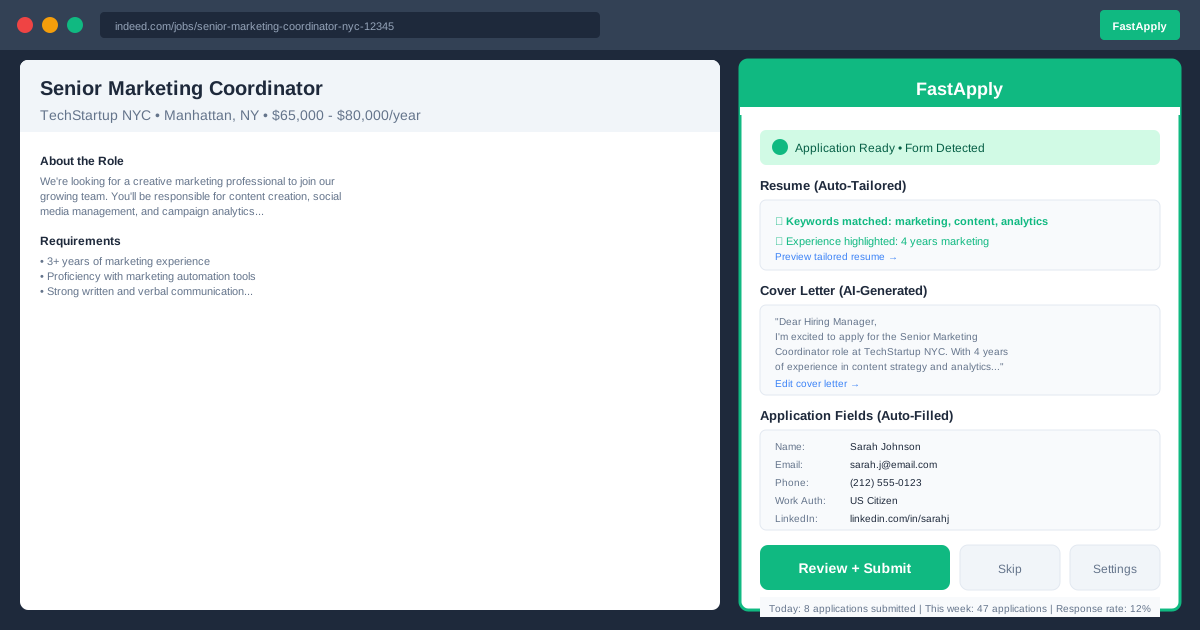
FastApply takes a different approach. Instead of submitting applications while you sleep, it automates the tedious parts—form filling, resume tailoring, ATS optimization—while keeping you in control of what actually gets submitted. The pause-and-review workflow means you’re not gambling your professional reputation on an algorithm’s judgment.

This matters in NYC’s competitive market. When 500 people apply to the same Brooklyn marketing role, the difference between getting an interview and getting filtered out often comes down to whether your resume actually matches the job description. FastApply’s AI handles that tailoring in seconds, but you still review and approve before anything goes out.

For gig and temp work specifically, where you’re often applying to multiple platforms and staffing agencies simultaneously, having one tool that manages your applications across all of them—without the risk of mass-submitting to irrelevant positions—saves hours of repetitive data entry while protecting your accounts from automation detection.

Measuring Auto-Apply Success

Track these metrics weekly:

  • Applications sent: Volume baseline
  • Response rate: Positive responses Ă· applications
  • Interview rate: Interviews Ă· applications
  • Quality score: Your subjective assessment of job relevance (are these roles you’d actually want?)

Healthy benchmarks:

  • Response rate: 5-15% is typical; below 5% suggests targeting problems
  • Interview rate: 2-5% is reasonable for volume applications
  • Quality score: If most auto-applied roles aren’t relevant, tighten filters

When to Avoid Auto-Apply Entirely

Some situations where manual applications are strongly preferred:

  • Executive or senior positions
  • Creative roles requiring portfolios
  • Small companies where personal touch matters
  • Roles with highly specific requirements
  • Companies where you have network connections
  • Dream companies you’ve researched extensively

In these cases, the “spray and pray” approach—even with quality filters—undermines your candidacy.


Industry-Specific Opportunities Across NYC Boroughs

NYC’s job market varies dramatically by industry and location. Here’s where to find part-time and temporary work across the five boroughs.

Manhattan

Dominant industries: Finance, technology, professional services, hospitality, retail, healthcare

Part-time hot spots:

Midtown (34th-59th Street):

  • Corporate temp work through agencies (admin, reception, office support)
  • Hospitality at hotels and restaurants
  • Retail at flagship stores (5th Avenue, Herald Square)
  • Event staffing at venues and corporate spaces

Financial District/Downtown:

  • Finance and professional services temp work
  • Restaurant and bar staffing (after-work crowd)
  • Corporate events

Upper East/West Side:

  • Home care and healthcare
  • Tutoring and childcare
  • High-end retail
  • Restaurant service

Platforms that work well: Instawork (hospitality), Robert Half (professional), Atrium (admin/fashion), delivery apps

Average part-time wages: $18-35/hour depending on role

Brooklyn

Dominant industries: Creative/media, tech startups, healthcare, hospitality, manufacturing

Part-time hot spots:

Downtown Brooklyn/DUMBO:

  • Tech company temp work
  • Creative agency freelance
  • Restaurant and bar hospitality
  • Retail in Atlantic Terminal area

Williamsburg/Bushwick:

  • Restaurant and bar work (extremely strong market)
  • Event staffing
  • Creative freelance
  • Warehouse/light industrial (outer areas)

East New York/Brownsville:

  • Warehouse and logistics
  • Home healthcare
  • Retail

Platforms that work well: Instawork (hospitality), Wonolo (warehouse), TaskRabbit (local services)

Average part-time wages: $17-28/hour depending on role and neighborhood

Queens

Dominant industries: Healthcare, construction, hospitality, logistics, manufacturing

Part-time hot spots:

Long Island City:

  • Tech and creative temp work
  • Healthcare roles
  • Warehouse (Amazon and others)
  • Restaurant service

Flushing:

  • Healthcare (major hospital presence)
  • Restaurant and food service
  • Retail

Astoria:

  • Restaurant and hospitality
  • Production and media (studios in area)
  • Retail

JFK Airport Area:

  • Logistics and warehouse
  • Hospitality (airport hotels)
  • Transportation-related

Platforms that work well: Wonolo (warehouse), delivery apps (high demand), healthcare staffing agencies

Average part-time wages: $17-25/hour depending on role

The Bronx

Dominant industries: Healthcare, retail, food service, logistics

Part-time hot spots:

Fordham:

  • Retail (major shopping corridor)
  • Food service
  • Healthcare

South Bronx:

  • Warehouse and logistics
  • Construction labor
  • Food production

Bronx hospitals area:

  • Healthcare support roles
  • Hospital services

Platforms that work well: Wonolo, delivery apps, healthcare staffing agencies

Average part-time wages: $17-22/hour (generally lower than Manhattan)

Important note: The Bronx has the highest unemployment and lowest job quality in NYC. However, healthcare roles—particularly home health aides—have strong demand.

Staten Island

Dominant industries: Healthcare, retail, construction, logistics

Part-time reality: Smallest job market of the five boroughs. Many Staten Islanders commute to Manhattan or Brooklyn for work.

Local opportunities:

  • Staten Island Mall and surrounding retail
  • Local healthcare facilities
  • Construction (ongoing development)
  • Restaurant and hospitality (limited compared to other boroughs)

Platforms that work well: Limited gig platform presence. Traditional job search often more effective.

Average part-time wages: $17-23/hour

Borough-by-Borough Platform Recommendations

BoroughTop Gig PlatformBest Temp Agency FocusStrongest Delivery App
ManhattanInstaworkRobert Half, AtriumDoorDash, Uber Eats
BrooklynInstaworkCreative-focusedDoorDash
QueensWonoloHealthcare agenciesInstacart
BronxWonoloHealthcare agenciesDoorDash
Staten IslandLimitedLocal agenciesDoorDash

Building Your Part-Time Job Search Strategy

You now have the landscape. Here’s how to turn it into a working strategy.

The Foundation: Know Your Numbers

Before applying anywhere, know these:

  • Minimum acceptable hourly rate: (NYC realistic minimum: $17-20/hour)
  • Hours you need: Weekly hours to meet financial needs
  • Schedule constraints: When can you actually work?
  • Transportation limitations: Can you get to Queens? The Bronx? Only certain neighborhoods?

These constraints eliminate options immediately, saving you time.

Week 1: Platform Setup

Day 1-2: Gig Platforms

  • Download and register for 2-3 gig platforms based on your skills
  • Complete all profile sections
  • Submit for background checks (which can take days)

Day 3-4: Staffing Agencies

  • Select 2-3 agencies matching your skills
  • Submit resumes/applications
  • Schedule intake interviews where required

Day 5-7: Freelance/Delivery (if applicable)

  • Set up profiles on relevant platforms
  • Complete any required verification
  • Understand how each platform works

Total setup time: 5-10 hours spread across the week

Week 2-4: Active Job Hunting

Daily routine (1-2 hours):

  1. Check gig platforms for new shifts (morning and evening)
  2. Review any temp agency communications
  3. Apply to 5-10 targeted positions (using Simplify or similar)
  4. Follow up on pending applications

Weekly routine:

  1. Update staffing agency contacts
  2. Review which platforms/strategies are working
  3. Adjust focus toward what’s generating results
  4. Expand to additional platforms if needed

The “Stacking” Strategy

Successful NYC gig workers don’t rely on one income source. Here’s how to stack:

Base layer: Most reliable income source

  • Traditional part-time job with set hours, OR
  • Staffing agency with regular placements

Middle layer: Flexible supplement

  • Gig platform shifts on off-days
  • Delivery work during peak hours

Top layer: Opportunity capture

  • TaskRabbit or similar for high-pay one-off gigs
  • Freelance projects that fit your skills

Example stack for someone who needs $1,000/week:

  • Part-time retail: 20 hours × $18/hour = $360
  • Instawork shifts: 10 hours × $22/hour = $220
  • DoorDash weekends: 15 hours × $20/hour = $300
  • TaskRabbit gigs: 2-3 hours × $40/hour = $120
  • Total: $1,000

When to Use AI Auto-Apply

Given everything I’ve covered, here’s when AI auto-apply makes sense:

Use it when:

  • You’re searching for traditional employment (not gig work)
  • You’ve already optimized your resume and profile
  • You have time for a longer search (not urgent need)
  • You commit to reviewing what’s being submitted
  • You use it alongside manual applications for top-choice roles

Don’t use it when:

  • You need work this week (gig platforms are faster)
  • You’re targeting only a few specific companies
  • Your resume/profile isn’t ready
  • You refuse to monitor what’s being submitted
  • You’re applying to senior/executive roles

Tracking and Optimization

Create a simple tracking system:

  • Where you applied
  • Date
  • Response received (Y/N)
  • Outcome

After 2-4 weeks, you’ll see patterns:

  • Which platforms generate responses
  • Which job types match well
  • Where you’re wasting time

Reallocate effort toward what works.


Common Mistakes That Keep NYC Job Seekers Stuck

After analyzing hundreds of job search experiences, here are the patterns that sabotage success.

Mistake 1: Waiting for the “Perfect” Opportunity

The problem: Paralysis while waiting for ideal role means bills pile up.

The fix: Take available work while continuing to search. A gig shift today doesn’t prevent you from landing your dream job tomorrow.

Mistake 2: Applying Everywhere Without Strategy

The problem: Volume without targeting wastes time and hurts your reputation.

The fix: Define your criteria first. Apply to fewer, better-matched positions.

Mistake 3: Neglecting Platform Ratings

The problem: On gig platforms, your rating determines which jobs you can access. Low ratings lock you out of premium opportunities.

The fix: Treat every gig like it matters. Show up on time. Do excellent work. Build your rating before you need it.

Mistake 4: Underestimating Setup Time

The problem: Background checks take days. Verification takes days. Then you’re desperate.

The fix: Set up platforms 2-3 weeks before you need work.

Mistake 5: Ignoring the Human Element

The problem: Focusing entirely on apps and algorithms while missing human opportunities.

The fix: Talk to people. Tell your network you’re looking. Ask existing employers about additional hours. Human connections still drive most hiring.

Mistake 6: Poor Financial Timing

The problem: Not understanding when you’ll actually get paid leads to cash flow crises.

The fix: Know payment timelines for every platform. Build bridge savings for gaps between work and payment.

Mistake 7: Not Tracking What Works

The problem: Spending equal time on platforms that don’t generate results.

The fix: Track everything for 2-4 weeks, then focus on what’s working.

Mistake 8: Misusing Auto-Apply

The problem: Running auto-apply at full blast and wondering why nobody responds.

The fix: Quality settings, conservative volume, human review.

Mistake 9: Undercharging for Freelance Work

The problem: NYC rates should be higher than average. Charging too little devalues your work and makes it unsustainable.

The fix: Research NYC market rates for your skills. Start at market rate, not below it.

Mistake 10: Treating Gig Work Like Employment

The problem: Expecting benefits, stability, and loyalty from platforms that provide none.

The fix: Use gig work for what it offers—flexibility and quick income—while building toward more stable situations.


Frequently Asked Questions

General NYC Job Market Questions

Q: What’s the minimum wage in NYC as of 2026? A: $17.00 per hour for NYC, Long Island (Nassau and Suffolk Counties), and Westchester County. The rest of New York State is $16.00 per hour. Tipped employees and home care workers have separate rates.

Q: How much does the average part-time worker earn in NYC? A: Wide variation by industry. Entry-level hospitality and retail typically pays $17-22/hour. Professional temp work through agencies can reach $30-50+/hour. Delivery workers average $15-25/hour including tips.

Q: What’s the best borough for finding part-time work? A: Manhattan has the highest concentration of opportunities, particularly Midtown and Downtown. Brooklyn (especially Downtown Brooklyn and Williamsburg) is strong for hospitality. Queens has significant warehouse/logistics work, particularly around Long Island City and near JFK.

Q: How long does it take to find part-time work in NYC? A: Gig work through apps can start within 1-2 weeks (after background check clearance). Traditional part-time jobs typically take 2-6 weeks. Professional temp work through agencies varies—sometimes days, sometimes weeks.

Gig Platform Questions

Q: Which gig platform has the most work in NYC? A: For hospitality/service work: Instawork. For warehouse/labor: Wonolo. For food delivery: DoorDash (largest market share). For grocery delivery: Instacart.

Q: Can I work for multiple gig platforms simultaneously? A: Yes, and most successful gig workers do exactly this. Just never double-book (accept simultaneous work from multiple platforms). Use multiple apps to maximize opportunities while taking one job at a time.

Q: How fast do gig platforms pay? A: Many offer same-day or next-day payment options. DoorDash has Fast Pay (same day for fee). Instawork offers Instapay. Wonolo has rapid pay via their Wisely card. Traditional weekly direct deposit is also standard.

Q: Do I need a car for gig work in NYC? A: Not necessarily. Many platforms allow bikes, e-bikes, and even walking in dense urban areas. For delivery, e-bikes are often optimal in NYC (faster than cars in traffic, no parking issues). Warehouse work doesn’t require personal vehicles.

Q: What happens if I cancel a gig platform shift? A: Cancellation policies vary. Generally, canceling with advance notice (24+ hours) has minimal impact. Late cancellations or no-shows damage your rating and can lead to account restrictions or deactivation.

AI Auto-Apply Questions

Q: Do AI auto-apply tools actually work? A: They can work, but results are highly variable. The key factors are targeting quality (strict filters), profile quality (what you’re submitting), and volume moderation (not spamming). Mass-applying with poor targeting often hurts rather than helps.

Q: Can employers tell when I use auto-apply? A: Increasingly, yes. Generic cover letters, suspicious timing patterns, and identical applications across many roles are detectable. Better tools with customization and human-like pacing are harder to detect but not invisible.

Q: Will using auto-apply get my LinkedIn account banned? A: It’s possible. LinkedIn has systems to detect automated behavior and may restrict or suspend accounts. Risk is higher with aggressive volume and obvious automation patterns. Conservative settings and review-before-submit reduce risk.

Q: What’s the best AI auto-apply tool? A: There’s no universal answer. For safety and control, Simplify (autofill without auto-submit) is safest. For auto-apply with quality focus, JobCopilot emphasizes targeting and review. LazyApply offers high volume but has mixed reviews and higher risk.

Q: How many jobs should I auto-apply to per day? A: Conservative recommendation: 5-10 per day maximum, especially on LinkedIn. Some tools allow much more, but higher volume increases detection risk and often reduces response rates. Quality beats quantity.

Q: Should I use auto-apply for every job search? A: No. Manual applications are still preferred for high-priority roles, senior positions, small companies, and anywhere personal touch matters. Auto-apply works best for volume testing in competitive markets.

Staffing Agency Questions

Q: What’s the difference between a temp agency and a gig app? A: Staffing agencies make you their employee during placements (W-2, some benefits possible). Gig apps treat you as an independent contractor (1099, no benefits). Agencies typically handle longer placements with more traditional roles.

Q: How do I choose between staffing agencies? A: Match agency specialty to your skills. Robert Half for finance/accounting/tech. Atrium for creative/fashion/NYC-specific. Randstad for variety. Register with 2-4 agencies to maximize opportunities.

Q: Do staffing agencies take a cut of my pay? A: No, they don’t reduce your pay. Agencies charge the employer a markup above what they pay you. Your pay rate is your full rate (minus normal taxes).

Q: Can temp work lead to permanent jobs? A: Absolutely. “Temp-to-perm” is a common pathway. Treat every assignment like an extended interview. Many employers prefer hiring proven temps over outside candidates.

Delivery Platform Questions

Q: Which delivery app pays the most in NYC? A: Earnings vary by time, location, and individual performance. Generally, DoorDash and Uber Eats offer the strongest combination of base pay and tips in NYC. Instacart can pay higher per order due to larger tips on grocery orders.

Q: Do I need insulated bags and other equipment? A: Most platforms provide or require basic bags. Higher-quality insulated bags (purchased yourself) can improve customer satisfaction and tips. Bikes/e-bikes need to be your own.

Q: What are the busiest hours for delivery in NYC? A: Lunch (11am-2pm), dinner (5pm-9pm, especially 6pm-8pm), weekend brunch (10am-1pm), and late night (10pm-1am). Working outside peak hours dramatically reduces earnings per hour.

Q: Is delivery work sustainable long-term? A: As primary income, challenging due to no benefits and vehicle/bike wear. As supplement or temporary income, viable. Key is understanding it as flexible income rather than stable career.

Freelance Platform Questions

Q: How do I get started on Upwork with no reviews? A: Start with smaller projects at competitive rates to build reviews. Complete your profile thoroughly. Apply to jobs that match your skills precisely. Consider the Rising Talent program.

Q: What’s the difference between Upwork and Fiverr? A: Upwork: You apply to client job posts. Better for larger, ongoing projects. Fiverr: You create gig listings, clients come to you. Better for productized services with clear deliverables.

Q: How much should I charge on TaskRabbit? A: NYC rates are higher than national averages. Furniture assembly: $30-50/hour. Moving help: $25-40/hour. Handyman work: $40-75/hour. Research competitors in your area and price competitively while starting.

Financial and Practical Questions

Q: How do I handle taxes with gig income? A: Gig work income (1099) means you’re responsible for self-employment taxes. Set aside 25-30% of earnings for taxes. Track expenses (gas, supplies, phone) for deductions. Consider quarterly estimated payments.

Q: Can I work multiple part-time jobs and gigs at once? A: Yes, there’s no legal limit. The practical limit is your time, energy, and ability to deliver quality work. Track your hours carefully and don’t overcommit.

Q: Do gig workers get unemployment benefits in NYC? A: New York extended some unemployment provisions to gig workers during COVID. Current status varies. Gig workers generally have less unemployment protection than traditional employees.

Q: Should I get extra insurance for delivery work? A: Personal auto insurance often excludes commercial delivery. Rideshare/delivery insurance riders are available and recommended. Some platforms provide limited coverage while actively on delivery.


Final Thoughts: Your Action Plan

You’ve made it through 30,000+ words of NYC part-time job market intelligence. Let me distill it into what matters:

The Reality Check

NYC’s part-time job market in 2026 is competitive but navigable. Healthcare dominates job growth. Gig economy platforms have matured into reliable income sources. AI auto-apply tools exist in a murky zone between helpful and harmful. Traditional staffing agencies remain relevant for professional work.

The people who succeed don’t rely on any single platform or strategy. They stack income sources, maintain flexibility, and treat every opportunity—whether a two-hour Instawork shift or a three-month temp assignment—as a building block.

Your Immediate Action Items

This week:

  1. Assess your skills, schedule, and income needs
  2. Register for 2-3 appropriate gig platforms
  3. Submit resume to 2-3 relevant staffing agencies
  4. Install Simplify extension for faster applications

Within two weeks:

  1. Complete all background checks and verifications
  2. Take your first few gig shifts to understand the process
  3. Begin applying to traditional part-time roles (5-10/day)
  4. Build initial ratings on your primary gig platform

Within one month:

  1. Evaluate what’s working and what isn’t
  2. Double down on productive platforms/strategies
  3. Expand to additional income sources if needed
  4. Establish a sustainable weekly routine

The AI Auto-Apply Decision

If you’re considering AI auto-apply tools after reading this guide:

Use them if:

  • You want to test market response at volume
  • You commit to quality settings and regular review
  • You use them alongside manual applications
  • You understand and accept the risks

Skip them if:

  • You need work immediately (gig platforms are faster)
  • You’re targeting senior or highly specific roles
  • You’re not willing to monitor what’s being submitted
  • Your resume/profile needs work first

If you use them, remember:

  • Quality filters over raw volume
  • Conservative limits (10-20/day max)
  • Review before submit when possible
  • Track results and adjust

The Bigger Picture

A part-time job or gig work might be a bridge to something better. Or it might be exactly what fits your life right now. Either way, approach it strategically.

The platforms and tools keep evolving. What works in January 2026 may shift by summer. Stay adaptable, keep tracking what works for you, and don’t be afraid to abandon strategies that aren’t delivering results.

NYC’s job market rewards people who show up, do excellent work, and build reputation over time. Whether that’s gig platform ratings, staffing agency relationships, or freelance client testimonials—your track record becomes your competitive advantage.

You have the information. Now execute.


Last updated: January 2026

Have questions not covered in this guide? The NYC job market evolves constantly. Check back for updates.


Related Resources:

  • NYC Department of Labor: dol.ny.gov
  • NYC Workforce1 Career Centers
  • NYSDOL Unemployment Information

Disclaimer: This guide represents research and analysis as of January 2026. Job market conditions, platform policies, minimum wage rates, and tool features change frequently. Verify current information before making decisions. Nothing in this guide constitutes employment, legal, or financial advice.


Appendix A: Complete NYC Borough-by-Borough Job Guide

For job seekers who want hyper-local intelligence, here’s an expanded breakdown of opportunities in each of NYC’s five boroughs.

Manhattan: The Opportunity Epicenter

Midtown (34th Street to 59th Street)

Midtown remains the commercial heart of New York City, home to iconic landmarks like the Empire State Building, Times Square, Rockefeller Center, and the Theater District. For part-time job seekers, this area offers the highest concentration of opportunities—but also the fiercest competition.

Hospitality and Events Midtown’s hotels run the gamut from budget properties to luxury flagships. The Plaza, St. Regis, Lotte New York Palace, and dozens of business-focused hotels like the Marriott Marquis constantly need:

  • Banquet servers for events and conferences
  • Front desk support during peak hours
  • Housekeeping (typically early morning shifts)
  • Concierge assistants
  • Restaurant staff (hotel restaurants are separate from standalone venues)

Event venues like the Javits Center, Manhattan Center, and hotel ballrooms create waves of demand around major conventions, trade shows, and corporate events. Platforms like Instawork and Qwick are particularly effective here.

Retail Opportunities Fifth Avenue from 49th to 59th Street hosts flagship stores for virtually every major brand. These stores typically hire:

  • Sales associates (often part-time to start)
  • Stock room workers
  • Visual merchandising assistants
  • Customer service representatives

Key employers include Apple (767 Fifth Avenue), Nike, Bergdorf Goodman, Saks Fifth Avenue, and dozens of luxury brands. Many of these positions pay above minimum wage ($18-25/hour) given the clientele they serve.

Herald Square (34th Street) anchors another retail cluster around Macy’s flagship store. This area tends to offer more entry-level positions than luxury-focused Fifth Avenue.

Office and Administrative Temp Work Midtown’s concentration of corporate headquarters creates constant demand for temporary administrative staff. Roles include:

  • Reception coverage
  • Data entry
  • Mail room support
  • Executive assistant fill-ins
  • Office management support

Staffing agencies like Robert Half, Atrium, and Randstad have strong Midtown relationships. Rates for administrative temp work range from $22-40/hour depending on the role and company.

Food Service The lunch rush in Midtown is legendary. Restaurants, cafes, delis, and food halls need staff primarily for:

  • 11am-2pm lunch service
  • 5pm-8pm post-work dinner service
  • Late night (restaurants serving theater-goers)

Fast-casual and quick-service restaurants often hire part-time staff more readily than fine dining establishments. Look for openings at Sweetgreen, Chipotle, Shake Shack, and local delis alongside traditional restaurants.

Transit Considerations Midtown is accessible via virtually every subway line. However, commute times from outer boroughs during rush hour can be substantial. If you’re commuting from eastern Queens or deep Brooklyn, factor in 45-60+ minutes each way.

Financial District / Downtown (Below Chambers Street)

Wall Street and the surrounding Financial District have transformed over the past two decades. Once purely a business district that emptied after 5pm, Downtown now has a significant residential population, retail presence, and dining scene.

Finance-Adjacent Temp Work Despite being the global financial capital, most trading floor and banking positions require full-time commitment and specific credentials. However, support roles exist:

  • Mailroom and document handling
  • Conference room coordination
  • Receptionist and visitor management
  • Administrative support for back-office operations

These roles typically come through staffing agencies with financial services specializations. Pay tends to be higher than general admin work ($25-45/hour).

Hospitality Growth The expansion of hotels in Lower Manhattan has created new hospitality opportunities:

  • The Four Seasons Downtown
  • The Beekman
  • Numerous boutique hotels
  • Restaurant and bar openings

The 9/11 Memorial and One World Trade Center draw millions of visitors annually, supporting nearby food service and retail.

Proximity to Brooklyn Downtown Manhattan connects easily to Brooklyn via multiple subway lines and the ferry. Job seekers living in DUMBO, Brooklyn Heights, or Downtown Brooklyn may find Downtown Manhattan opportunities faster to reach than Midtown.

Upper West Side and Upper East Side

These residential neighborhoods have different employment profiles than commercial areas:

Childcare and Household Support Wealthy families on both sides of Central Park frequently hire:

  • Part-time nannies and babysitters
  • House managers and personal assistants
  • Dog walkers and pet sitters
  • Household organizing help

Platforms like Care.com and UrbanSitter connect providers with families, while TaskRabbit handles one-off household projects.

Healthcare and Senior Care The concentration of hospitals (NewYork-Presbyterian, Mount Sinai, Lenox Hill) and elderly residents creates healthcare employment:

  • Home health aides
  • Companion care
  • Physical therapy assistants
  • Medical office support

Local Retail and Dining Neighborhood-focused restaurants, coffee shops, and boutiques hire locally. These tend to be smaller operations with less formal hiring processes—sometimes a resume dropped off in person is more effective than online applications.

Brooklyn: Borough of Neighborhoods

Brooklyn’s diversity means job opportunities vary dramatically by neighborhood. What works in Williamsburg differs significantly from opportunities in East New York.

Downtown Brooklyn / DUMBO

Tech and Startup Ecosystem DUMBO has evolved into a tech hub with companies like Etsy, WeWork (originally), and numerous startups. While full-time tech roles require specific skills, support roles exist:

  • Office management and admin
  • Event coordination
  • Customer support
  • Content and community management

Professional Services Downtown Brooklyn’s government buildings and court complexes create demand for:

  • Legal support staff (through agencies)
  • Government administrative temp work
  • Notary and document services

Major Development Projects Ongoing construction and retail development (Atlantic Terminal, Barclays Center area) creates both construction-related work and eventual retail/hospitality positions.

Williamsburg and Bushwick

Restaurant and Bar Capital These neighborhoods have among the highest concentrations of restaurants and bars per capita in New York City. For hospitality workers, this is ground zero:

  • Bartender positions (especially craft cocktail knowledge)
  • Server roles (often require experience)
  • Back of house (prep cooks, dishwashers)
  • Host and hostess positions
  • Baristas (coffee culture is strong)

Competition for the best positions is fierce. Building experience at less prestigious establishments first often provides a pathway to better opportunities.

Creative and Production Work Film, photo, and commercial production frequently shoots in these neighborhoods. While most crew positions are full-time or union, production assistants and support roles sometimes hire through gig platforms.

Retail Diversity From vintage shops to high-end boutiques, retail opportunities span the spectrum. Many small businesses hire through word of mouth rather than formal job postings—networking and in-person inquiries matter.

Crown Heights, Bed-Stuy, Prospect Heights

Healthcare Access The presence of SUNY Downstate Medical Center and Kings County Hospital creates healthcare employment opportunities. These larger institutional employers often hire part-time positions in:

  • Patient transport
  • Dietary services
  • Housekeeping and environmental services
  • Clerical support

Neighborhood Commercial Corridors Fulton Street, Nostrand Avenue, and other commercial strips have local businesses hiring for:

  • Retail positions
  • Food service
  • Customer service roles

South Brooklyn (Bay Ridge, Bensonhurst, Sunset Park)

Industrial and Logistics Sunset Park’s industrial zone and the Brooklyn waterfront include:

  • Warehouse work (particularly with Industry City tenants)
  • Light manufacturing
  • Distribution and fulfillment

Wonolo and similar platforms often have positions in these areas.

Local Services The large residential populations of these neighborhoods create demand for:

  • Home services (cleaning, repair, landscaping)
  • Caregiving
  • Retail and dining

East Brooklyn (Brownsville, East New York, Canarsie)

These neighborhoods face higher unemployment and fewer job opportunities compared to other parts of Brooklyn. However, some opportunities exist:

  • Retail along major corridors
  • Healthcare support
  • Warehouse work near industrial areas
  • City government positions (community-focused programs)

Job seekers in these areas may need to travel to other neighborhoods for the best opportunities, making subway access an important consideration.

Queens: Diversity and Industry

Queens is the most ethnically diverse urban area in the world, and its job market reflects that diversity.

Long Island City

Post-Industrial Boom Once a manufacturing hub, LIC has transformed into a residential, commercial, and arts district:

  • Amazon and other companies with distribution centers
  • Museums and cultural institutions (MoMA PS1, various galleries)
  • Restaurants and hospitality serving the new residential population
  • Healthcare at nearby hospitals

Proximity to Manhattan LIC’s subway access to Manhattan (one stop to Midtown) means some workers live in LIC but work in Manhattan, and vice versa.

Flushing and Eastern Queens

Healthcare Dominance The Flushing Hospital Medical Center, Queens Hospital Center, and numerous medical offices create healthcare employment:

  • Clinical support roles
  • Administrative positions
  • Pharmacy support
  • Patient services

Cultural Economy Flushing’s vibrant Asian-American community supports:

  • Restaurant and food service (often requiring language skills)
  • Retail in bustling commercial districts
  • Community services

Airport Proximity Eastern Queens’ proximity to JFK International Airport creates:

  • Airport retail and food service
  • Hotel hospitality (airport hotels)
  • Logistics and ground transportation

Astoria

Food Scene Astoria’s dining scene rivals Brooklyn’s Williamsburg:

  • Greek restaurants (historical concentration)
  • Diverse international cuisines
  • Craft cocktail bars
  • Coffee shops

Production Hub The Kaufman Astoria Studios and Silvercup Studios bring film and TV production to the area. While most production jobs require specific experience, support roles exist.

Local Retail and Services Steinway Street and surrounding commercial corridors offer retail and service employment in a neighborhood-business context.

The Bronx: Healthcare and Beyond

The Bronx faces significant economic challenges, with unemployment rates consistently higher than other boroughs. However, opportunities exist, particularly in healthcare.

South Bronx

Logistics Hub The Hunts Point Market—one of the world’s largest food distribution centers—employs thousands:

  • Warehouse work
  • Distribution roles
  • Food handling
  • Transportation and logistics

Healthcare Growth Lincoln Medical Center and surrounding facilities create healthcare employment.

Fordham and University Heights

Educational Institutions Fordham University and surrounding institutions create:

  • Food service positions
  • Retail employment
  • Academic support roles (sometimes student-preferred)

Commercial Corridors Fordham Road’s major retail corridor includes national chains and local businesses hiring for standard retail positions.

Northern Bronx

Montefiore Medical Center As one of the largest employers in the Bronx, Montefiore and the Albert Einstein College of Medicine create significant healthcare employment across all levels.

Staten Island: The Suburban Borough

Staten Island’s job market is the smallest among the five boroughs, with many residents commuting to Manhattan or Brooklyn for work.

Local Opportunities

  • Staten Island Mall and surrounding retail
  • Healthcare at Staten Island University Hospital
  • Local government and services
  • Construction (ongoing development)

Commute Reality The free Staten Island Ferry connects to Manhattan’s Financial District, making Downtown jobs accessible. However, the overall transit time to most Manhattan destinations exceeds 45-60 minutes.


Appendix B: Seasonal and Event-Based Work Calendar

NYC’s job market has distinct seasonal patterns. Understanding these cycles helps you anticipate when opportunities will emerge.

January - February

Post-Holiday Reset Retail hiring slows dramatically after the December holiday season. Many seasonal workers see hours cut or positions end. However:

  • Tax preparation services ramp up (through April)
  • Winter weather creates demand for snow-related services
  • Indoor event venues maintain steady hospitality demand

Fashion Week (February) New York Fashion Week creates burst demand for:

  • Event staffing
  • Production assistants
  • Hospitality at venues
  • Retail support at participating brands

March - May

Spring Events Season As weather improves, outdoor events return:

  • Catering and events staffing increases
  • Restaurant patios open (expanded outdoor dining continues)
  • Tourism begins ramping up

Tax Season Peak (April) Tax preparation firms have highest demand:

  • H&R Block, Jackson Hewitt, and local firms hire seasonal tax preparers
  • Administrative support for accounting firms

Graduation Season (May) Universities and schools drive:

  • Event catering for ceremonies and parties
  • Hotel demand for visiting families
  • Restaurant business around campuses

June - August

Peak Tourism Season Summer is NYC’s busiest tourism period:

  • Hotel occupancy peaks (hospitality hiring)
  • Attractions fully staffed (museums, tours, etc.)
  • Outdoor events constant (concerts, festivals, sporting events)

Summer Camps and Childcare Working parents need summer childcare:

  • Day camp counselor positions
  • Babysitting/nanny demand increases
  • Tutoring for summer academic programs

Restaurant Outdoor Dining Peak The summer outdoor dining scene creates:

  • Additional server positions
  • Host/hostess demand
  • Support staff for expanded seating

Back-to-School Preparation (August) Retail hiring begins for fall:

  • School supply retailers
  • Clothing stores
  • College-area businesses

September - October

Fashion Week Returns (September) Another Fashion Week creates similar opportunities to February.

Fall Event Season Corporate events, galas, and fundraisers concentrate in fall:

  • Catering at peak demand
  • Event staff needed for high-profile functions
  • Hotel business strong

Halloween Season Themed attractions and events:

  • Haunted houses and attractions
  • Costume retailers
  • Themed events at venues

November - December

Holiday Retail Surge The most significant seasonal hiring period:

  • Major retailers staff up 30-50% or more
  • Shopping districts need extended hours coverage
  • Gift wrapping services
  • Customer service support

Holiday Events and Parties Corporate holiday parties and events drive:

  • Catering demand peaks
  • Venue staffing
  • Entertainment support

New Year’s Eve Times Square and citywide celebrations create:

  • Security and crowd management
  • Hospitality at venues
  • Transportation-related work

Key Timing Insight: Most seasonal hiring for November-December happens in October and early November. If you wait until November to apply for holiday positions, the best opportunities are already taken.


Government Resources

New York State Department of Labor

  • Website: dol.ny.gov
  • Unemployment information
  • Wage and hour laws
  • Job training programs

NYC Workforce1 Career Centers

  • Website: nyc.gov/workforce1
  • Free career services
  • Job placement assistance
  • Skills training programs
  • Locations in all five boroughs

NYC Department of Consumer and Worker Protection

  • Website: nyc.gov/dcwp
  • Know your rights as a worker
  • Scheduling law information
  • Paid sick leave requirements

Gig Economy Platforms

  • Instawork: instawork.com
  • Wonolo: wonolo.com
  • Shiftsmart: shiftsmart.com
  • Qwick: qwick.com
  • Steady: steadyapp.com

Delivery Platforms

  • DoorDash: doordash.com/dasher
  • Uber Eats: uber.com/deliver
  • Instacart: instacart.com/shoppers
  • Grubhub: driver.grubhub.com
  • Amazon Flex: flex.amazon.com

Freelance Platforms

  • Upwork: upwork.com
  • Fiverr: fiverr.com
  • TaskRabbit: taskrabbit.com
  • Thumbtack: thumbtack.com

Job Boards

  • Indeed: indeed.com
  • LinkedIn: linkedin.com/jobs
  • Glassdoor: glassdoor.com
  • ZipRecruiter: ziprecruiter.com
  • SimplyHired: simplyhired.com

Staffing Agencies (NYC Focus)

Robert Half

  • Midtown: 125 Park Avenue
  • Brooklyn coverage
  • roberthalf.com

Atrium Staffing

  • NYC headquarters
  • atriumstaff.com

Randstad

  • 140 Broadway location
  • randstadusa.com

Adecco

  • Multiple NYC locations
  • adeccousa.com

Kelly Services

  • kellyservices.us

AI Auto-Apply Tools

  • Simplify: simplify.jobs
  • JobCopilot: jobcopilot.com
  • LazyApply: lazyapply.com
  • LoopCV: loopcv.pro
  • Sonara: sonara.ai
  • Jobright: jobright.ai

Educational Resources

Resume and Cover Letter Help

  • NYC Public Library career services (free)
  • CUNY career centers (for students/alumni)
  • Workforce1 centers (free assistance)

Skill Building

  • Coursera: coursera.org
  • LinkedIn Learning: linkedin.com/learning
  • Google Career Certificates: grow.google/certificates
  • City University of New York (CUNY) workforce programs

Union Resources

Relevant Unions for Part-Time Workers

  • RWDSU (Retail, Wholesale and Department Store Union)
  • SEIU (Service Employees International Union)
  • UNITE HERE (Hospitality workers)
  • TWU (Transit Workers Union)

While most gig work is non-union, some traditional part-time positions may be union-represented, potentially offering better wages and protections.


Understanding your legal rights helps you navigate the job market and protect yourself from exploitation.

Minimum Wage Laws

As of January 1, 2026:

  • NYC, Long Island, Westchester: $17.00/hour
  • Rest of New York State: $16.00/hour
  • Tipped employees: Cash wage + tip credit must equal at least minimum wage
  • Home care workers: Higher minimums apply ($19.65/hour downstate)

Beginning in 2027, minimum wage will be tied to inflation and increase annually based on the Consumer Price Index.

NYC’s Earned Safe and Sick Time Act requires:

  • Employers with 5+ employees: Up to 40 hours paid sick leave annually
  • Employers with fewer than 5 employees: Up to 40 hours unpaid sick leave annually
  • Accrual: 1 hour for every 30 hours worked
  • Usable: After 120 days of employment

This applies to full-time, part-time, and temporary employees. Gig workers classified as independent contractors are generally not covered.

Fair Workweek Law (Scheduling)

For fast food and retail workers with 500+ employees nationwide:

  • Schedules must be posted 14 days in advance
  • Employers must pay “schedule change premiums” for last-minute changes
  • Employees have the right to refuse additional hours without penalty

Freelance Isn’t Free Act

For freelance work over $800:

  • Written contracts required
  • Payment due within 30 days of completed work
  • Protections against non-payment

Know Your Rights as a Gig Worker

Gig workers face a complex legal landscape:

  • Classification: Whether you’re an “employee” or “independent contractor” affects your rights
  • Deactivation: Limited protections against platform deactivation in many cases
  • Insurance: Platforms provide limited coverage; consider personal insurance
  • Taxes: You’re responsible for self-employment taxes on 1099 income

Reporting Violations

If you experience wage theft or other violations:

  • NYS Department of Labor: 1-888-4NYSDOL
  • NYC Department of Consumer and Worker Protection
  • Legal Aid Society (free legal help for eligible workers)

Appendix E: Tax Considerations for Part-Time and Gig Workers

Tax obligations for gig workers and part-time employees differ significantly.

W-2 Employees vs. 1099 Contractors

W-2 Employment (Traditional Jobs, Staffing Agencies)

  • Employer withholds income tax, Social Security, Medicare
  • Receive W-2 form by January 31
  • File standard income tax return
  • May qualify for unemployment benefits

1099 Independent Contractor (Most Gig Work)

  • No withholding—you’re responsible for all taxes
  • Receive 1099-NEC form (if earnings exceed $600 from single payer)
  • Must pay self-employment tax (15.3%) in addition to income tax
  • Should make quarterly estimated payments
  • Can deduct business expenses

Self-Employment Tax Basics

Self-employment tax covers Social Security and Medicare:

  • Social Security: 12.4% on income up to $168,600 (2024 limit, adjusted annually)
  • Medicare: 2.9% on all income
  • Total: 15.3%

As a W-2 employee, your employer pays half. As a gig worker, you pay all of it.

Deductible Expenses for Gig Workers

Common deductions for delivery and gig workers:

  • Vehicle expenses: Either actual expenses or standard mileage rate (67 cents/mile for 2024)
  • Phone expenses: Portion used for work
  • Supplies: Insulated bags, car chargers, etc.
  • Platform fees: If applicable
  • Health insurance: Self-employed health insurance deduction

Important: Keep detailed records and receipts. Apps like Stride, Everlance, and Hurdlr help track mileage and expenses.

Quarterly Estimated Taxes

If you expect to owe $1,000 or more in taxes, you should make quarterly payments:

  • April 15
  • June 15
  • September 15
  • January 15 (of following year)

Use IRS Form 1040-ES to calculate and pay. Failure to pay quarterly may result in penalties.

Multiple Income Sources

If you have both W-2 and 1099 income:

  • W-2 withholding may cover some of your total liability
  • Calculate total expected tax and ensure you’re withholding or paying enough
  • Consider adjusting W-2 withholding to cover 1099 tax obligation

Getting Help

  • IRS Free File: Free tax filing for income under $79,000
  • VITA (Volunteer Income Tax Assistance): Free tax preparation for qualifying individuals
  • NYC Free Tax Prep: nyc.gov/taxprep

Appendix F: Health Insurance Options for Part-Time Workers

Access to health insurance is one of the biggest challenges for part-time and gig workers.

Employer Coverage

Some part-time employees qualify for employer-sponsored coverage:

  • ACA requires coverage for employees working 30+ hours/week at companies with 50+ employees
  • Some employers offer coverage at lower hour thresholds
  • Staffing agency employment may include basic coverage options

Marketplace Coverage

The New York State of Health marketplace (nystateofhealth.ny.gov) offers:

  • Plans at various price points
  • Income-based subsidies reduce costs
  • Coverage regardless of employment status
  • Open enrollment annually; special enrollment for qualifying life events

Medicaid

If your income is below certain thresholds, you may qualify for Medicaid:

  • No premium
  • Comprehensive coverage
  • Apply through NY State of Health

Gig Platform Options

Some platforms offer limited insurance:

  • DoorDash: Occupational accident insurance while dashing
  • Uber: Injury protection while driving
  • Various platforms: Partnerships with insurance providers (often at full cost)

These typically don’t replace comprehensive health coverage.

Freelancers Union

The Freelancers Union (freelancersunion.org) offers:

  • Health insurance plans
  • Dental and vision
  • Life and disability insurance
  • Designed for independent workers

Healthcare.gov Subsidy Eligibility

Premium tax credits are available based on income:

  • Generally available up to 400% of federal poverty level
  • Credit amount depends on income and plan cost
  • Can reduce monthly premiums significantly

Appendix G: Building Long-Term Career Paths from Part-Time Work

Part-time and gig work doesn’t have to be a dead end. Here’s how to build toward more stable employment.

From Gig to Traditional Employment

Identify Target Companies Many gig workers transition to traditional employment with companies they’ve worked for through platforms:

  • Perform exceptionally on gig assignments
  • Express interest in permanent roles
  • Apply directly when positions open

Build Verifiable Experience Document your gig work professionally:

  • Track earnings, hours, and performance metrics
  • Request written references from clients/employers when possible
  • Describe gig work effectively on resumes

From Temp to Permanent

Staffing agency temp work has a clear pathway:

  • “Temp-to-perm” positions are explicitly designed for conversion
  • Even non-temp-to-perm assignments can lead to offers
  • Build relationships with supervisors and colleagues
  • Express interest in permanent opportunities

Success Factors:

  • Consistent attendance and reliability
  • Exceeding expectations on assignments
  • Flexibility and positive attitude
  • Networking within the organization

Skills Development While Working

Use part-time work as a launchpad:

  • Online courses: Build skills during off-hours
  • Certifications: Many fields value specific credentials
  • Side projects: Demonstrate capabilities outside day job
  • Networking: Every gig is a chance to meet people who might help your career

Industry-Specific Paths

Hospitality

  • Server → Lead Server → Floor Manager → General Manager
  • Many restaurant GMs started as servers or hosts
  • Certifications (sommelier, bartender, food safety) increase value

Healthcare

  • Home health aide → Certified nursing assistant → LPN → RN
  • Clear educational pathways exist
  • Tuition assistance often available

Administrative

  • Temp receptionist → Permanent admin → Office manager → Operations
  • Demonstrated reliability opens doors
  • Learn company-specific systems for advantage

Creative/Freelance

  • Build portfolio with early projects
  • Increase rates as reputation grows
  • Transition to agency or in-house roles if desired

When to Prioritize Stability

Signs it’s time to shift from gig work to traditional employment:

  • Burnout from schedule unpredictability
  • Need for benefits (especially health insurance)
  • Desire for career advancement
  • Life changes requiring income stability

Part-time and gig work serve purposes: flexibility, supplemental income, bridging employment gaps. But most workers eventually benefit from more stable arrangements. Build toward that while taking advantage of what gig work offers now.


Appendix H: Mental Health and Well-Being for Gig Workers

The gig economy’s flexibility comes with psychological challenges that traditional employment doesn’t always present.

Common Stressors

Income Unpredictability Not knowing how much you’ll earn creates anxiety:

  • Build savings buffer when possible (even small amounts help)
  • Track weekly minimums and averages
  • Diversify income sources to reduce volatility

Algorithm Dependence Platforms control your access to work:

  • Deactivation anxiety is real
  • Maintain good ratings proactively
  • Don’t put all eggs in one platform basket

Isolation Gig work often means working alone:

  • Online communities connect gig workers (Reddit, Facebook groups)
  • Periodic co-working or coffee shops provide social contact
  • Maintain relationships outside work

Physical Toll Delivery and physical gig work strains the body:

  • Ergonomic considerations (bike fit, driving posture)
  • Rest between intensive work periods
  • Don’t sacrifice health for extra earnings

Resources

NYC Mental Health Resources

  • NYC Well: Free, confidential mental health support (call 888-NYC-WELL)
  • Therapy through Medicaid if eligible
  • Sliding-scale community mental health centers

Self-Care Practices

  • Set work boundaries (don’t let flexibility become 24/7 availability)
  • Regular exercise and sleep schedules
  • Financial planning reduces money anxiety
  • Maintain non-work identity and activities

Recognizing Burnout

Signs you may need to step back:

  • Dread opening gig apps
  • Physical exhaustion that rest doesn’t fix
  • Irritability and mood changes
  • Declining performance despite effort

Gig work burnout is real. Taking breaks—even short ones—often improves both well-being and performance.


Resources

New York State Department of Labor - Minimum Wage

NYC Mayor’s Office - Worker Protection

NYC Human Resources Administration - Benefits

NY State of Health - Insurance Marketplace

IRS - Gig Economy Tax Center

NYC Small Business Services - Job Centers


Next Steps

Start with one platform that matches your situation. If you need cash fast, Instawork and DoorDash offer same-day or next-day pay. If you want steadier hours, register with two or three staffing agencies in your target industry. If you’re testing the waters while employed, TaskRabbit and Fiverr let you build side income on your own schedule.

For AI auto-apply tools, the safest path is starting with Simplify’s free autofill to save time on applications you control. If you want more automation without the risks of mass-applying, FastApply’s pause-and-review workflow keeps you in the driver’s seat.

Whatever path you choose, remember: NYC’s job market rewards persistence and strategy over desperation. Set daily limits. Track what works. Adjust based on results, not hope.

The platforms and tools exist. The opportunities are there. What happens next is up to you.

#NYC part-time jobs

#temporary jobs NYC

#gig economy NYC

#Instawork NYC

#Wonolo NYC

#DoorDash NYC pay

#Uber Eats NYC

#AI auto-apply tools

#LazyApply review

#JobCopilot review

#Simplify jobs

#NYC staffing agencies

#NYC minimum wage 2026

#best gig apps NYC

#NYC job market 2026

#Brooklyn jobs

#Manhattan temp work

#Queens gig work

#Bronx employment

#Staten Island jobs

#NYC freelance platforms

#TaskRabbit NYC

#Instacart NYC

#Amazon Flex NYC

FastApply Team

FastApply Team

Career Experts