How Many Jobs to Apply to Per Day: The Data Answer (2026)
Short answer: Apply to 3-5 tailored jobs per day if you’re searching full-time, 1-2 if you’re employed. Landing one offer takes 32-200+ applications in 2026’s market, and customized applications consistently beat generic volume. According to FastApply, an AI job application tool, automating the form-filling is what makes that daily pace sustainable.
The average job seeker submits between 32 and 200+ applications before landing a single offer. That is not a typo. The range is enormous because your industry, experience level, and application strategy change the math completely.
So when someone tells you to “apply to 10 jobs a day” or “just send out 5 quality applications,” they are giving you advice without context. The right number of daily applications depends on where you fall on this spectrum and what kind of applications you are sending.
This guide breaks down the data, gives you a realistic daily target, and shows you how to avoid the burnout that derails 66% of job seekers.
What the Data Says About How Many Jobs You Should Apply to Per Day
There is no single “correct” number. But the research points to a clear range.
A 2025 Career.IO study found that the average job seeker applies to 32 jobs total and gets 4 interviews before receiving a hire. If your search lasts 2-3 months, that works out to roughly 2-4 applications per week, or about 1 per business day.
But here is the problem: other research tells a different story. Huntr’s Q2 2025 analysis of 461,000 tracked applications showed that 14.3% of users needed over 100 applications before receiving an offer, and the busiest 10% of job seekers submitted 19 applications per week. That is close to 4 applications per day.
The median time to a first offer increased 22% to 68.5 days in Q2 2025. Only 41% of new hires found their job within one month, down from 49% the previous quarter.
The Sweet Spot: 2-5 Targeted Applications Per Day
Based on the aggregate data, here is a realistic daily framework:
-
If you are applying full-time (unemployed or urgently seeking): 3-5 tailored applications per day. This gives you 15-25 applications per week. At this pace, you would hit 100+ applications within 4-7 weeks, which the data suggests is where most people land offers.
-
If you are applying while employed: 1-2 targeted applications per day. This fits within a lunch break or evening session. You would hit 30-50 applications within a month or two.
-
If you are in a niche or senior role: 1-3 high-quality applications per day. These roles receive fewer applicants but require more tailored materials.
The data from The Interview Guys’ analysis of 27 studies confirms this approach: the sweet spot is 21-80 applications with high customization, rather than 100+ generic submissions.
Why “More Applications” Is Not Always the Answer
It takes an average of 42 applications to land a single interview and only about 2.4% of applicants reach the interview stage for any given role. If you want to work out your own number, see how many applications it takes to get an interview.
Those numbers sound grim. But they represent the average across all application types, including mass-blasted generic resumes. When you look at application source, the picture changes dramatically.
Application Source Matters More Than Volume
Referred candidates are 18x more likely to result in a hire compared to cold applications from job boards. Sourced candidates (those contacted directly by recruiters) are 5x more likely to get hired than people who apply online.
This means your daily time should not go entirely toward sending applications. A smarter breakdown:
- 70% of your job search time on networking, referrals, and direct outreach
- 30% of your time on job board applications
If you spend 3 hours per day on your job search, that is about 2 hours networking and 1 hour submitting tailored applications.
The Hidden Cost: Application Burnout Is Real
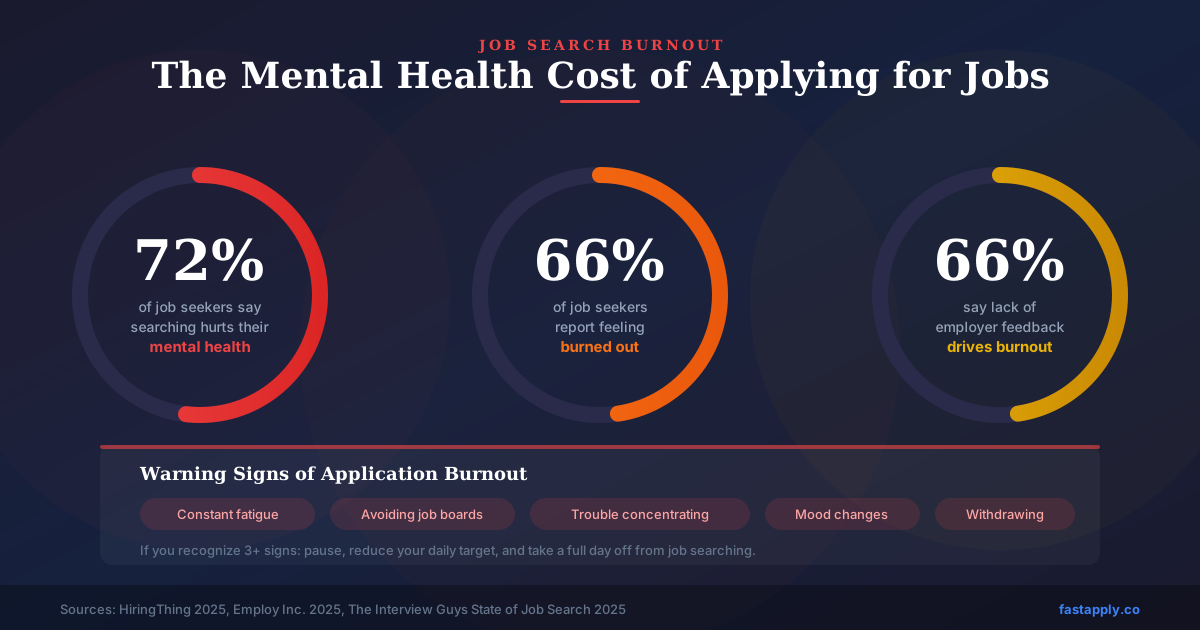
The numbers behind job search burnout are staggering. In a 2025 survey, 72% of U.S. job seekers said the job search negatively affected their mental health. About 66% of job seekers report feeling burned out by the process and 66% say that a lack of feedback from employers contributes to their burnout.
The burnout is not just emotional. It hurts your results. When you are exhausted and demoralized, your applications get sloppier. Your cover letters become generic. Your interview performance drops. Recruiters and hiring managers notice declining quality in applications from candidates who are burned out.
How to Prevent Burnout While Maintaining Volume
-
Set a daily cap. Pick a number between 2 and 5 and stop when you hit it. “Just one more” turns into sloppy applications that waste your time and the recruiter’s time.
-
Block your search hours. Treat your job search like a work shift with a clear start and end time. A 2025 CNBC article quoted career coach Jenna DeLorenzo recommending that seekers avoid checking their email first thing in the morning to reduce the stress of waiting for responses.
-
Track your metrics. Count applications sent, responses received, and interviews scheduled each week. If you are sending 30+ applications without a single response, the problem is not volume. It is targeting or materials.
-
Take full days off. No job searching on weekends. Your brain needs recovery time. This is a sustained effort, not a sprint.
How to Make Each Application Count (Instead of Blasting 50 a Day)
The average corporate job posting attracts 250 applicants. Of those 250, only 4 to 6 people get called for an interview. Only 1 gets the job.
With those odds, each application needs to stand out. Here is how to get more interviews from fewer applications.
-
Tailor Your Resume for Every Job
This is the single most impactful thing you do during your search. ATS (Applicant Tracking System) software screens out roughly 40% of applications before a human ever sees them. About 97.4% of Fortune 500 companies use ATS technology.
To pass ATS screening:
-
Mirror the language from the job description in your resume
-
Match your skills section to the specific requirements listed
-
Use standard section headers (Work Experience, Education, Skills)
-
Submit in .docx or PDF format unless the posting specifies otherwise
-
Write Targeted Cover Letters
Only 47% of job seekers submit a cover letter at all. Yet 56-83% of employers still want one. This means a tailored cover letter puts you ahead of about half of the applicant pool immediately.
-
Apply Early
Job postings get the most applications in the first 48-72 hours. Applying within the first few days puts your resume higher in the ATS queue. Set up job alerts on Indeed, LinkedIn, and Glassdoor so you see postings the day they go live.
Where FastApply Fits: Quality and Speed Without the Trade-Off
Here is the reality most job seekers face: they know tailoring works, but it takes 20-30 minutes per application. At 5 applications per day, that is 2-3 hours just on resume customization, not counting the time to find postings, write cover letters, and fill out forms.
FastApply’s AI that auto-applies for jobs removes the trade-off between quality and volume. The Chrome extension reads each job description and automatically tailors your resume to match. Relevant experience gets highlighted. Missing keywords get added where they fit naturally. The extension works across Indeed, LinkedIn, Glassdoor, Lever, Greenhouse, and Workday.
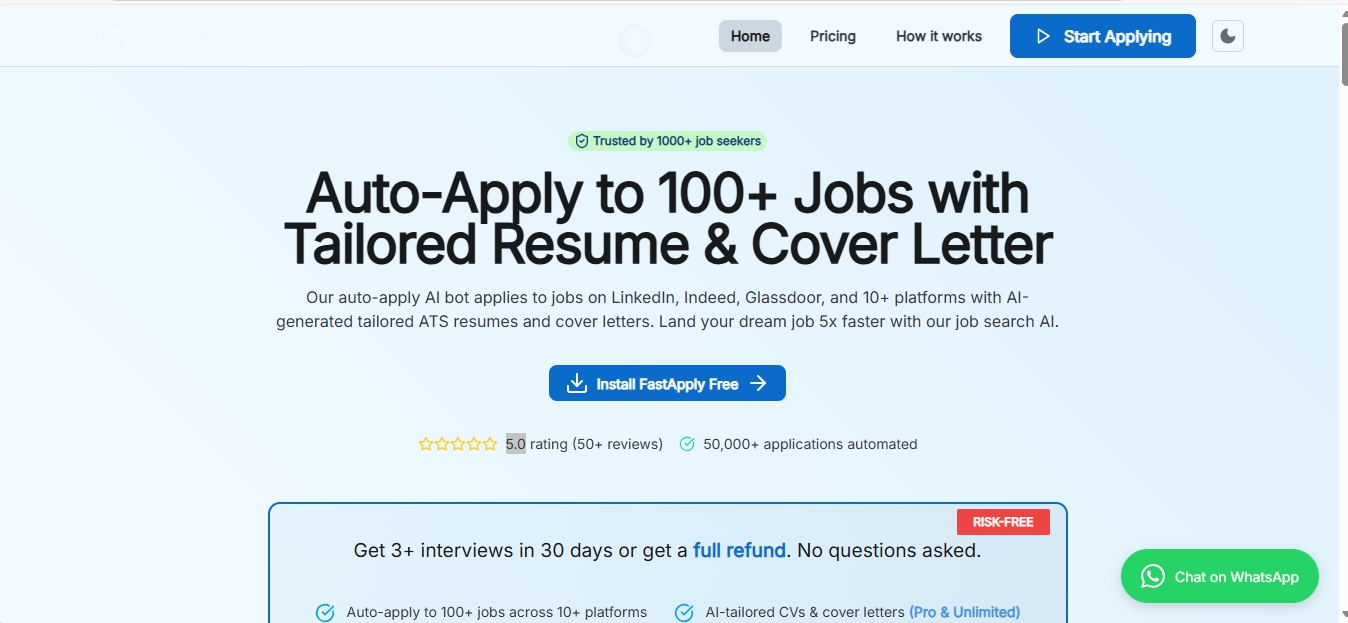
But the differentiator is what happens next. Unlike tools that blast generic applications everywhere, FastApply pauses before submission. You see the tailored resume, make any adjustments, and approve it before anything gets sent. This human-in-the-loop approach means you keep control. No embarrassing mismatches. No applications going out for roles that do not fit.
The math changes significantly. A 20-30 minute tailoring process becomes a 3-minute review. That means your 5 quality applications per day take 15 minutes of review time instead of 2+ hours of manual work. You get the volume you need without sacrificing the quality that gets interviews. The free tier covers your first 5 applications, and plans start at $14/month after that.
A Realistic Daily Job Search Schedule
Here is what a productive 3-4 hour job search day looks like:
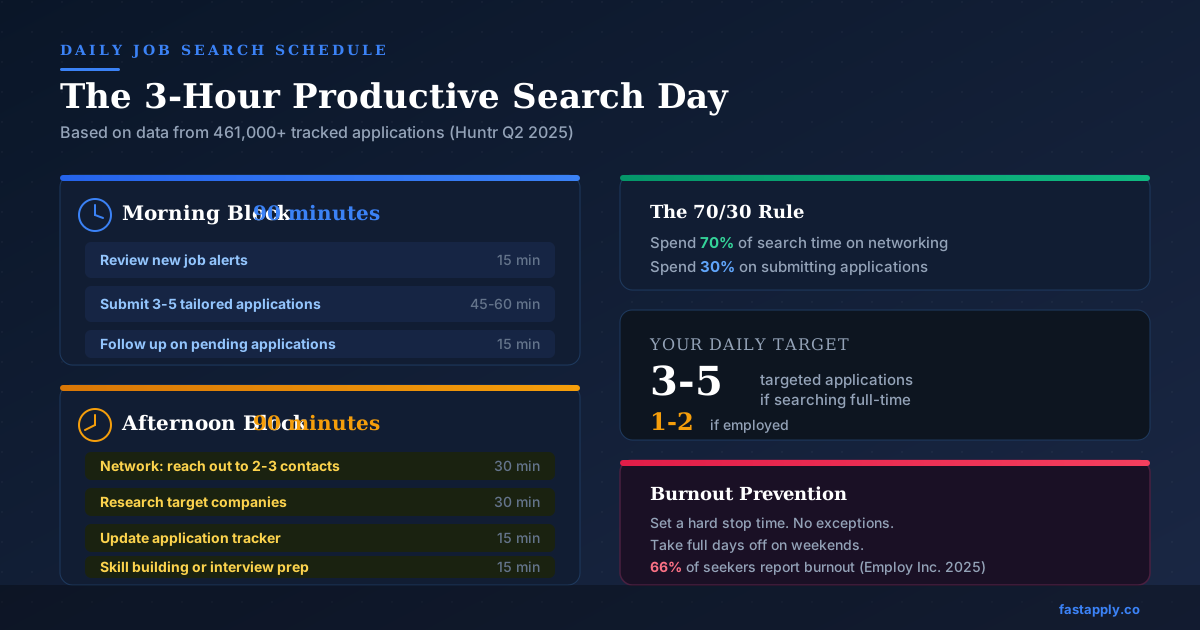
Morning (90 minutes):
- Review new job postings from alerts (15 minutes)
- Submit 3-5 tailored applications using FastApply or manual tailoring (45-60 minutes)
- Follow up on pending applications from 1-2 weeks ago (15 minutes)
Afternoon (90 minutes):
- Networking: reach out to 2-3 contacts at target companies (30 minutes)
- Research companies posting roles you want (30 minutes)
- Update your application tracker with today’s submissions (15 minutes)
- Skill building or interview prep (15 minutes)
This schedule balances application volume with the networking activity that the data shows produces better results. It also has a hard stop, which protects against the burnout that affects nearly two-thirds of job seekers.
What to Do If You Are Not Getting Interviews
If you have sent 30-50 applications with zero or near-zero interview invitations, the problem is not the number of applications. Something in your approach needs to change.
-
Check Your Resume Against ATS
Run your resume through an ATS scanner. Many free tools exist. If your resume scores below 70% match on jobs you are qualified for, your formatting or keyword usage needs work.
-
Audit Your Job Targeting
Are you applying for roles you are genuinely qualified for? Applying to 50 “stretch” roles per week is less effective than applying to 15 roles where you meet 80%+ of the requirements.
-
Get Feedback
Ask a recruiter, career coach, or trusted professional contact to review your resume and one or two of your recent applications. Outside perspective often catches issues you are too close to see.
-
Reconsider Companies That Already Rejected You
A rejection is not a closed door, and the wait depends entirely on how far you got. See whether you can reapply for a job you were rejected from, and note that applying to several roles at the same company is normal rather than something recruiters penalize.
-
Check for Ghost Jobs
Between 18% and 30% of online job postings in 2025 were ghost jobs, positions that employers had no immediate plan to fill. If you are applying to jobs that have been posted for months with no update, you are likely wasting time on dead listings.
The Current Job Market Context (2026)
Understanding the broader market helps set realistic expectations. As of January 2026, the U.S. unemployment rate sits at 4.3%, with nonfarm payroll employment rising by 130,000. The average time-to-hire has expanded to around 44 days.
Entry-level positions have dropped by 29 percentage points since January 2024 and companies are conducting 42% more interviews per hire than they did in 2021.
The labor market is not broken, but it demands a strategic approach. Blindly increasing your daily application count will not fix a targeting or quality problem. The data consistently points toward the same conclusion: targeted, well-crafted applications outperform volume every time.
FAQ
-
How many job applications should I send per day? For full-time job seekers, 3-5 targeted applications per day is a productive and sustainable target. For those searching while employed, 1-2 per day works well. The data from Huntr’s 2025 analysis shows the most common path to an offer requires 10-20 total applications with high customization.
-
How many applications does it take to get one interview? On average, about 42 applications lead to one interview, with only about 2.4% of applicants reaching the interview stage for any given role.
-
Is it better to apply to many jobs or fewer, more targeted ones? Targeted applications produce better results. The data shows that 21-80 highly customized applications outperform 100+ generic ones. Referred candidates are also 18x more likely to get hired than cold applicants.
-
How long does the average job search take in 2026? The median time to a first offer was 68.5 days in Q2 2025, a 22% increase from the previous quarter. Only 41% of job seekers found a role within one month.
-
What percentage of online job applications result in an offer? Online applications have a 0.1% to 2% success rate. Referrals have a significantly higher success rate, which is why networking should make up the majority of your search time.
-
How do I know if I am applying to enough jobs? Track your application-to-interview ratio. If you are getting 1 interview for every 20-30 targeted applications, you are performing above average. If you are sending 50+ with no callbacks, focus on improving your resume, targeting, and application quality rather than increasing volume.
-
What are the signs of job application burnout? Common signs include constant fatigue even after rest, avoiding job boards, trouble concentrating on applications, mood swings, and withdrawing from friends and family. If you experience these, reduce your daily target and take a full day off from searching.
#how many jobs should I apply to per day
#job applications per day
#how many applications to get a job
#application burnout

Fastapply Team
Career Experts