How to Get a Job With No Experience: The New Grad Guide for 2026
Graduation was supposed to be the starting line. For many new grads, it feels more like a stall.
You apply to roles that ask for “entry-level” experience, only to find requirements you don’t meet. You send out applications, tailor resumes, and still hear nothing back. Not because you’re unqualified but because the system is built to filter you out before you get a chance to prove yourself.
The data backs it up. As of late 2025, only 30% of bachelor’s degree graduates reported landing full-time roles in their field, according to Cengage Group. The underemployment rate has climbed to 42.5%, meaning nearly half of graduates are working in roles that don’t require a degree.
This guide breaks down what actually works when you have little to no formal experience, how to position what you have, where to find real opportunities, and how to apply at scale without blending into the noise.
Why the Entry-Level Market Is This Hard Right Now
Understanding the problem helps you stop blaming yourself and start solving it.
New grad hiring in 2025 peaked at a rate 44% lower than it did in May 2022, the last year before hiring began its downward trajectory, according to Gusto’s real-time payroll data. Employers projected just a 1.6% increase in hiring for the Class of 2026 compared to the Class of 2025, according to NACE’s Job Outlook 2026 survey.

Three forces are colliding at once:
-
Over-hiring hangovers. Companies hired aggressively in 2021 and 2022. Many of those employees are still in place and have not left. Fewer departures mean fewer openings.
-
AI and automation pressure. The rapid rise of generative AI is prompting some companies to rethink the structure of entry-level roles, automate routine tasks, or delay hiring while they evaluate how AI might reshape workflows.
-
The experience paradox. Nearly 90% of employers say they avoid hiring recent grads . Nearly 90% cite lack of real-world experience as the reason (60% cited this directly). That is the position every first-time worker finds themselves in.
None of this means the market is closed. It means you need a smarter strategy than your older siblings used five years ago.
What “No Experience” Means to a Hiring Manager
Most new grads read “3-5 years required” and close the tab. That is a mistake.
Employers writing entry-level job descriptions frequently paste requirements from mid-level roles without updating them. Entry-level roles often attract 400+ applications, so job descriptions get inflated to filter out the truly unqualified. The bar is set artificially high, not because they expect a new grad to have five years of experience, but because they want to narrow a flood.
What hiring managers look for in a new grad:
- Evidence of applied thinking: Class projects, freelance work, side projects, and competitions all count.
- Attitude toward learning: One in three hiring managers cite poor work ethic as a top complaint about recent grads. Show you are the exception.
- Communication: One in four hiring managers say graduates are underprepared for interviews. Being rehearsed and professional is already a differentiator.
- GPA, in some cases: 47% of hiring managers screen by GPA, up from 38% in 2024. If yours is strong, put it on the resume. If it is not, your projects and experience need to carry more weight.
The goal is to reframe your lack of full-time jobs as a different kind of proof of competence.
Building Your Experience Story Without a Job Title
Academic Projects That Read Like Work
Your capstone project, thesis, group assignment, or research paper is not just coursework. It is evidence that you shipped something.
Write about each project the way you would write a job bullet:
-
State what the project was (10 words max)
-
State what you did specifically (not “contributed to” but did)
-
State what the outcome was (grade, metric, presentation, publication)
-
Weak version: “Participated in a group marketing project for a consumer goods company.”
-
Stronger version: “Led a four-person team to develop a go-to-market strategy for a fictional consumer brand. Presented to a panel of three industry professionals. Received highest grade in a cohort of 40 students.”
Both describe the same thing. One sounds like experience. The other sounds like homework.
Internships, Freelance, and Volunteer Roles
Recent graduates who received job offers through internships were 10% more likely to secure an accepted offer before graduation, and over 80% of interns received an offer after applying to fewer than 10 positions.
If you did an internship, paid or unpaid, short or long, it belongs at the top of your resume. Treat it exactly as you would a full-time job entry.
If you did not intern, look at everything else:
- Freelance design, writing, coding, or tutoring work
- Running a student club or organization (this is project management)
- Volunteering with a structured deliverable
- Part-time retail or food service (transfers directly to customer service, conflict resolution, and time management roles)
Do not dismiss part-time or service jobs. Food service, driving, and in-person roles have the highest share of job postings requiring less than one year of experience. Working any of those jobs demonstrates reliability, which is not a given for new grads.
Personal Projects and Side Work
A portfolio of personal projects is table stakes in fields like software, design, writing, and marketing.
For tech: one clean GitHub repository with documented code and a README that explains the project beats a list of courses taken.
For creative fields: a website with three pieces of published work beats a PDF portfolio emailed on request.
For business and finance roles: a case study write-up on a public company acquisition, a financial model built for fun, or a mock marketing audit demonstrates the thinking employers pay for.
You do not need an employer to give you a project. Build one yourself, document it, and put it somewhere public.
Where to Find Entry-Level Jobs in 2026
Job Boards to Prioritize
Not all boards perform equally for new grads.
LinkedIn remains the primary platform for professional roles. Set up job alerts with filters for “Entry Level” or “Associate.” Apply within 24-48 hours of a posting going live. Applying within 48-72 hours of posting, when employers are most active, significantly improves your chances.
Indeed indexes postings from company career pages and has a large volume of entry-level listings. Use the “0-1 years experience” filter.
Handshake is built specifically for students and recent grads. Many employers post roles here that they do not post anywhere else, specifically to attract early-career candidates.
LinkedIn Easy Apply posts get buried. Find postings that require an application on the company’s own website, where competition is lower and your application is more likely to be read.
Glassdoor is useful for researching companies before you apply, not just for finding postings. Read reviews, check salary ranges, and understand what you are walking into.
Sectors With the Most Entry-Level Openings
Healthcare-related industries account for 27% of the job sectors where postings remain above pre-pandemic levels. Beyond healthcare, sectors hiring aggressively at the entry level include logistics, financial services, government, and education.
Companies in tech-driven metros like San Francisco and San Jose are seeing stronger gains in both new grad hiring and pay. If you are in or willing to relocate to a tech hub, your odds improve.
The Hidden Job Market
Nearly 17% of recent grads found their first job through referrals or networking, according to ZipRecruiter’s 2025 Graduate Report. Referrals boost interview chances by 10x compared to cold applications.
The hidden job market refers to roles filled before they are ever posted publicly. This happens through:
- Alumni networks. Your school’s alumni association and LinkedIn alumni network are underused. Search your school on LinkedIn, filter by “People,” then filter by “Connections” set to alumni. Message five people a week with a specific, short ask.
- Informational interviews. Ask for a 20-minute call, not a job. Most people will say yes to a 20-minute call. Some of those calls turn into referrals.
- Career fairs. In-person school career fairs are the one place where a new grad has equal footing with everyone else in the room.
- LinkedIn connection requests with context. A generic connection request gets ignored. A short note referencing a shared interest or their specific work gets answered.
How to Apply Without Wasting 300 Hours
Here is where most new grad job searches fall apart: the math.
It takes an average of 42 applications to land a single interview in 2025, with only 2.4% of candidates making it through to the interview stage. A typical corporate job opening receives approximately 250 applications. Entry-level postings attract more.
Only 0.1% to 2% of cold online applications result in a job offer. That is not a reason to stop applying. It is a reason to apply efficiently.
At 30 minutes per tailored application, reaching 100 applications takes 50 hours. Most new grads who tailor every application carefully run out of steam before they build real momentum. Most who fire off generic applications get filtered immediately by ATS systems.
The middle path: apply at enough volume to stay in the numbers game, but make each application specific enough to pass ATS and stand out to a human reader.
75% of resumes are automatically rejected by Applicant Tracking Systems before a human ever reviews them. ATS rejection happens when your resume does not include the exact language from the job description. Fix this by mirroring keywords from each posting in your resume’s skills and bullet points.
FastApply: The Tool Built for This Problem
Here is the reality most new grads face: tailoring resumes works, but it takes time you do not have when you need to apply to 100+ roles.
FastApply is a Chrome extension that reads each job description and tailors your resume to match before you apply. It also simplifies the step of finding roles by bringing 800,000+ listings from multiple platforms into one place, so you are not repeating the same searches across tabs.
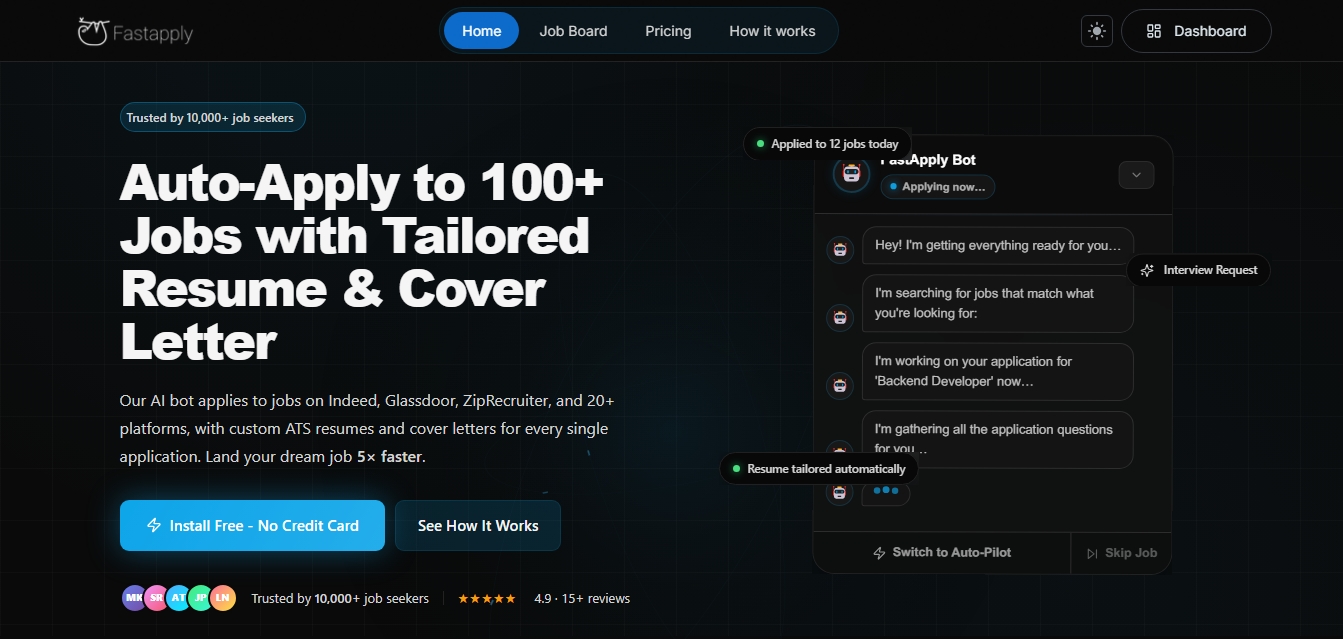
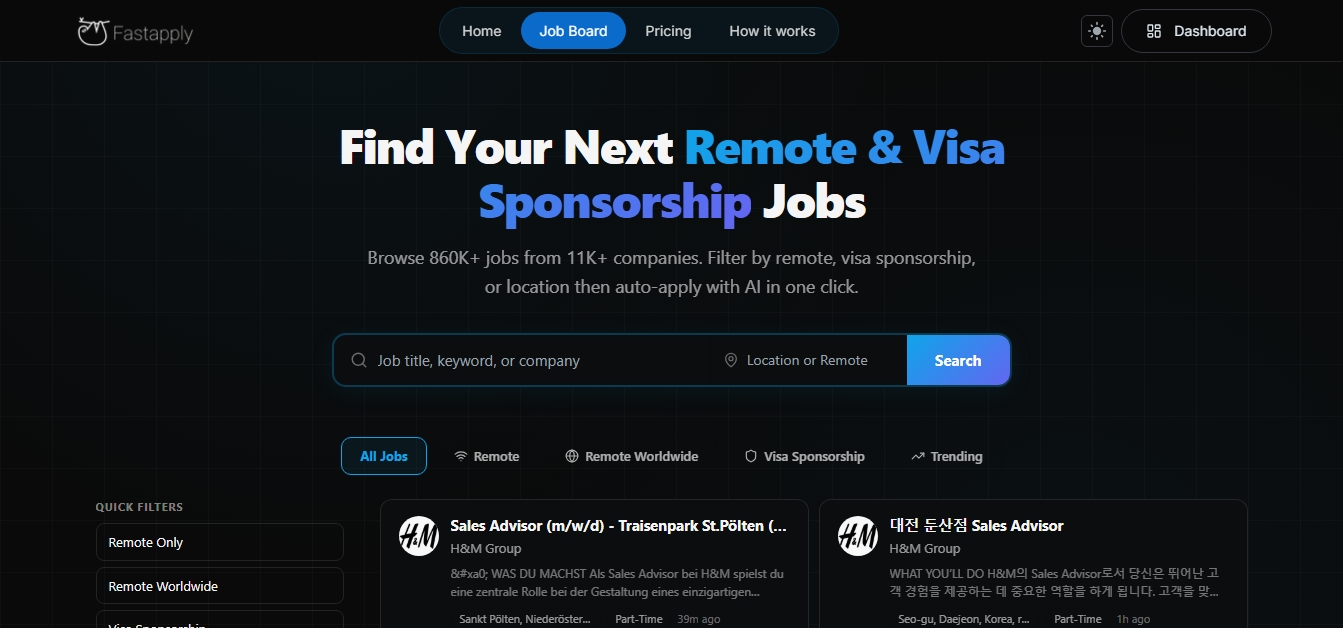
FastApply inputs keywords from the job posting into your resume and moves relevant experiences forward. Unlike fully automated tools that fire off generic applications without your review, FastApply pauses before submission. You see what will be sent, make any adjustments, and approve. A 30-minute manual process becomes a 3-minute review.
For new grads applying across multiple platforms including Indeed, Glassdoor, Lever, Greenhouse, and Workday. FastApply handles the repetitive work without removing you from the process. You stay in control. The volume problem gets solved without sacrificing the quality problem.
The Application Itself: What to Get Right
Resume for Entry Level in 2026
Your resume should be one page. Every line should answer one question: does this make me look ready to contribute on day one?
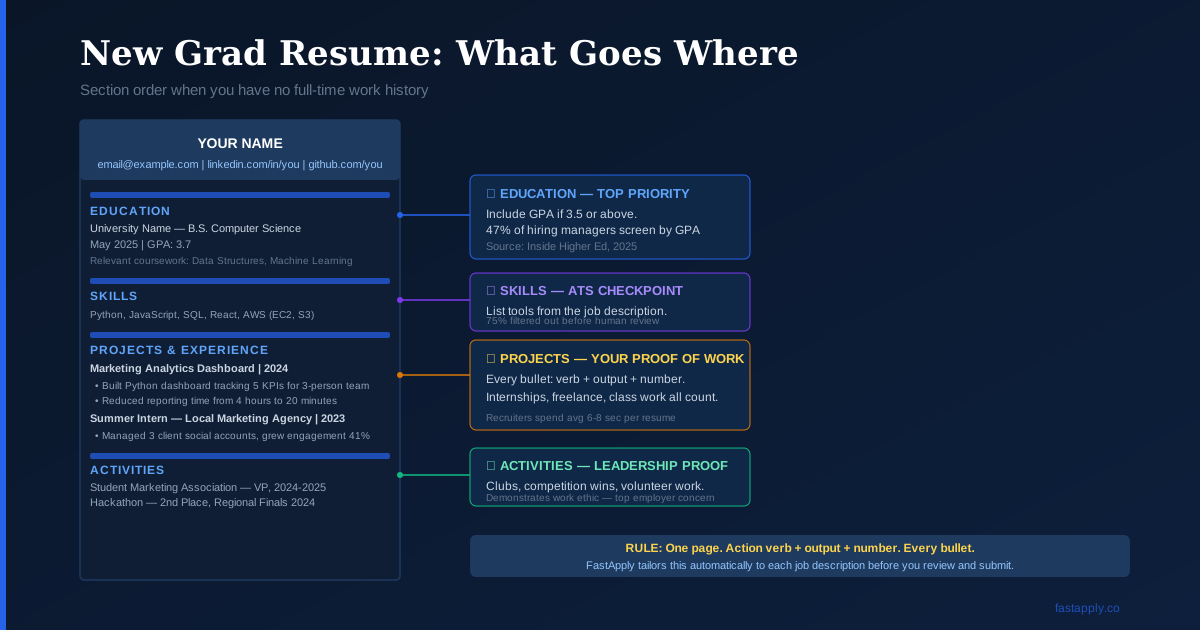
Order your sections like this if you have no full-time work history:
- Name and contact information
- Education (GPA if 3.5+, relevant coursework if directly applicable)
- Skills (technical skills, tools, languages)
- Projects or Experience (combine internships, freelance, and projects)
- Activities or volunteer work
What every bullet needs:
- An action verb at the start (built, analyzed, managed, wrote, designed)
- A specific output or result, not a description of your task
- A number wherever one exists (team size, percentage improvement, dollar value, user count)
Recruiters spend an average of 6 to 8 seconds reviewing a resume, and only 1 in 4 resumes reach a human reviewer at all. Write for the first scan, not for someone reading every word.
Cover Letters: When They Matter
Cover letters matter most for small companies and roles that specifically request them. For high-volume applications to large companies, they rarely influence decisions.
When you do write one:
- Open with a direct statement about why this specific company, not why you want a job in general
- Connect one project or experience to one specific need stated in the job description
- Keep it to three short paragraphs
Do not restate your resume. The cover letter adds context the resume cannot.
Following Up
Send a follow-up email one week after submitting if you have not heard back. Keep it to two sentences. Confirm your application, express continued interest, and offer to provide anything additional.
Most applicants do not follow up. The ones who do are remembered.
What to Do When Applications Stop Working
If you have sent 50+ applications and received fewer than 5 responses, something specific is broken. Run this diagnostic:
Problem 1: No responses at all. Your resume is likely failing ATS or your targeted roles are misaligned with your qualifications. Get a free ATS check from a tool like Jobscan, and honestly assess whether the roles you are targeting require more than what you have.
Problem 2: ATS passes, no interview calls. Your resume reaches a recruiter and does not land. This usually means your bullet points describe duties instead of accomplishments, or your formatting signals “student” rather than “professional.”
Problem 3: Getting interviews but no offers. This is an interview preparation problem, not an application problem. Record yourself answering common questions. Get feedback from someone who will be honest with you. Practice out loud, not in your head.
Problem 4: Burnout. 72% of job seekers report negative mental health impacts from long hiring processes and poor employer communication. Burnout is a real obstacle, not a character flaw. Set a daily application goal (five solid applications is a productive day), build in non-job-search hours, and track progress in a spreadsheet so you can see momentum even when it feels invisible.
FAQ: How to Get a Job With No Experience
Q: Do I need to have an internship to get an entry-level job?
No, but it helps significantly. About 35% of workers enter the workforce without an internship or other relevant work experience. Without an internship, your projects, freelance work, and academic achievements need to do more heavy lifting on your resume.
Q: Should I apply if I meet fewer than half the requirements?
Apply if you meet 60-70% of the requirements. 51% of employers say they hire across majors that fall both inside and outside their industry. Requirements on job postings are wish lists, not contracts.
Q: How many jobs should I apply to per week?
Applying to 10-15 jobs per week, or two to three per day, is a sustainable pace that allows you to customize each application, according to Indeed’s career guidance. Five targeted, tailored applications in a day produce better results than 30 generic ones.
Q: Is it worth applying to roles that say “3+ years experience required”?
For entry-level in title only, yes. For roles genuinely requiring years of applied professional experience, no. Your time is better spent on roles you can make a strong case for.
Q: How do I answer “tell me about your experience” if I have none?
Reframe the question in your head. You have experience, just not full-time job experience specifically. Talk about your most relevant project, internship, volunteer role, or part-time job using the STAR method (Situation, Task, Action, Result). Be specific and confident. Vagueness is what loses interviews, not the type of experience you are drawing from.
Q: How long does a typical new grad job search take?
The average job seeker takes 24 weeks to complete the hiring process and find a job. For new grads in a competitive market, plan for six months as a realistic baseline. Starting earlier, networking more, and applying at higher volume reduces that timeline.
Q: What are the best industries for new grads right now?
Healthcare, technology, financial services, and logistics are the strongest sectors in 2026. Within tech, roles that involve AI, data, and cloud infrastructure are attracting the most new-grad hiring. Healthcare is particularly strong because demand for workers is structural, not cyclical.
#how to get a job with no experience
#new grad job search
#entry level job tips
#first job after college

Fastapply Team
Career Experts