How to Land a Tech Job in the USA in 90 Days
Landing a tech job in 2026 requires an active plan. The average time to fill a tech position in the U.S. is 41 days, and senior technical roles often stretch well beyond that. Job seekers apply to anywhere from 32 to 200+ positions before landing an offer, with tech sitting at the high end of that range.
But here is the good news: the U.S. Bureau of Labor Statistics projects roughly 317,700 openings in computer and IT occupations every single year through 2034. The jobs exist, you just need a system to land one in 90 days or less.
This guide breaks down a week-by-week plan to go from “starting my search” to “signing my offer letter” in three months flat.
The 2026 Tech Job Market: Where the Opportunities Are
Before you start applying, you need to know where hiring is strongest. The tech job market in 2026 is selective but active. Employers posted nearly 1.1 million technology jobs in 2025, according to Robert Half’s hiring analysis. And 61% of technology leaders plan to increase permanent headcount in the first half of 2026.
The hottest areas for hiring, per the same Robert Half analysis include:
- AI, ML, and data science: 49,200 postings in 2025, up 163% from 2024
- Cybersecurity: 66,800 postings in 2025, up 124% year over year
- Software development: 15% projected growth through 2034, with about 129,200 openings annually
- Cloud infrastructure and DevOps: Consistent demand as companies modernize systems
The Bureau of Labor Statistics reports that the median annual wage for computer and IT occupations reached $105,990 in 2024. Professionals with AI and machine learning expertise command a 15-25% salary premium over generalist counterparts.
The bottom line: companies are hiring, but they are being deliberate about it. They want specialized skills, proof of ability, and candidates who stand out from the noise. Your 90-day plan needs to account for that reality.
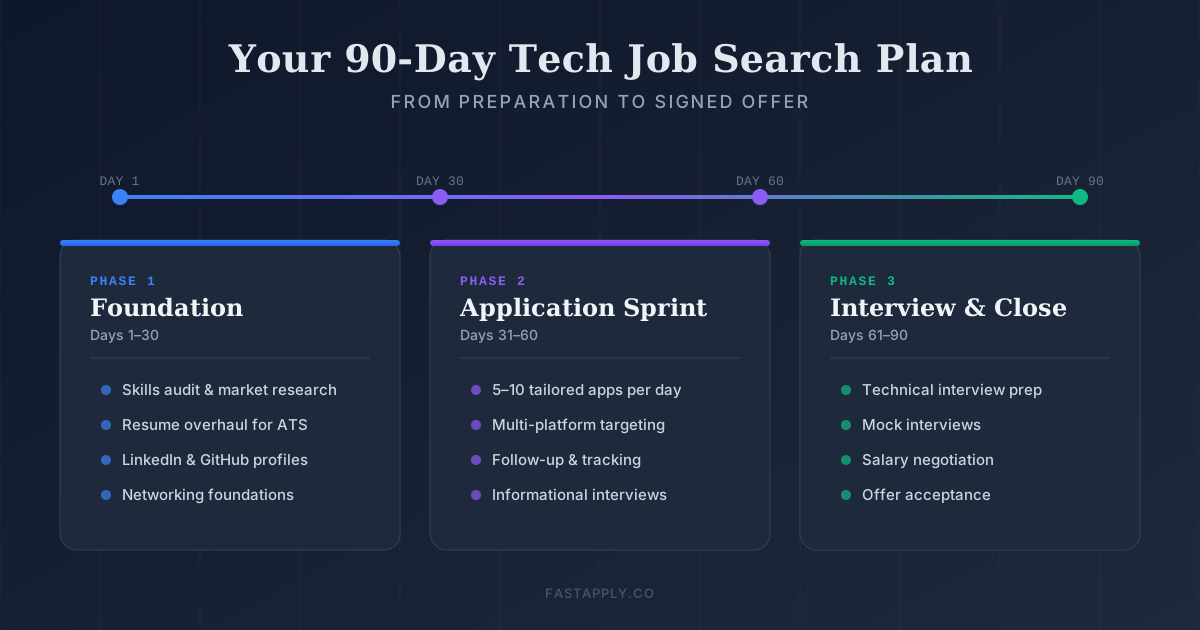
Phase 1: Foundation Building (Days 1-30)
The first month is about preparation, not applications. Spend these 30 days building a foundation that makes every future application count.
-
Week 1: Skills Audit and Market Alignment
Start by mapping your existing skills against what employers are hiring for right now. Python, AWS, APIs, CI/CD, and AI has been ranked among the top five tech skills with the largest year-over-year increase in job listings.
Action items for Week 1:
- List every technical skill you have, including tools, languages, and frameworks
- Search 30-50 job postings for your target role on LinkedIn, Indeed, and Glassdoor
- Identify the top 10 skills that appear most frequently in those postings
- Highlight the gaps between your current skills and what employers demand
- Choose 1-2 high-impact skills to build or sharpen during your 90-day sprint
If you are targeting AI-related roles, know that 78% of information and communications technology positions now include AI technical skills, according to the AI Workforce Consortium report led by Cisco. Even if AI is not your specialty, basic AI literacy gives you a competitive edge for almost any tech role in 2026.
-
Week 2: Resume Overhaul for ATS and Humans
Your resume for tech jobs needs to clear automated tracking systems before a human ever sees it.
Build your resume with these principles:
- Use a clean, single-column format with standard section headers (Experience, Education, Skills, Projects)
- Mirror the exact language from job descriptions in your skills section
- Quantify every accomplishment with numbers (revenue generated, users served, performance improved by X%)
- Remove outdated technologies that no longer appear in current job postings
- Keep it to one page for under 10 years of experience, two pages maximum for senior roles
Write a master resume that includes all your relevant experience. Then tailor it for each application by adjusting the skills section and reordering bullet points to match the job description.
This is where the manual process breaks down for most people. Tailoring 100+ resumes at 20-30 minutes each adds up to 50-100 hours of repetitive work. FastApply solves this problem directly. The Chrome extension reads each job description and automatically tailors your resume to match the position. Keywords get emphasized and relevant experiences move to the top. Unlike fully automated tools that spray generic applications everywhere, FastApply lets you review the process before submission. That 30-minute tailoring process becomes a 3-minute review.
-
Week 3: Build Your Online Presence
A LinkedIn profile is no longer optional. Recruiters and hiring managers check your online presence before scheduling interviews. According to the Dice 2025 Tech Salary Report, 47% of tech professionals were actively pursuing new roles in 2025, meaning your profile competes with a large share of the industry.
Strengthen your LinkedIn profile by:
- Writing a headline that names your target role and top skill (e.g., “Software Engineer | Python & AWS | Building Scalable Backend Systems”)
- Adding a summary that reads like a pitch, not a biography
- Listing 3-5 projects with measurable results
- Requesting recommendations from past colleagues or managers
- Setting your profile to “Open to Work” (visible to recruiters only if you prefer privacy)
To further enhance your professional online presence, refer to our detailed guide on LinkedIn strategy
Also, set up or update your GitHub profile. For developers, a clean GitHub with 2-3 well-documented projects speaks louder than a resume bullet point. Include a README for each project that explains the problem, your solution, and the tech stack.
-
Week 4: Networking Foundations
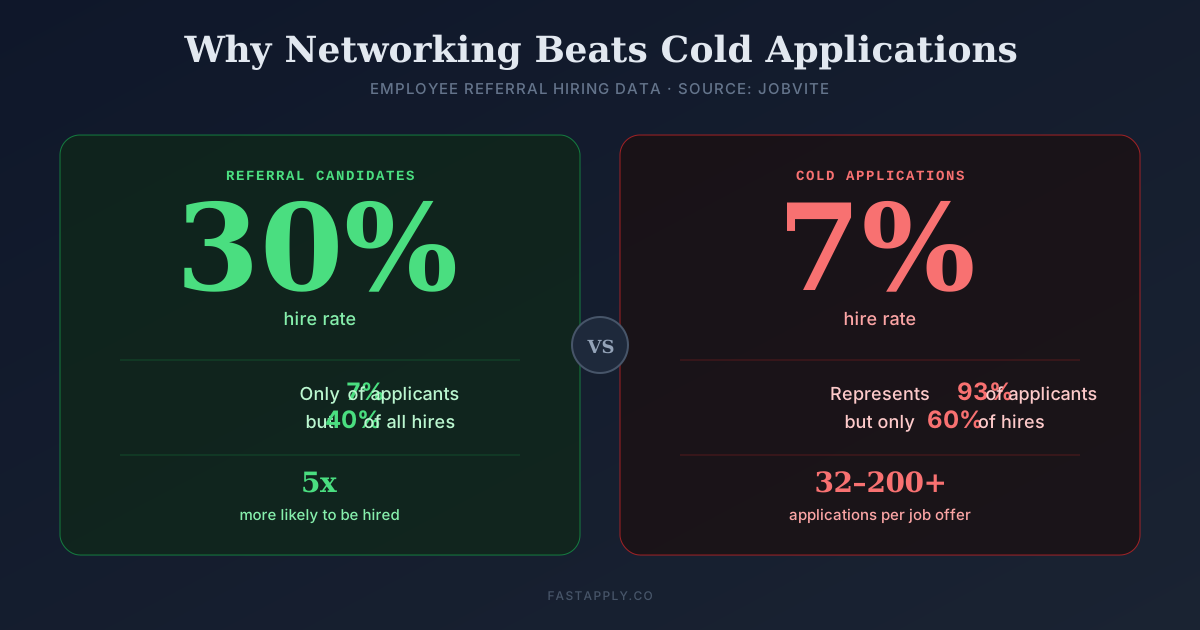
Networking remains the single most effective job search strategy. Referred candidates are hired at a rate of about 30%, compared to an average rate of 7% for applicants sourced through other methods. Studies also shows that while only 7% of applicants come from referrals, they account for 40% of all hires. Networking is not optional in your 90-day plan.
Start building your network this week:
- Identify 20 companies you want to work for
- Find 2-3 employees at each company on LinkedIn (aim for people in your target department)
- Send personalized connection requests (mention a shared interest, a project they worked on, or a company initiative you admire)
- Join 2-3 relevant tech communities on Discord, Slack, or Reddit
- Attend at least one virtual or in-person tech meetup or webinar
Do not ask for a job in your first message. Build genuine relationships first. Ask about their experience at the company, what they are working on, or what skills they value most. The job referrals come naturally after you build rapport.
Phase 2: Active Application Sprint (Days 31-60)
With your foundation set, month two is about volume with quality. Your goal is to submit 5-10 tailored applications per day while continuing to network.
Week 5-6: Targeted Applications Across Multiple Platforms
Do not put all your applications on one platform. Spread your efforts across the major job boards and company career pages.
Where to focus your applications:
- LinkedIn: Largest professional network with strong tech job listings. Use the “Easy Apply” filter and saved job alerts for your target roles.
- Indeed: High volume of postings across all experience levels. Set up daily email alerts for your target keywords.
- Glassdoor: Useful for company reviews and salary data alongside job listings.
- Company career pages: Many companies post jobs on their own sites before listing them on boards. Check the careers pages of your top 20 target companies weekly.
- ATS platforms like Lever, Greenhouse, and Workday: Many mid-size and large companies use these systems. Understanding how they work gives you an advantage in formatting your application.
At this pace, you are looking at 50-100 applications over two weeks. Without automation, that means 25-50 hours of resume tailoring alone. FastApply works across Indeed, LinkedIn, Glassdoor, Lever, Greenhouse, Workday, and dozens of other platforms. The extension detects the job posting, pulls the description, and generates a tailored resume and cover letter. You review and approve each one before submission. This workflow turns a full day of applications into a focused morning session.
Week 7-8: Follow-Up and Tracking
Most candidates never follow up after applying. That is a missed opportunity. A polite follow-up email one week after applying shows genuine interest and puts your name back in front of the hiring team.
Track every application with these details:
- Company name and role title
- Date applied
- Platform used
- Contact person (if known)
- Follow-up date
- Current status (applied, phone screen, interview, offer, rejected)
Use a spreadsheet, Notion board, or a dedicated tool to stay organized. FastApply includes application tracking so you keep a record of every position you have applied to without maintaining a separate system.
During this phase, continue networking. Aim for 3-5 informational conversations per week. When you apply to a company where you have a connection, ask if they would be willing to put in a referral. That single action multiplies your chances of getting an interview.
Phase 3: Interview Preparation and Closing (Days 61-90)
By month three, you should have callbacks and interviews lined up. This final phase is about converting those opportunities into offers.
Week 9-10: Technical Interview Preparation
Tech interviews in 2026 remain rigorous. Companies now conduct 42% more interviews per hire than they did in 2021. Prepare for multiple rounds, including coding challenges, system design, behavioral questions, and take-home assignments.
Build a study plan around these areas:
- Data structures and algorithms: Practice on LeetCode, HackerRank, or NeetCode. Aim for 2-3 problems daily, focusing on medium-difficulty questions.
- System design: Study common patterns like load balancing, caching, database sharding, and microservices architecture. The “System Design Interview” book by Alex Xu is a solid resource.
- Behavioral questions: Prepare 8-10 stories using the STAR method (Situation, Task, Action, Result). Focus on teamwork, conflict resolution, leadership, and handling failure.
- Domain-specific knowledge: If you are targeting AI/ML roles, review statistics, model evaluation, and common frameworks (TensorFlow, PyTorch). For cybersecurity, brush up on threat modeling and security protocols.
Week 11: Mock Interviews and Refinement
Practice under realistic conditions. Schedule mock interviews with friends, mentors, or platforms like Pramp and Interviewing.io. Record yourself if possible and review your answers for clarity, conciseness, and confidence.
Common mistakes to avoid in tech interviews:
- Jumping into coding without asking clarifying questions
- Failing to talk through your thought process out loud
- Ignoring edge cases in your solutions
- Not asking the interviewer thoughtful questions about the team or product
- Underselling your past achievements during behavioral rounds
Week 12: Negotiation and Offer Acceptance
When offers arrive, do not accept the first number you see. The CompTIA State of the Tech Workforce 2025 report found that the median wage for tech workers is 127% higher than the median national wage. You have room to negotiate.
Negotiate with confidence:
- Research salary ranges for your role and location on Glassdoor, Levels.fyi, and Blind
- Ask for 24-48 hours to review any offer
- Negotiate base salary first, then bonuses, equity, remote flexibility, and PTO
- Use competing offers as a reference point if you have them
- Be professional and gracious throughout the process. Hiring managers expect negotiation and respect candidates who advocate for themselves.
The Skills That Get You Hired
The tech roles with the strongest demand right now share a common thread: they sit at the intersection of technical depth and business impact.
High-Demand Technical Skills
According to the IEEE-USA 2026 Tech Hiring Outlook, the five skills with the largest year-over-year increase in tech job listings are Python, AWS, APIs, CI/CD, and AI. Data management and data analytics for AI implementation will be among the most sought-after skills in 2026.
If you are making a career change into tech, focus on one of these high-demand paths:
- Software development: Learn Python or JavaScript, build 2-3 portfolio projects, and earn a cloud certification (AWS Cloud Practitioner or Azure Fundamentals)
- Data science: Study Python, SQL, statistics, and a visualization tool like Tableau. Complete a capstone project with a real dataset.
- Cybersecurity: Earn CompTIA Security+ or Google Cybersecurity Certificate. Set up a home lab to practice threat detection.
- Cloud/DevOps: Get certified in AWS or Azure. Learn Docker, Kubernetes, and Terraform through hands-on projects.
The Rise of Skills-First Hiring
A degree still matters, but less than it used to. The number of HR leaders using skills-first hiring has tripled in two years, according to the General Assembly’s State of Tech Talent 2025 report. This means certifications, bootcamps, and portfolio projects carry real weight, especially for roles in software engineering, data analytics, and UX design.
Coursera, edX, and Google Career Certificates all offer programs that employers recognize. The Harvard Extension School’s professional development courses also provide strong credentials if you want an academic-backed option.
Common Mistakes That Extend Your Job Search Beyond 90 Days
Plenty of qualified candidates take six months or longer to find a tech job. Here is what separates the 90-day success stories from the prolonged searches.
-
Applying without tailoring: Generic resumes get filtered out. Every application needs customization, even if it is just adjusting the skills section and top three bullet points. FastApply handles this automatically, keeping your applications tailored at scale.
-
Ignoring networking: Cold applications have a 0.1-2% success rate. Referrals have a 30% success rate. The math is clear. Spend 30-40% of your job search time building relationships.
-
Over-preparing and under-applying: Some candidates spend months studying for interviews before sending a single application. Start applying by day 31 at the latest. You will learn more from real interviews than from another week of LeetCode.
-
Not tracking results: If you do not know your conversion rates (applications to interviews, interviews to offers), you do not know what to fix. Track everything and adjust your approach every two weeks.
-
Targeting only FAANG companies: Big tech companies receive hundreds of thousands of applications. Mid-size companies and startups often hire faster (12 days average versus 42 days at enterprise companies) and offer competitive compensation with equity upside.
Frequently Asked Questions
-
How many applications does it take to get a tech job in 2026?
Studies show a wide range, from 32 to 200+ applications for a single offer. The number drops significantly when you tailor each resume and include referrals. Candidates with employee referrals are 5 times more likely to get hired than cold applicants.
-
What is the average salary for tech jobs in the USA in 2026?
The Bureau of Labor Statistics reports a median annual wage of $105,990 for computer and IT occupations as of 2024. Salaries range from approximately $50,000 at entry level to nearly $200,000 for senior roles. AI and ML specialists earn a 15-25% premium over generalist tech workers.
-
Do I need a computer science degree to get a tech job?
Not always. Skills-first hiring has tripled among HR leaders in the past two years. Certifications from Google, AWS, CompTIA, and recognized bootcamps now carry significant weight. A strong portfolio of projects and relevant certifications opens doors at many companies.
-
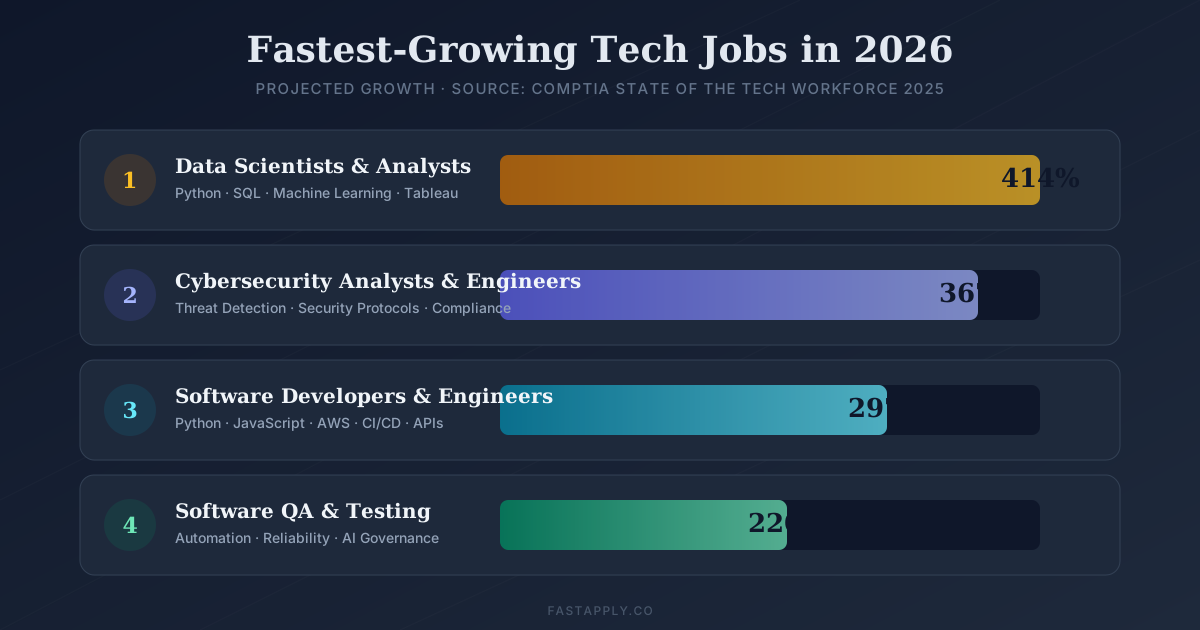
What are the fastest-growing tech jobs in 2026?
Data scientists and data analysts (414% projected growth), cybersecurity analysts and engineers (367% projected growth), and software developers and engineers (297% projected growth), according to CompTIA’s 2025 State of the Tech Workforce report.
-
How long does the tech hiring process take?
The average time-to-hire across all industries sits at about 42 days. For senior technical positions, expect up to 68 days. AI and ML roles take the longest, averaging 89 days. Plan your timeline accordingly and keep multiple applications active simultaneously.
-
Does FastApply work on all job platforms?
FastApply works across major platforms including Indeed, LinkedIn, Glassdoor, and ATS systems like Lever, Greenhouse, and Workday. The Chrome extension detects job postings, generates tailored resumes and cover letters, and pauses for your review before submitting.
-
What tech certifications are most valuable in 2026?
AWS certifications (Cloud Practitioner, Solutions Architect), CompTIA Security+, Google Career Certificates in Data Analytics or Cybersecurity, and Azure Fundamentals all rank highly among employers. AI-specific certifications are growing in demand as 81% of hiring managers now consider AI-related skills a hiring priority.
Your 90-Day Timeline at a Glance
| Phase | Days | Focus | Weekly Goal |
|---|---|---|---|
| Foundation | 1-7 | Skills audit and market research | Map skills to 50 job postings |
| Foundation | 8-14 | Resume overhaul | Build ATS-friendly master resume |
| Foundation | 15-21 | Online presence | Complete LinkedIn and GitHub profiles |
| Foundation | 22-30 | Networking launch | Connect with 40-60 professionals |
| Application Sprint | 31-44 | Targeted applications | 5-10 tailored applications per day |
| Application Sprint | 45-60 | Follow-ups and tracking | 3-5 informational calls per week |
| Interview and Close | 61-75 | Technical interview prep | 2-3 coding problems daily |
| Interview and Close | 76-84 | Mock interviews | 3-4 practice sessions |
| Interview and Close | 85-90 | Negotiation and acceptance | Close your best offer |
#How to land a tech job in USA
#land a tech job in 90 days
#90 days tech job plan
#2026 tech job plan

Fastapply Team
Career Experts