
Job Application Burnout Is Real: How to Apply to 50+ Jobs a Week Without Losing Your Mind (2026)
Job searching is one of the most mentally exhausting things a person can do. You send out dozens of applications and hear nothing back. You’ve tailored your resume for the fifth time this week, refresh your inbox, and wonder what you are doing wrong.
You are not imagining it. Job application burnout is a documented, measurable problem and the current job market makes it worse than ever. This guide breaks down why burnout happens, what it costs you, and how to build a sustainable rhythm that lets you apply to 50 or more jobs a week without burning out by Thursday.
What Job Application Burnout Actually Looks Like
Burnout is not just feeling tired. It is a specific pattern of symptoms that builds up over weeks of repetitive, high-stakes, low-feedback work - exactly what job searching delivers.
Warning signs include:
- You open a job board and immediately feel dread instead of motivation
- You start applications and abandon them halfway through
- You send out generic, unedited resumes because tailoring feels pointless
- Sleep quality drops, but you still feel exhausted during the day
- You avoid checking your email because rejections feel worse than silence
- You withdraw from conversations with people who ask “how’s the job search going?”
These are not character flaws. They are physiological stress responses to a process designed without your mental health in mind.
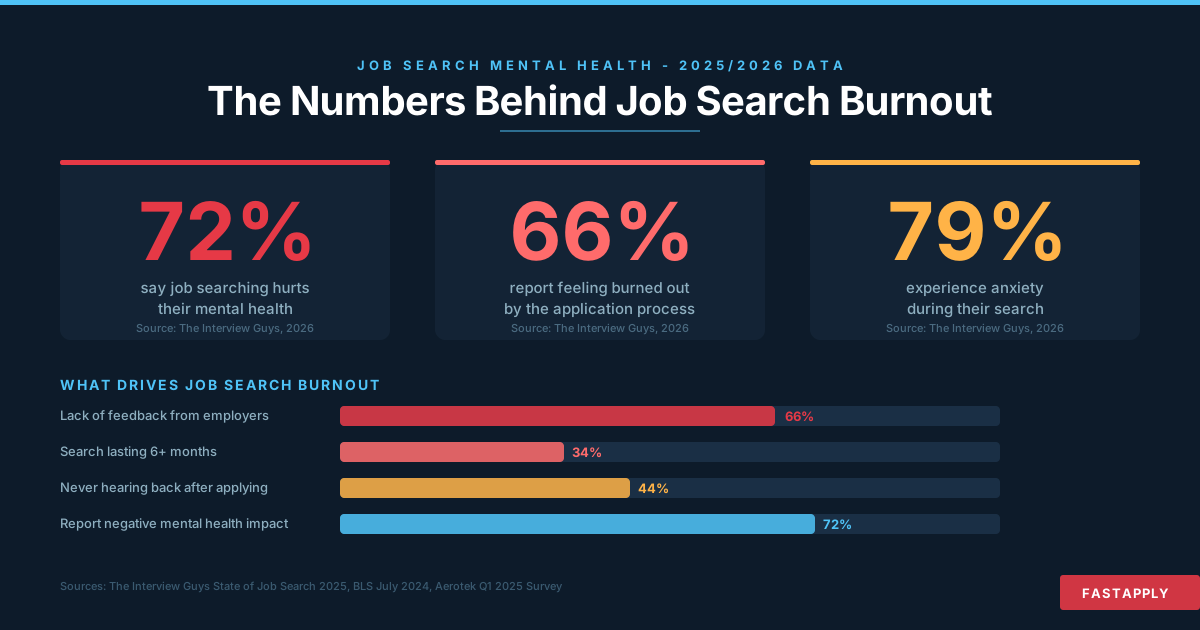
The data confirms how widespread this is. 72% of job seekers report that job searching negatively impacts their mental health, 79% experience anxiety during the job search, and 66% report feeling burned out by the process. That last number is not a small minority. Two-thirds of people actively looking for work are running on empty.
Why the 2025–2026 Job Market Makes Burnout Worse
Burnout thrives on a specific combination: high effort, low control, and uncertain rewards. Today’s job market delivers all three.
-
Searches take longer than they used to
U.S. Bureau of Labor Statistics data shows that the median unemployment duration in July 2024 was 20.6 weeks, or about five months. That is five months of daily applications, waiting, and rejection before most people land something. By mid-2025, roughly one-third of workers reported job searches lasting six months or longer.
Prolonged uncertainty is a primary driver of burnout. Career coach Jen DeLorenzo notes that her clients who are used to finding a job in one to two months are now waiting six months to over a year to land a handful of interviews, and burnout tends to creep in during those prolonged periods of searching.
-
The volume required has gone up
A Pathrise analysis of tech job seekers found that in 2024 the average candidate needed 294 applications to land one offer, up from about 254 the year before. Even in more accessible sectors, LinkedIn now processes around 11,000 job applications per minute, while only a handful of hires happen in the same window.
When you need that many applications to get results, applying slowly is not an option and applying fast without a system is a fast track to burnout.
-
Feedback is almost nonexistent
55.3% of applicants cite waiting to hear back after applying or interviewing as their top frustration. 66% of job seekers say lack of feedback contributes to their burnout.
Humans need signals that their effort is producing results. The job search process strips those signals away at almost every step. You apply, and nothing happens. You interview, and nothing happens. You follow up, and nothing happens. The nervous system reads this as failure, even when the process is simply broken.
The Real Cost of Pushing Through Without a System
Many job seekers respond to burnout by pushing harder; more applications, longer hours, more tailoring. This approach backfires in a specific, measurable way.
-
Quality drops before you notice
When you are burned out, the first thing to go is attention to detail. You miss typos. You forget to change the company name in a cover letter. You apply to roles that do not match your experience because volume feels like progress. A burned-out application is almost always a worse application than a focused one.
-
The process takes longer
The average job application takes between 15 and 30 minutes to complete properly. CareerBuilder research found that the average job seeker does not want to complete an application that takes longer than 20 minutes. At 50 applications a week, that is 12 to 25 hours of work before you account for resume tailoring, cover letters, and follow-ups. Burned-out people work slower and make more errors, which means they spend more time, not less, on each application.
-
Burnout compounds
Warning signs of burnout include constant fatigue even after sleep, avoiding job boards and applications, difficulty concentrating, mood changes like irritability and frustration, and withdrawing from loved ones. Each of those symptoms makes the next week harder. A burned-out job seeker in month four applies less effectively than they did in month one, which extends the search further, which deepens the burnout.
How to Apply to 50+ Jobs a Week Without Burning Out
The solution is not to apply less. In a market where 64% of surveyed job seekers said they landed a job after submitting 25 or fewer applications, but a meaningful minority still needed 100 or more applications before getting hired, volume matters. The solution is to protect your energy through structure.
1. Set a daily cap and stop when you hit it
Treating the job search like a full-time job with no end time is the most common mistake. Career coach DeLorenzo recommends applying to jobs in focused batches of one to two hours throughout the day, then fully disconnecting to run, walk, or read.
Set a specific number of applications per day: 8 to 12 is a realistic target for quality applications and stop when you reach it. The discipline is not in doing more. It is in stopping.
2. Separate research from applying
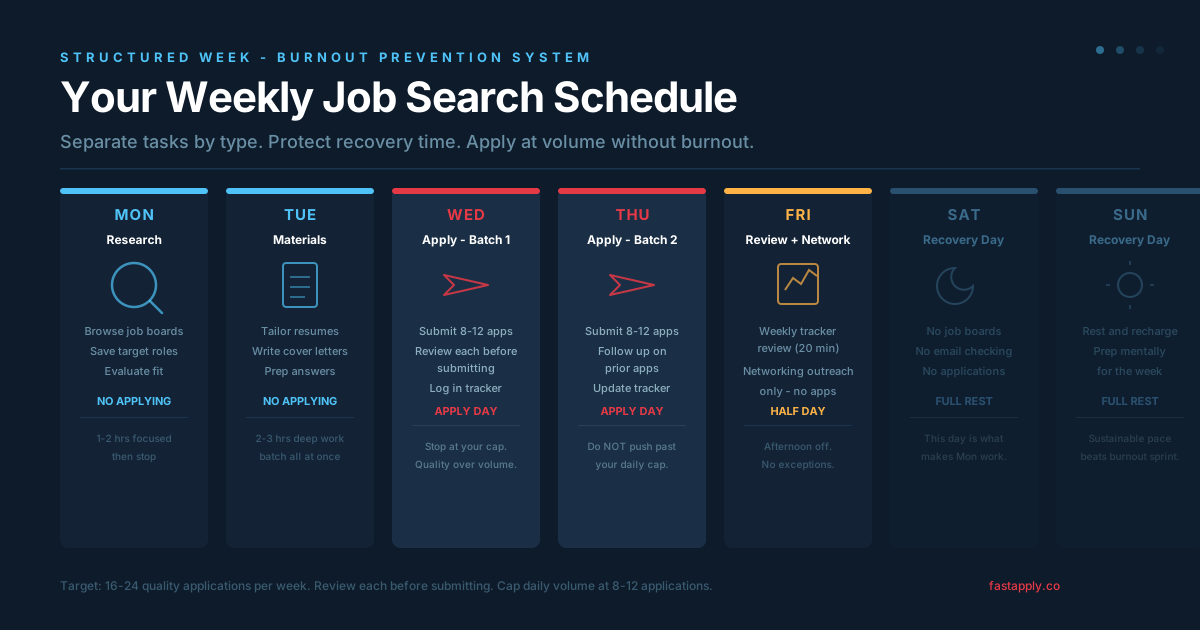
Most burnout comes from context-switching. Finding relevant jobs, evaluating them, tailoring materials, and submitting applications all require different mental modes. Doing them in the same session drains energy fast.
Instead, batch tasks by type:
- Monday and Tuesday mornings: source and save job listings, do not apply yet
- Tuesday through Thursday: write and tailor application materials
- Friday morning: batch-submit the week’s applications and track everything
This separation keeps each task focused and prevents the fatigue that comes from switching gears every 20 minutes.
3. Build a master document library before you start
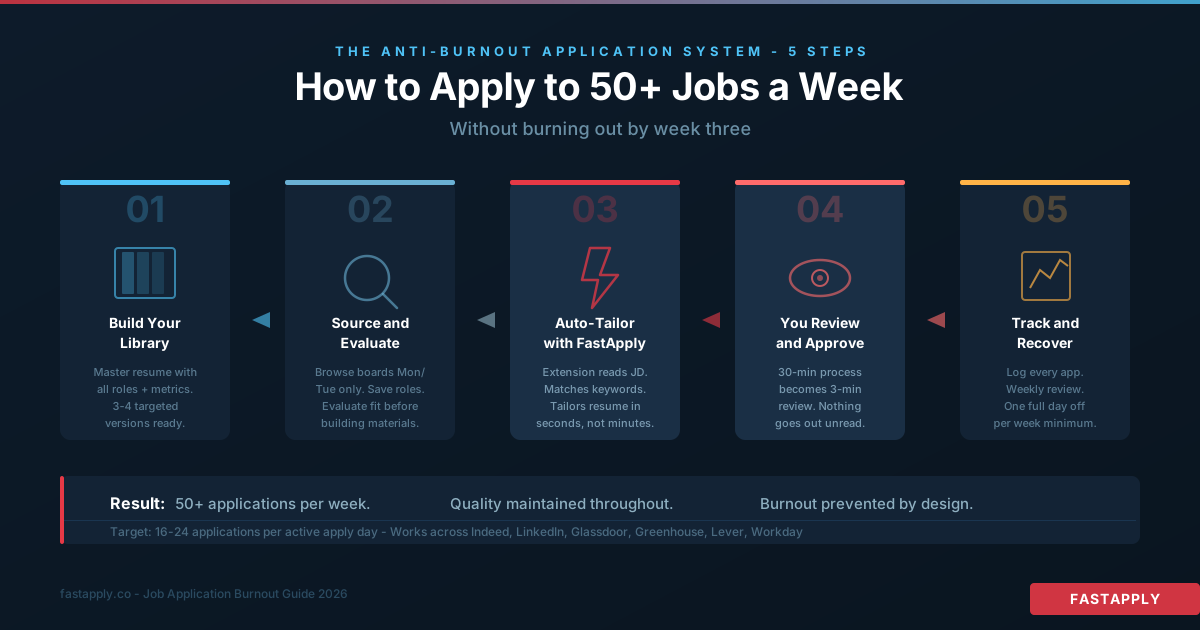
Most of the time spent on a single application goes into re-creating things you have already written before. Build these once:
- A master resume with every role, metric, and achievement you have
- Three to four targeted resume versions for different role types
- A base cover letter for each target role category
- A list of standard application answers (why this company, biggest challenge, etc.)
With a library in place, “tailoring” becomes selecting and adjusting, not writing from scratch. That distinction saves one to two hours per application batch.
4. Create an honest tracking system
Tracking sounds administrative, but it serves a psychological function: it gives you evidence that you are making progress when the market gives you none. Job searches that span five months or more require sustained, strategic effort to stay effective. Tracking lets you see what is working.
A simple spreadsheet with company name, role, date applied, status, and notes is enough. Review it weekly. When you feel like you are getting nowhere, the tracker shows you the actual data.
5. Protect at least one full day off per week
According to research, completely disconnecting from the job search process at regular intervals is one of the most effective strategies for preventing the kind of burnout that makes job seekers avoid applications entirely.
One day completely off job searching every week is not laziness. It is recovery time that keeps your quality up for the other six days.
How Technology Helps Manage Job Application Burnout
A lot of job seekers turn to automation tools when they hit burnout. Some of these help. Some make things worse.
Fully automated “spray and pray” tools that submit hundreds of applications without any human review create a specific problem: your name gets attached to applications you never actually read. When you land an interview, you may have no idea what the job was. When a recruiter asks about your interest in the company, you have nothing real to say.
The tools worth using are the ones that reduce mechanical work while keeping you in control of what gets submitted.
FastApply works differently. The Chrome extension reads each job description and automatically tailors your resume to match pulling in relevant keywords, adjusting the experience summary, and surfacing the most relevant parts of your background for that specific role. But it does not submit without you. You review the tailored application first, make any adjustments, and then approve it.
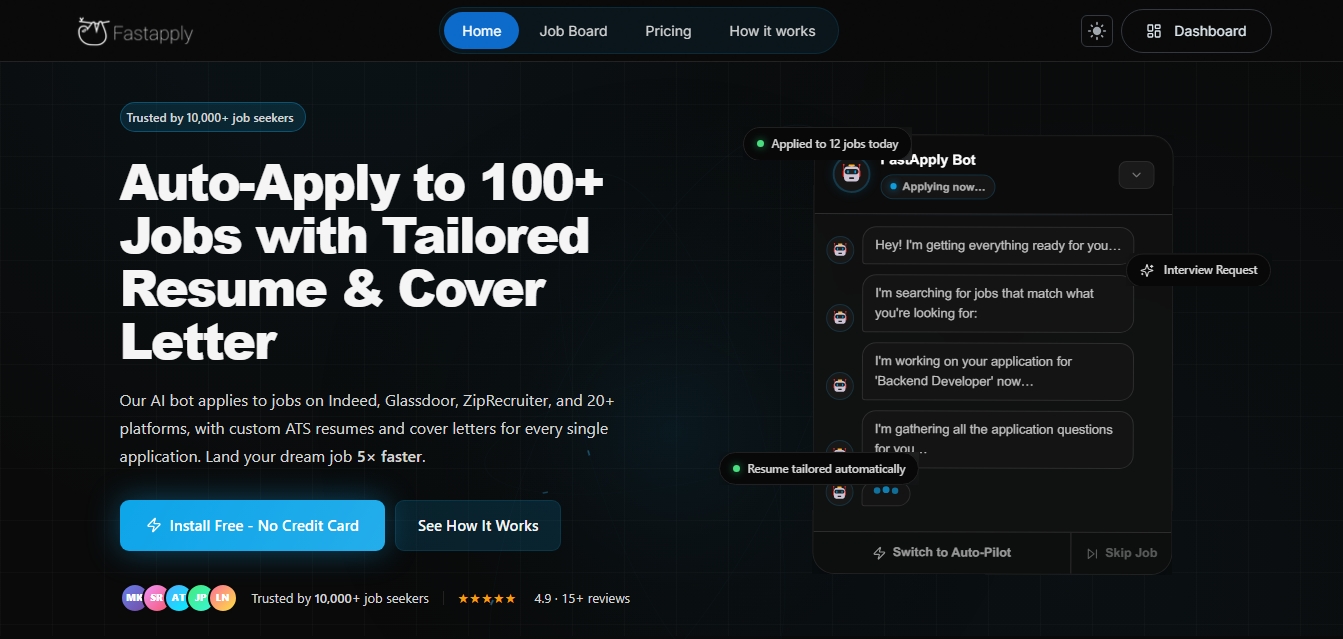
That distinction matters. A 30-minute manual application process becomes a 3-minute review. You still read what goes out under your name. You still confirm the role is something you actually want. The mechanical work: the form filling, the keyword matching, the formatting gets handled automatically. The judgment stays yours.
FastApply works across Indeed, Glassdoor, Lever, Greenhouse, Workday, and 20+ major platforms. For someone applying to 50+ jobs a week across multiple job boards, that breadth removes the switching friction that burns through time and attention.
It also changes how you find those roles in the first place.
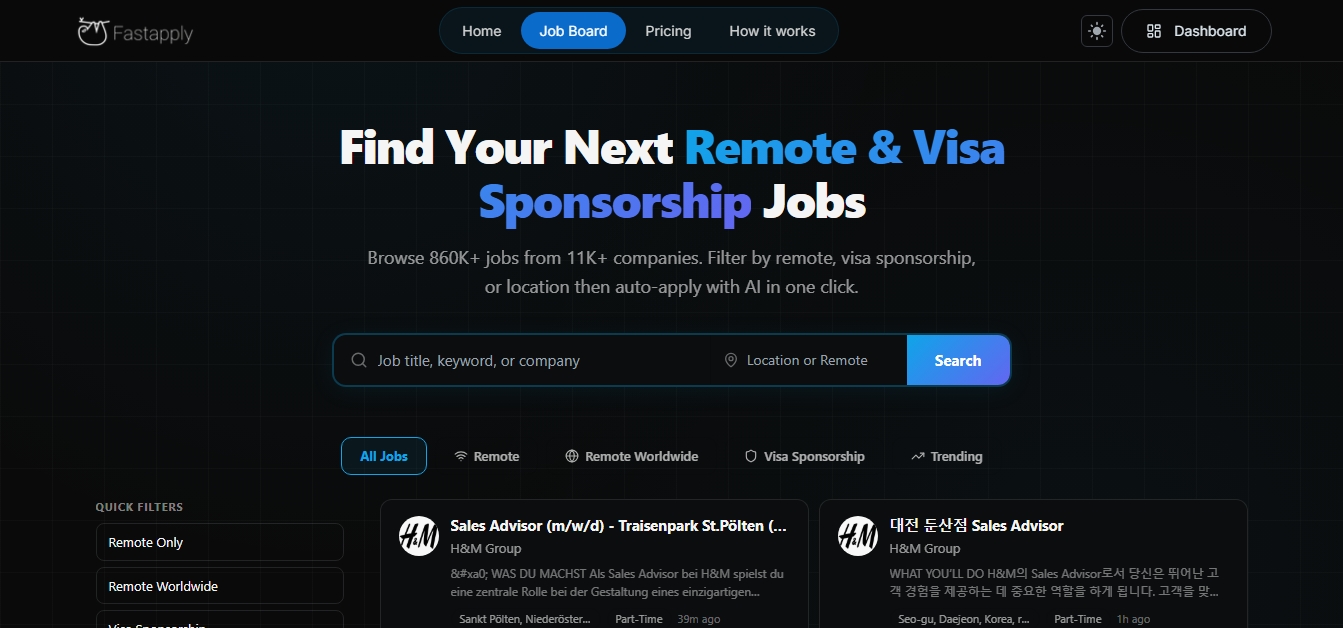
Instead of opening multiple tabs and repeating the same searches, FastApply’s job board brings 800,000+ opportunities from different platforms into one place. You can filter what matters, track what you’ve seen, and focus on roles that are actually worth your time.
The right tool does not replace your judgment. It removes the drudgery that depletes it.
What to Do When Burnout Has Already Set In
If you are reading this in month three of a job search and already feel the symptoms, the goal is not to push through. The goal is to recover while keeping the search moving at a reduced pace.
-
Cut volume, not quality
If you have been sending 15 applications a day, go to five. Five good applications produce better results than 15 exhausted ones. Burnout recovery requires reducing load, not abandoning the effort entirely.
-
Change what you look at
If you have been applying exclusively through job boards, spend a week on direct outreach and networking instead. The change in activity disrupts the burnout cycle and often surfaces opportunities the boards do not show. Research shows that 71.3% of job seekers found roles through referrals, making direct networking one of the most effective channels available.
-
Tell someone you trust what is happening
Job seekers who ask themselves “what is my headspace like right now?” before starting a session are less likely to spiral into stress responses triggered by rejection emails. Saying out loud to a trusted person “I am burned out and it is affecting my search” is not failure. It is accurate self-assessment. It is also the first step toward fixing it.
-
Give yourself a defined recovery period
Rather than a vague “I’ll take it easy this week,” set a specific recovery window. Tell yourself: “For the next five days, I will apply to three roles per day and spend 30 minutes on networking. On day six, I will reassess.” Structure helps more than willpower.
FAQ: Job Application Burnout
- What is job application burnout, and how is it different from general fatigue?
Job application burnout is a specific form of exhaustion caused by prolonged high-effort, low-feedback activity. General fatigue improves with rest. Burnout does not. It involves emotional exhaustion, cynicism about the process, and a drop in your ability to function effectively, even when you are technically rested. It requires structural changes to the job search process, not just sleep.
- How many job applications is too many per day?
There is no universal number, but most job seekers hit diminishing returns after eight to twelve targeted applications per day. Applications submitted beyond that threshold tend to be lower quality, which reduces conversion rates and extends the search. A smaller volume of well-targeted applications outperforms a high volume of generic ones in almost every case.
- Is job search fatigue normal, or does it mean something is wrong with my approach?
It is normal. 66% of active job seekers report burnout, and 79% report anxiety during the job search process. The feeling is a response to the conditions of modern job searching, not a signal that you are doing something wrong. That said, sustained fatigue usually points to structural problems that are worth addressing: no batching system, no tracking, no recovery time.
- How do I stay motivated during a long job search?
Motivation is unreliable over a five-month search. Systems are more reliable than motivation. Build a daily routine with defined start and stop times, track applications so you have evidence of progress, and schedule recovery time into the week. You do not need to feel motivated every day. You need a process that works even on the days when you do not.
- Does tailoring every resume really make a difference, or is it a waste of time?
Tailoring matters, but the degree of tailoring required varies. At minimum, your resume should include the core keywords from the job description and reflect the specific responsibilities of the role. Full rewrites for every application are not necessary. Having two to three targeted versions of your resume for different role types, combined with keyword adjustments for each specific application, gives you most of the benefit at a fraction of the time cost.
- What is the best way to track job applications without spending all day on admin?
A simple spreadsheet with seven columns is enough: company, role title, date applied, platform, status, next action, and notes. Update it at the end of each application session, not in real time. A weekly 20-minute review of the tracker is enough to stay on top of follow-ups and spot patterns.
- When should I take a complete break from job searching?
Take a complete break when the quality of your applications drops below your normal standard, when you avoid opening job boards even when you have time, or when the search is causing significant disruption to your sleep, relationships, or health. A three-to-five day break does not meaningfully delay your search, and it often resets your output quality enough to produce better results in the following week.
#job application burnout
#job search mental health
#tired of applying to jobs
#job search fatigue

Fastapply Team
Career Experts