
Jobs in Saudi Arabia for Foreign Workers: How Hiring Works in 2026
Short answer: Every foreign worker in Saudi Arabia is sponsored by an employer, and there is no job-seeker visa. The employer obtains a visa quota on the Qiwa platform and applies for your visa authorisation; you attest your documents, pass a medical at a Wafid-approved centre, have the visa stamped, fly, and receive your Iqama (residence permit) after arrival. Demand for foreign workers sits in construction, engineering, project management, IT and healthcare, much of it tied to Vision 2030 projects, while administrative, sales, HR and retail roles are being reserved for Saudi nationals under the Nitaqat programme. Indian workers also face qualification checks before a visa is issued. Apply on LinkedIn, Bayt, GulfTalent, Naukrigulf, Indeed and company career pages, and never pay a recruiter.
A steady share of our support chats come from visitors in Saudi Arabia, most of them already in the Kingdom and asking us to find them a new employer. Many more came from India asking for jobs in Saudi with nothing beyond a trade or a title. The answer to both groups starts in the same place: how a Saudi employer is allowed to hire you at all.
There is no job-seeker visa, so the employer sponsors everything
Unlike the UAE, Saudi Arabia does not issue a visa for looking for work. Visit and business visas do not permit employment. Every work visa begins with an employer that holds a quota for foreign hires and is in good standing with the Ministry of Human Resources and Social Development (MHRSD).
Two things follow for an applicant abroad. The offer always comes before the visa. And the employer’s own Saudization status decides whether it can hire a foreigner at all, which is why the Nitaqat section below matters even if you have never heard the word.
If you are already in the Kingdom, the 2021 labour reform rules allow a transfer of sponsorship between employers through Qiwa once contract conditions are met, which is what most of the Saudi visitors in our chat were trying to do. The process below is for someone arriving from outside.
The work visa, step by step, and who does what
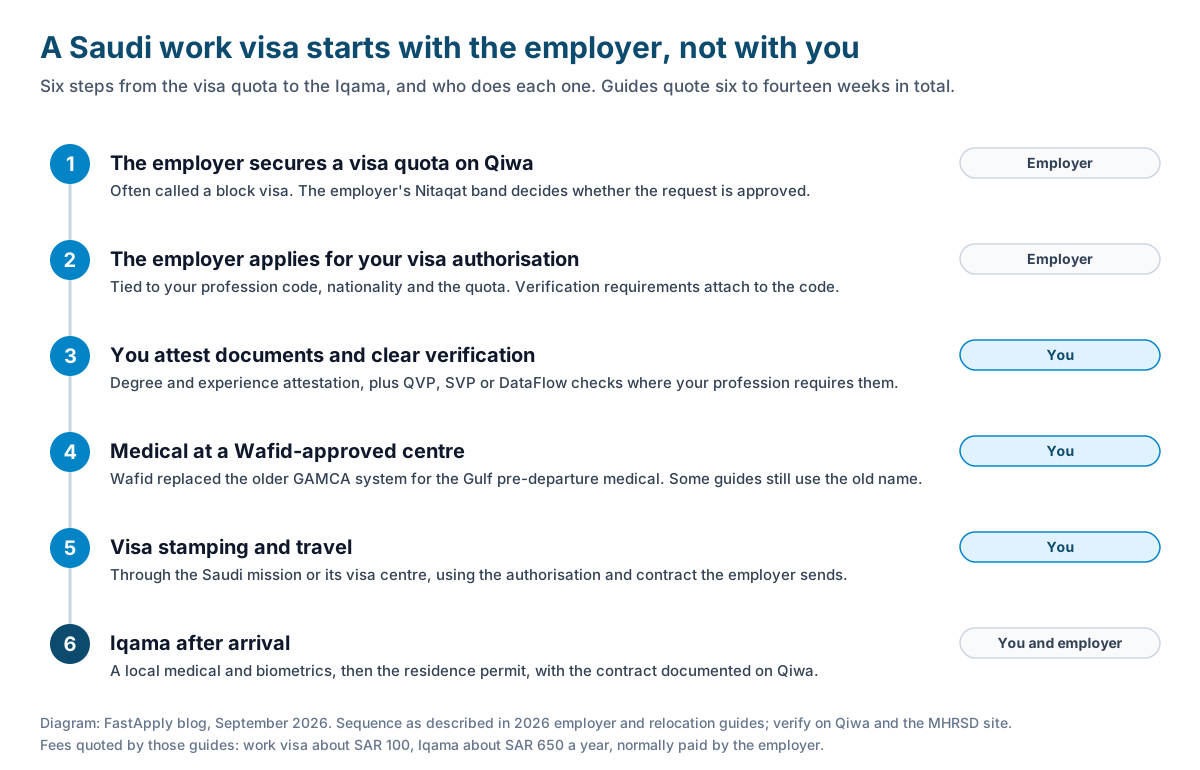
- The employer secures a visa quota. Through Qiwa, the employer requests visas for foreign hires, often called a block visa. Its Nitaqat band decides whether the request is approved.
- The employer applies for your visa authorisation. It is tied to your profession code, your nationality and the quota. The profession code matters later, because verification requirements attach to it.
- You attest documents and clear verification. Degree and experience certificates are attested in your home country and at the Saudi mission, and the qualification checks described in the next section are completed.
- Medical at a Wafid-approved centre. The Gulf pre-departure medical runs through the Wafid platform, which replaced the older GAMCA system. Some guides still use the old name.
- Visa stamping and travel. Through the Saudi mission or its visa centre, using the authorisation and contract your employer sends.
- Iqama after arrival. A local medical and biometrics, then the residence permit, with the contract documented on Qiwa.
Secondary guides quote six to fourteen weeks for the whole sequence, depending on the trade and how complete the paperwork is, with a work visa fee of about SAR 100 and an Iqama fee of about SAR 650 a year that the employer normally pays. Treat those as indicative. The current rules live on Qiwa and the MHRSD site, and a serious employer will give you its own timeline.
The verification steps Indian workers now face
This is the part that has changed most since 2024, and it is where the consultancy guides disagree with each other, so I will mark what is firm and what is not.
- Qualification Verification Programme (QVP). Degrees, certifications and experience documents are uploaded to qvp.pacc.sa and assessed before a work visa is issued. Several consultancies report it has been mandatory for Indian workers since 14 January 2025. The programme exists; the exact profession list and the date are from secondary sources.
- Skill Verification Programme (SVP). For listed technical trades, a theory test and a practical test. The first phase in India began in December 2022 in New Delhi and Mumbai, and Fragomen reported a 50% pass mark with a certificate valid for five years. Guides written in 2026 say a missing certificate can block both the visa and later Iqama renewal.
- DataFlow and professional councils. Regulated professions go through DataFlow primary-source verification, with healthcare workers registering with the Saudi Commission for Health Specialties and engineers with the Saudi Council of Engineers.
We have not verified the current profession lists ourselves. Before you pay any testing or verification fee, check which programme your profession code falls under with the employer, the Saudi mission in India, or on the MHRSD and Qiwa sites. An employer that cannot tell you is an employer that has not hired from India recently.
Where the demand is, and where Saudization closes the door
Saudization is the policy; Nitaqat is the enforcement. Each private employer is placed in a band according to the share of Saudi nationals on its payroll, and the band decides whether it can issue new work visas, renew permits or transfer sponsorship. A new three-year phase of the programme runs from 2026 to 2028, effective 26 April 2026 according to a Mondaq legal summary, with a stated goal of more than 340,000 additional private-sector jobs for Saudi nationals. Quotas are rising in administrative support, marketing and sales, HR, customer service and retail.
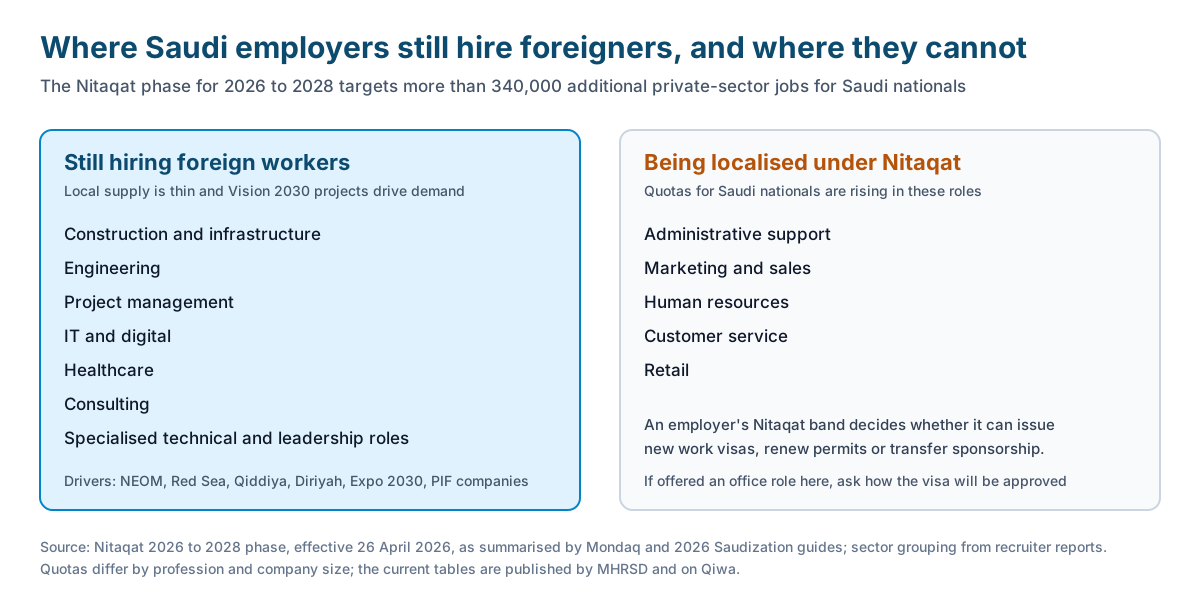
Foreign workers compete best where local supply is thin: construction and infrastructure, engineering, project management, IT and digital, healthcare, consulting, and specialised technical and leadership roles. The demand comes from the Vision 2030 programme and the projects attached to it: NEOM, the Red Sea, Qiddiya, Diriyah, Riyadh Expo 2030 and the companies owned by the Public Investment Fund.
The practical reading: if a small employer in a localised sector offers you an administrative or sales role, ask how it expects the visa to be approved. If a contractor on a giga-project offers you an engineering or site role, the quota question is usually already answered.
Pay, benefits and what the contract should say
There is no income tax on salaries. Packages are usually quoted as a basic wage plus housing and transport allowances, and the allowances are often expressed as a share of basic. Ask for the split, because the end-of-service award is calculated on wages, and some benefits reference basic pay only.
The end-of-service award under Saudi labour law is half a month’s wage for each of the first five years of service and a full month’s wage for each year after that, with the full amount paid when the contract ends on the employer’s terms and reduced amounts in some resignation cases. Health insurance is the employer’s obligation. Iqama issue and renewal fees, and the work permit levy, are the employer’s cost. Since the 2021 reforms, workers can transfer sponsorship through Qiwa when the contract conditions are met, and the contract itself is documented on Qiwa, which gives you a record you can refer to in a dispute. The Arabic text generally prevails if the two versions differ, so get the Arabic version read before you sign.
Three contract clauses are worth checking before you accept: probation length and whether either side can end it early, who pays for the annual flight home and family visas, and whether housing is an allowance or a provided room in a camp.
Where to apply from abroad
| Where | What it is good for |
|---|---|
| Professional and technical roles; set the location to Saudi Arabia, Riyadh, Jeddah or Dammam | |
| Bayt | The largest Gulf-specific board; employers search profiles |
| GulfTalent | Mid-level to senior professional roles |
| Naukrigulf | India-to-Gulf recruitment, strong in engineering, construction and accounts |
| Indeed Saudi Arabia | Aggregated listings; check where the apply button goes |
| Company career pages | Aramco, SABIC, NEOM, Red Sea Global, stc, Almarai, Alfanar and the big contractors post directly; check each page |
| Registered recruitment agents | The only lawful route for ECR passport holders from India |
FastApply applies on LinkedIn, Indeed and Bayt, and on the application systems behind company career pages such as Workday, SmartRecruiters and Taleo. GulfTalent and Naukrigulf are not on its supported list, so apply there by hand. Pricing depends on where you are: from Rs 599 a month if you are in India, from $14 a month elsewhere, with 5 free applications and no card. Our ranked list of job search apps covers the general boards, and the visa sponsorship job boards list covers employers that sponsor elsewhere.
Two details on the forms themselves. Saudi employers usually ask for expected salary as a monthly figure in riyals, with allowances separate, not an annual package. And the notice period question is asked early, because the visa sequence is long enough that a 90-day notice period on top of it can push a start date out by five months; our notice period guide explains how to state it honestly.
Before you fly: the documents to have ready
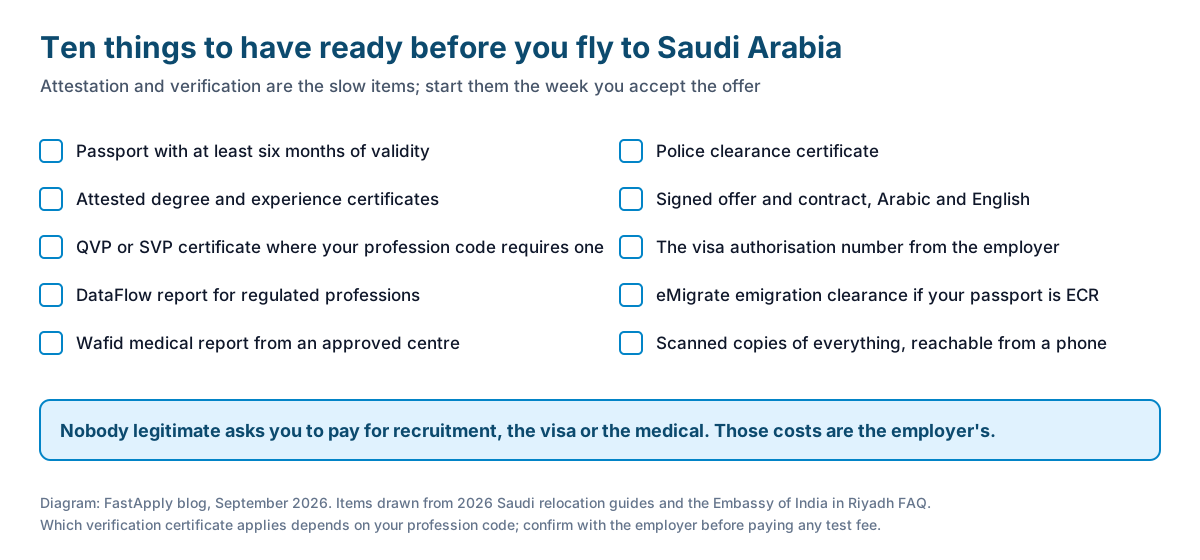
- Passport with at least six months of validity
- Attested degree and experience certificates
- QVP or SVP certificate where your profession code requires one
- DataFlow report for regulated professions
- Wafid medical report from an approved centre
- Police clearance certificate
- Signed offer and contract, Arabic and English
- The visa authorisation number from the employer
- eMigrate emigration clearance if your passport is ECR
- Scanned copies of all of the above, stored where you can reach them from a phone
Attestation and verification are the slow items. Start them the week you accept an offer, not the week the employer asks.
The Indian side: ECR passports, eMigrate and registered agents
Indian passports are ECR or non-ECR, and ECR status generally applies when the holder has not passed the 10th standard. ECR passport holders need emigration clearance through the eMigrate portal before taking up employment in Saudi Arabia, and the Embassy of India in Riyadh states that ECR-category workers can be recruited only through eMigrate. Foreign employers may recruit professionals and non-ECR workers directly or through Indian recruiting agents, who must be registered with the Protector General of Emigrants. You can check an agent’s registration on the eMigrate portal, and an agent who is not listed is not someone to pay or trust with your passport.
If you have a degree, you are almost certainly non-ECR, and the direct route (employer to you, no agent) is normal.
Scams: the same rules as everywhere in the Gulf
Nobody legitimate asks you for money. Recruitment costs, visa fees and medical fees in a proper Saudi hire are borne by the employer, and the recruiting agents who charge candidates are either unregistered or breaking the rules of their registration. A genuine offer comes with a visa authorisation number you can quote back to the employer, an interview on video, and emails from a company domain. An offer that lives on WhatsApp, names a famous company and asks for a processing fee is the pattern the Gulf authorities warn about every few months. Our Dubai guide for Indian applicants covers the UAE version of the same checks, and the Germany guide covers a market where the rules are different but the fee scams are identical.
FAQ
-
Can foreigners get jobs in Saudi Arabia in 2026? Yes, through an employer that holds a visa quota and sponsors the work visa. Demand is strongest in construction, engineering, project management, IT and healthcare, much of it linked to Vision 2030 projects. Administrative, sales, HR and retail roles are increasingly reserved for Saudi nationals.
-
Is there a job-seeker visa for Saudi Arabia? No. Visit and business visas do not allow employment. The offer comes first and the employer applies for your visa authorisation through Qiwa. Workers already in the Kingdom can transfer sponsorship under the 2021 labour reform rules.
-
What is the Qualification Verification Programme? A check of degrees, certifications and experience documents through qvp.pacc.sa before a work visa is issued. Consultancies report it has been mandatory for Indian workers since 14 January 2025, alongside skill tests for listed technical trades. Confirm your profession’s requirement with the employer or the Saudi mission before paying any fee.
-
How long does a Saudi work visa take? Secondary guides quote six to fourteen weeks from visa authorisation to Iqama, depending on the trade and the paperwork. Attestation, verification and the Wafid medical are the slow steps, so start them as soon as you accept an offer.
-
Is there income tax in Saudi Arabia? No income tax is charged on salaries. Packages are usually basic pay plus housing and transport allowances, employers must provide health insurance, and the end-of-service award is half a month’s wage per year for the first five years and a full month per year after that.
-
Do I need a recruiting agent? Not if you hold a non-ECR passport; employers can hire you directly. ECR passport holders from India can only be recruited through the eMigrate portal, and any Indian agent involved must be registered with the Protector General of Emigrants. No agent should charge you.
Conclusion
Saudi Arabia hires foreign workers in large numbers, but only through employers that hold a quota, and only after a sequence that now includes qualification checks for Indian applicants. The demand is in engineering, construction, IT, healthcare and the giga-projects, not in the office roles being localised under Nitaqat. Get the attestation and verification moving the week you accept, keep the contract split clear, and send your applications where Saudi employers read them: LinkedIn, Bayt, GulfTalent, Naukrigulf and their own career pages.
#jobs in saudi arabia
#jobs in saudi arabia for foreign workers
#saudi arabia work visa process
#saudi jobs for indians
#saudization nitaqat 2026
#how to get a job in saudi arabia

Ekekenta Clinton
Founder, FastApply