Jobs in Germany for Indians in 2026, Including Ausbildung
Short answer: There are three realistic routes from India to a job in Germany. The first is a job offer plus the EU Blue Card, which in 2026 needs a gross salary of EUR 50,700 a year, or EUR 45,934.20 in shortage occupations, for recent graduates, and for IT specialists with three years of experience but no degree. The second is the Opportunity Card (Chancenkarte), a one-year residence permit to look for work inside Germany, awarded on points and requiring German at A1 or English at B2 plus proof of funds. The third is Ausbildung, two to three and a half years of paid vocational training with a statutory minimum allowance starting at EUR 724 a month in 2026 and a visa that usually requires German at B1. Demand is real and growing, and outside IT the main filter is language.
Germany comes up in our support chat in two forms: professionals asking us to find roles in Berlin or Munich, and younger visitors asking about apprenticeships. This guide covers both groups, with the figures that matter and the places where the consultancy blogs disagree.
Three routes compared
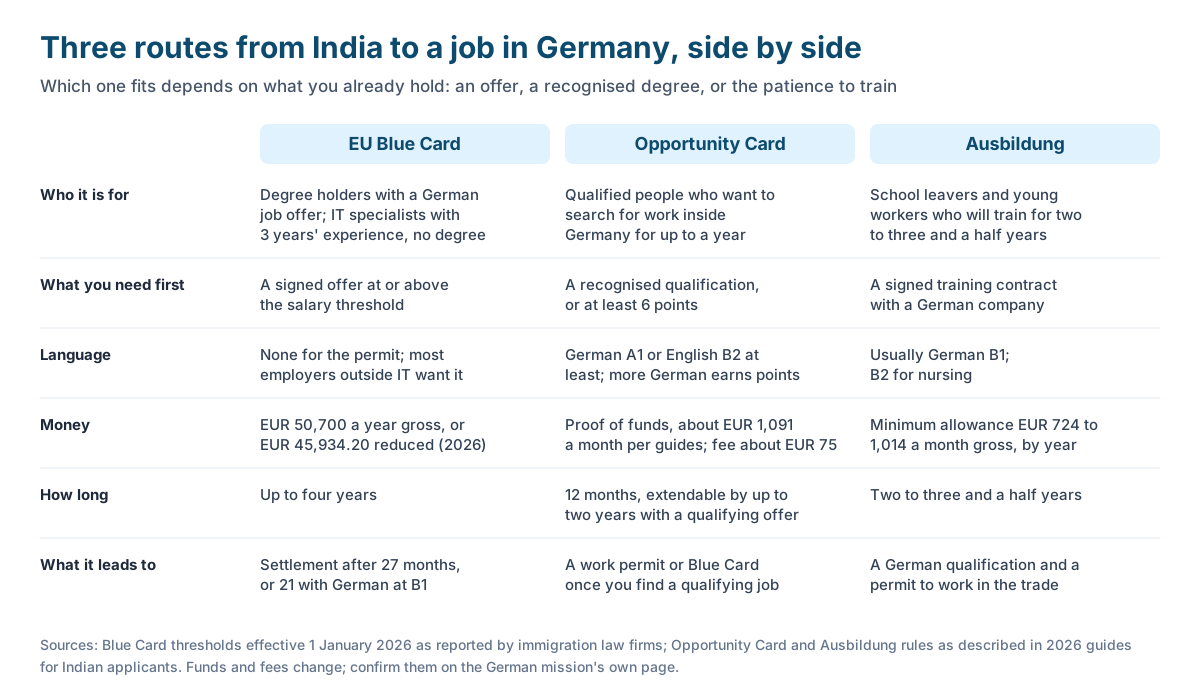
The routes are not ranked. Which one fits depends on what you already have: an offer, a recognised degree, or the patience to learn German and train.
Route 1: a job offer and the EU Blue Card
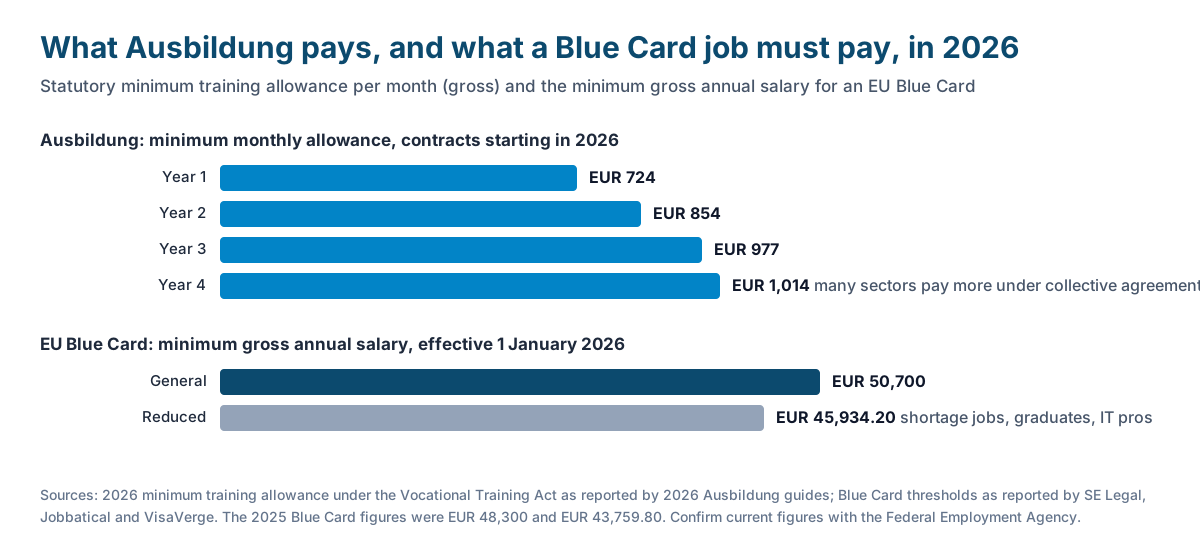
The Blue Card is the permit for degree holders with a job offer. The salary thresholds reset every January, and the 2026 figures are consistent across the immigration law firms and relocation companies that track them: EUR 50,700 gross a year for most occupations, and EUR 45,934.20 for the reduced category. The reduced threshold covers shortage occupations (a list that includes STEM academics, IT and health management, physicians, nurses with academic training, and teachers), people who completed their degree within the last three years, and IT specialists with at least three years of relevant experience and no university degree. Where only the reduced threshold is met, consent from the Federal Employment Agency is part of the application; at the general threshold that step falls away. For comparison, the 2025 figures were EUR 48,300 and EUR 43,759.80.
The permit itself does not require German. The employer usually does, unless the role is in IT or research. The card is issued for up to four years and leads to a settlement permit after 27 months, or 21 months with German at B1, under the rules in force as of September 2026. Family members can join and work.
What the route needs from you before you apply: a degree that Germany recognises (check it on the anabin database, or get a statement of comparability from the ZAB), and a salary expectation stated in euros per year, gross. Indian applicants often quote a monthly figure or a CTC-style package, and German forms want the annual gross.
Route 2: the Opportunity Card for searching on the ground
The Chancenkarte was introduced in June 2024 for people who do not yet have an offer. It is a residence permit of 12 months to look for work in Germany. You qualify directly if your qualification is fully recognised in Germany. Otherwise you need at least two years of vocational training or a degree recognised in the country where you earned it, basic language ability (German at A1 or English at B2), and at least six points. Points come from the level and recognition of your qualification, years of experience, better German, age under 35, and earlier stays in Germany.
You also need proof that you can support yourself. Guides for Indian applicants quote a blocked account of about EUR 1,091 a month for the planned stay and an application fee of about EUR 75, with processing from India taking several weeks. The exact amounts are set by the German missions and change, so take them from the mission’s own page rather than from a blog, including this one.
While you hold the card you may work up to 20 hours a week and take trial jobs of up to two weeks with an employer. Once you have an offer that meets the rules, you switch to a work permit or a Blue Card. If the offer exists but something is still missing, the card can be extended by up to two further years.
The honest caveat: a year in Germany with limited German is expensive, and English-only roles cluster in IT, research and a few international companies. The card works best for people who already have interviews lined up or a profession on the shortage list.
Route 3: Ausbildung, paid training with a visa
Ausbildung is Germany’s dual vocational training system: you are employed by a company, paid a monthly allowance, and spend part of each week at a vocational school. Programmes run two to three and a half years in nursing, mechatronics, IT specialist tracks, logistics, hotel and restaurant work, electrical trades, construction and dozens of other occupations. At the end you hold a German qualification that employers in the trade recognise, and a residence permit to work in it.
The pay is an allowance, not a salary. The statutory minimum for contracts starting in 2026 is EUR 724 a month in the first year, EUR 854 in the second, EUR 977 in the third and EUR 1,014 in the fourth, gross, for training covered by the Vocational Training Act. Many sectors pay more through collective agreements. The visa for training requires that the allowance covers your living costs; where it is low, the missions ask for extra financial evidence.
Language is where most Indian applicants stall. The training visa generally requires German at B1, unless the training provider confirms your language ability, and nursing and medical training in practice require B2. Guides aimed at Indian applicants also mention an APS certificate (the Academic Evaluation Centre check that Indian students have needed for German study visas since November 2022), a police clearance certificate and a medical certificate. Whether APS is required for your specific training visa is something to confirm with the German Missions in India, because the guides disagree.
Age is another point of disagreement among the guides. The training visa itself has no statutory age limit; the separate visa to come to Germany and look for a training place is limited to applicants under 35. Read the requirements for the visa you are actually applying for.
What the numbers say about demand
Official German figures put the number of Indian workers in the country at 136,670 in 2024, up from 23,320 in 2015. At the end of 2024 the German government announced that the skilled-work visa quota for Indian citizens would rise from 20,000 to 90,000 a year. The German Economic Institute attributes about 570,000 unfilled positions to demographic change and growing demand in healthcare, transport, IT, engineering and the skilled trades. A Handelsblatt study published in January 2026 found that Indian workers in Germany earned around 29% more than their German counterparts in 2024, a reflection of how concentrated they are in science, technology and engineering roles. During a March 2026 visit to India, Chancellor Merz spoke of cutting bureaucratic, linguistic and cultural barriers; that is a pledge reported by the press, not yet a rule you can rely on.
Taken together: demand exists, the quota is no longer the constraint, and the practical limits are recognition of your qualification and language.
Language: the real filter
English-only jobs exist, and they are concentrated in software, data, research and a handful of international companies in Berlin, Munich and Hamburg. Everywhere else, including most engineering, healthcare, logistics and the entire Ausbildung system, the working language is German, and employers filter on it before they look at your experience. B1 opens the training route and most mid-level jobs; B2 opens nursing, customer-facing roles and management.
If you are planning a year ahead, the single best investment is a German course that ends in a Goethe or telc certificate, because the visa and the employer both want proof, not a self-assessment.
Where German employers post, and how to apply
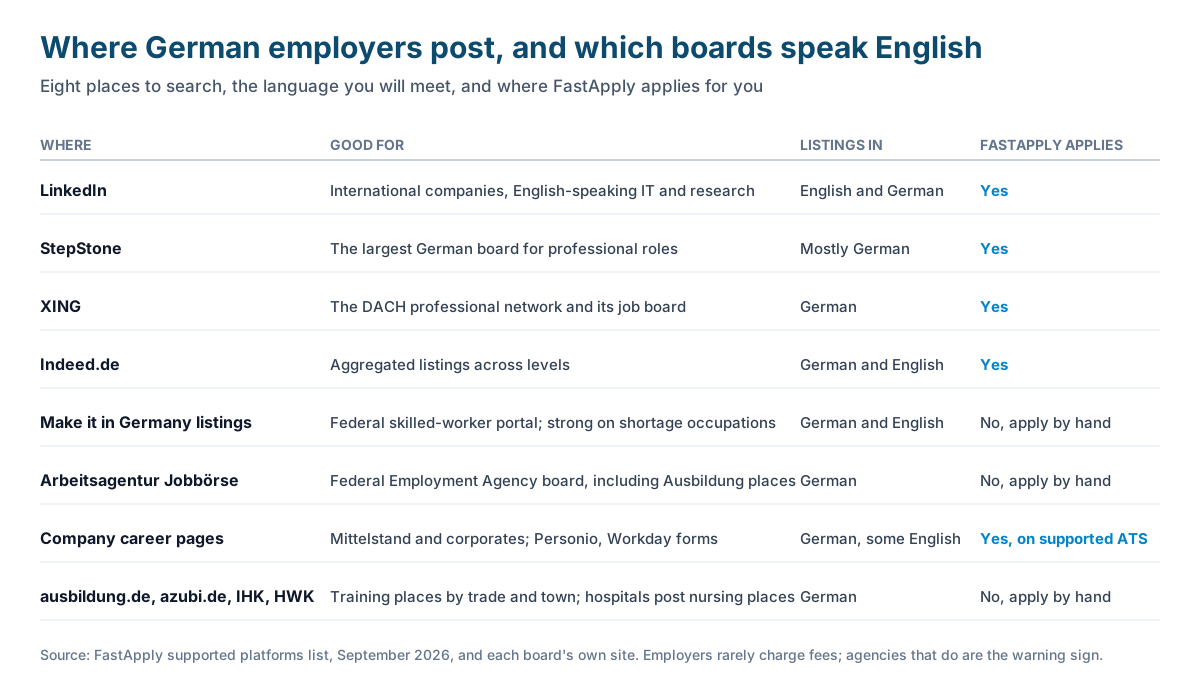
| Where | What it is good for |
|---|---|
| International companies and English-speaking IT and research roles | |
| StepStone | The largest German board for professional roles; listings mostly in German |
| The DACH professional network and its job board | |
| Indeed.de | Aggregated listings across levels |
| Make it in Germany job listings | The federal skilled-worker portal; strong on shortage occupations |
| Arbeitsagentur Jobbörse | The Federal Employment Agency board, including Ausbildung places |
| Company career pages | Mittelstand and corporates; forms often run on Personio, SmartRecruiters or Workday |
| ausbildung.de, azubi.de, IHK and HWK listings | Training places by trade and town; hospital groups post nursing places directly |
FastApply applies on StepStone, XING, LinkedIn and Indeed, and on the Personio, SmartRecruiters and Workday forms behind company career pages. The government boards and the Ausbildung portals are not on its supported list, so apply there by hand. Pricing depends on where you are: from Rs 599 a month if you are in India, from $14 a month elsewhere, with 5 free applications and no card. For the general boards worth installing, see our ranked job search apps, and for employers that sponsor in other countries, the visa sponsorship job boards list.
The German application: Lebenslauf, Anschreiben, Zeugnisse
German hiring still expects a document set, and a bare resume looks incomplete to many HR teams.
- Lebenslauf. A tabular CV, one or two pages, reverse chronological, with exact months. A photo is optional under German anti-discrimination law and many applicants still include one. Keep it single-column and text-based so the ATS behind the career page can read it; our ATS resume format guide covers the layout rules that apply everywhere.
- Anschreiben. A short cover letter, under one page, in the language of the posting, naming the role and why this company. Still common, especially outside startups.
- Zeugnisse. Degree certificates, transcripts and work references (Arbeitszeugnisse) attached as PDFs, with translations where the posting asks.
Most career pages take all three as uploads, and the mistake we see most often is attaching the Indian CV to a German form and leaving the certificate fields empty. If you are applying from several accounts and boards, our guide to uploading and replacing your resume explains where each board stores the file, so the German version goes to German employers.
Avoiding the agent trap
Ausbildung in particular has attracted agencies in India that charge lakhs for placement, language classes bundled with “guaranteed” training contracts, and visa paperwork. Some are legitimate language schools with employer contacts. Some are not. The signs are the same as in the Gulf: fees before any contract exists, pressure to pay fast, and employers you cannot find on the Arbeitsagentur or IHK listings. Training contracts are signed with the company, visas are issued by the German mission, and neither charges a placement fee. If you want a comparison, the fee scams in our guides to jobs in Dubai for Indians and jobs in Saudi Arabia follow the identical script.
For readers weighing Germany against other destinations, the mechanics in our guides to a Canadian work permit and UK visa sponsorship jobs are the useful comparison: Canada and the UK filter on points and sponsor licences, Germany filters on recognition and language.
FAQ
-
Can Indians get jobs in Germany without knowing German? In IT, data, research and some international companies, yes, and those roles are mostly in Berlin, Munich and Hamburg. Outside those fields employers expect German at B1 or B2, and the Ausbildung system runs in German.
-
What is the EU Blue Card salary in 2026? EUR 50,700 gross a year for most occupations, or EUR 45,934.20 for shortage occupations, graduates within three years of their degree, and IT specialists with three years of experience and no degree. The figures took effect on 1 January 2026.
-
What is Ausbildung and how much does it pay? Paid vocational training of two to three and a half years, split between a company and a vocational school. The statutory minimum allowance for 2026 is EUR 724 a month in year one, rising to EUR 1,014 in year four, gross; many sectors pay more under collective agreements.
-
What does the Opportunity Card require? A recognised qualification, or at least six points from your qualification, experience, language, age and earlier stays in Germany; German at A1 or English at B2; and proof of funds, which guides put at about EUR 1,091 a month. It lasts 12 months, allows 20 hours of work a week, and converts to a work permit once you have a qualifying offer.
-
Which websites do German employers use? LinkedIn, StepStone, XING and Indeed.de for professional roles, the Make it in Germany listings and the Arbeitsagentur Jobbörse as government boards, and company career pages. Ausbildung places are listed on ausbildung.de, azubi.de and the IHK and HWK sites.
-
How many Indians work in Germany? Official figures count 136,670 Indian workers in Germany in 2024, up from 23,320 in 2015. The skilled-work visa quota for Indian citizens was raised from 20,000 to 90,000 a year in an announcement at the end of 2024.
Conclusion
Germany wants skilled workers from India and has said so in numbers: a 90,000-a-year visa quota, 570,000 unfilled positions, and Blue Card thresholds that an IT or engineering offer clears easily. The route you take depends on what you hold today. An offer gets you a Blue Card at EUR 50,700 or EUR 45,934.20. A recognised degree and six points get you a year to search. A training contract and B1 German get you Ausbildung at EUR 724 a month to start. Pick the route, get the qualification recognised, and spend the waiting months on German.
#jobs in germany for indians
#ausbildung in germany
#eu blue card germany 2026
#chancenkarte opportunity card
#germany jobs for indian freshers
#how to get a job in germany from india

Ekekenta Clinton
Founder, FastApply