
Are You Legally Authorized to Work in the United States? How to Answer (2026)
Short answer: Answer “Yes” to “Are you legally authorized to work in the United States?” if you could start work for this employer tomorrow without the employer filing anything: US citizens, permanent residents, asylees and refugees, anyone holding a valid employment authorization document (OPT, STEM OPT, H-4 EAD, a pending green card EAD, TPS, DACA), and people already in a work-authorised status such as H-1B. Answer “Yes” to “Will you now or in the future require sponsorship?” if the employer would ever have to file a petition to keep you working, which is the honest answer for almost everyone on a student or temporary visa. If you are outside the United States with no status, or here on a visitor visa, the answers are No and Yes.
These two questions produce the most expensive wrong answers we see. Right-to-work and sponsorship are among the fields people most often fill in wrong, and the damage is never one application. A stored default that says “No” to authorisation, or the wrong answer on sponsorship, goes out on every form until someone notices. So this guide gives the answer by status, explains why employers ask, and ends with how to set the two fields once so they stay right.
Two questions that look like one
Most US application forms ask them together, and people treat them as the same question with two phrasings. They are not.
“Are you legally authorized to work in the United States?” is about today. It asks whether you can be put on payroll for this employer now, without the employer filing anything with the government first. A valid employment authorization document, a green card, citizenship, or a work-authorised status that transfers (such as H-1B) all make the answer Yes.
“Will you now or in the future require sponsorship for employment visa status?” is about the future. It asks whether the employer will ever have to file a petition, pay fees or enter a lottery to keep you. A student on OPT can start tomorrow, which answers the first question, and will still need an H-1B petition within a year or three, which answers the second.
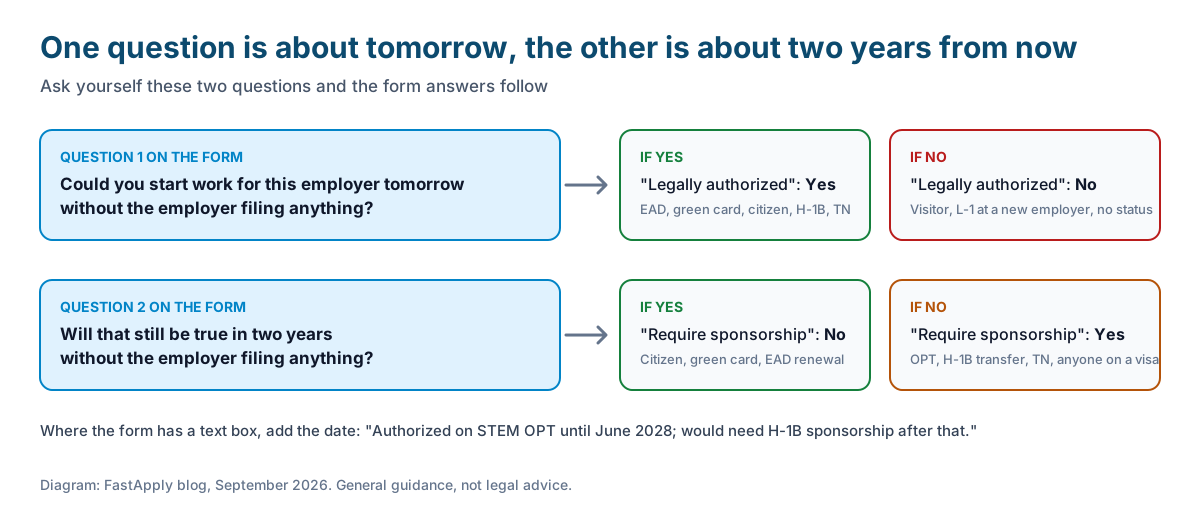
Keeping them apart matters because the forms score them separately. A “No” to the first question usually ends the application. A “Yes” to the second does at some companies and not at others. Answering both honestly is the only approach that survives the paperwork at the end, and the paperwork always comes.
How to answer, by status
The table below follows the guidance that university career offices give international students, including Duke’s career hub (October 2025 article, archived copy), the University of Colorado Boulder’s international office and Johns Hopkins (whose resource page has since moved), plus the career platform Interstride. None of it is legal advice, and if your situation is unusual, your international student office or an immigration attorney is the right next call.
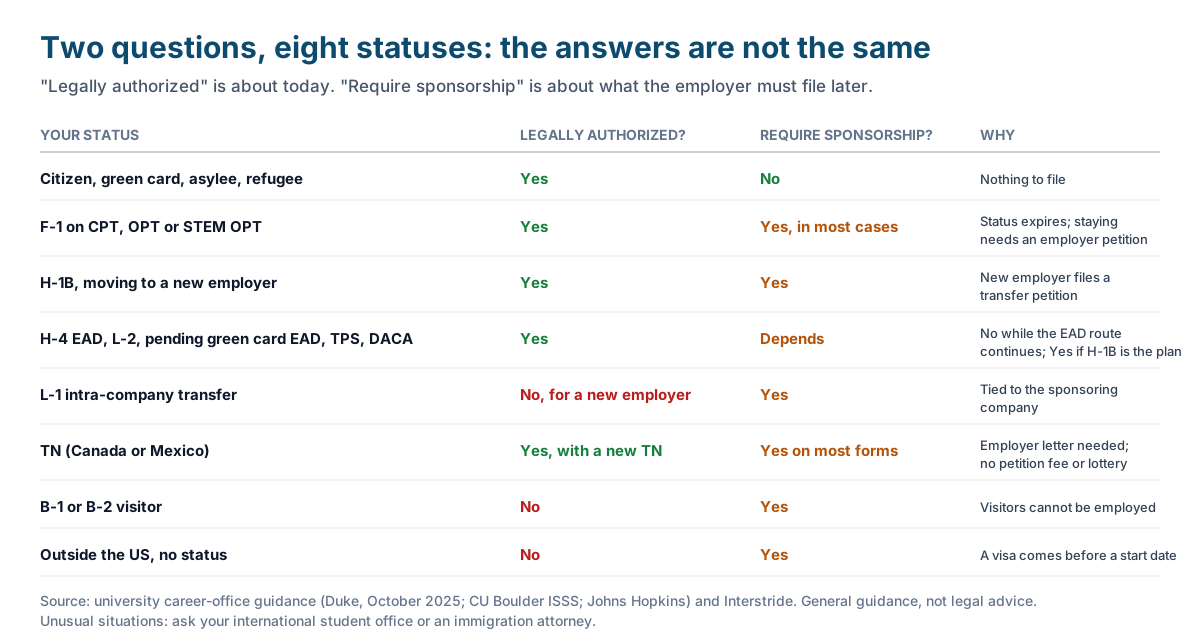
| Your status | Legally authorized? | Require sponsorship? | Why |
|---|---|---|---|
| US citizen, permanent resident, asylee, refugee | Yes | No | Nothing to file, now or later |
| F-1 student on CPT, OPT or STEM OPT | Yes | Yes, in most cases | Your status expires; staying beyond it needs an employer petition |
| H-1B, moving to a new employer | Yes | Yes | You hold work authorisation, but the new employer must file a transfer petition |
| H-4 EAD, L-2 with work authorisation, pending green card EAD, TPS, DACA | Yes | Depends | No while your EAD route continues; Yes if you expect to need H-1B later |
| L-1 (intra-company transfer) | No, for a new employer | Yes | L-1 is tied to the sponsoring company |
| TN (Canada or Mexico) | Yes, with a new TN | Yes on most forms | A new TN needs an employer support letter, though no lottery |
| B-1 or B-2 visitor | No | Yes | Visitor status does not permit employment |
| Outside the US with no status | No | Yes | You would need a visa before any start date |
A few of these deserve a sentence more.
OPT and CPT. You are authorised today, so the first answer is Yes, and Duke, CU Boulder and Johns Hopkins all say so. On sponsorship, the honest answer is usually Yes, because F-1 status ends and most routes to staying run through an employer. Johns Hopkins notes two cases where No can be right: a short-term role such as an internship that finishes inside your authorisation, or a plan to return home or go back to study afterwards. If that is you, No is honest. If you hope to stay, it is not.
H-1B transfer. You are authorised, and some people hesitate because the new employer has to file. Say Yes to authorisation. The transfer petition is what the sponsorship question is for, so that answer is Yes too. Our guide to the H-1B transfer process covers the timing.
EAD holders. An H-4 EAD, a pending adjustment of status EAD, TPS or DACA makes you authorised today. Whether you will need sponsorship depends on your route. If the EAD will keep renewing and you expect a green card through family or your own petition, No is defensible. If your plan relies on the employer filing H-1B at some point, say Yes.
TN. Canadians and Mexicans in professional occupations can get a new TN with an employer support letter and no lottery. Where the form has a text box, “Eligible for TN; a new TN requires an employer letter but no lottery” is accurate and reassuring. Where it is yes or no only, pick Yes and explain in the cover letter.
Why employers ask
Two reasons, and knowing them makes the questions less threatening.
The first is Form I-9. Every US employer must verify a new hire’s identity and work authorisation within three business days of the start date. The authorisation question on the application is the employer asking early what the I-9 will ask later. That is also why a false “Yes” never works: it is checked, with documents, before your first week ends.
The second is budget. Sponsoring an H-1B costs money and legal time, and many employers have simply decided not to. The sponsorship question lets them filter on that policy before anyone spends an hour on your resume. It is blunt, and for candidates who need sponsorship it is useful information: a company that filters you out here was never going to file.
Employers may ask whether you are authorised to work. Questions that go further, into citizenship or national origin, can raise discrimination issues under federal guidance from the Equal Employment Opportunity Commission. We mention this only so you know the authorisation question itself is normal and legal; it is not a request for your passport.
What a wrong answer costs
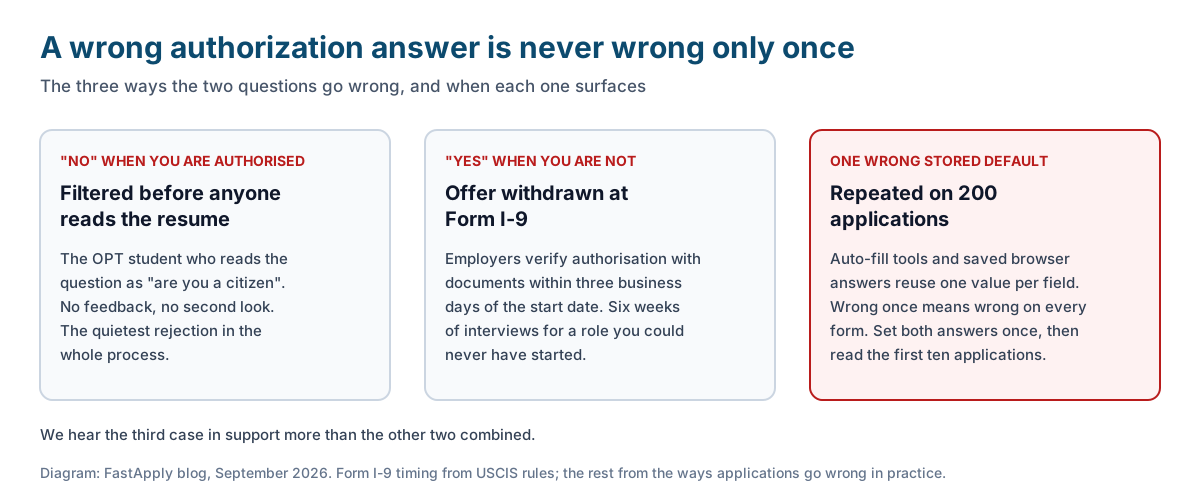
“No” when you are authorised. This is the OPT student who reads the question as “are you a citizen” and answers No. The application is filtered before a person reads the resume, and nobody tells you why. It is the quietest rejection in the process.
“Yes” when you are not. The application gets through, the interviews go well, the offer arrives, and the I-9 cannot be completed. The offer is withdrawn, the recruiter remembers your name, and you have spent six weeks on a role you could never have started.
One wrong default, two hundred times. This is the version we see in support. An auto-fill tool, or a browser’s saved answers, stores one value for each question. If that value is wrong, every application carries it. Two hundred applications with the wrong authorisation answer are two hundred rejections you caused, with no feedback to tell you what happened. The fix is to set both answers once, carefully, and to read the first ten applications before letting anything run. That is step five of our guide to mass applying with AI, and it is there because of fields like this one.
Wording that helps where there is a text box
Many forms are yes or no only. When one gives you space, a single sentence with a date does more than either box can:
- “Authorized to work on STEM OPT until June 2028; would need H-1B sponsorship after that.”
- “Authorized to work on H-4 EAD, valid through March 2027 and renewable; no sponsorship needed while it continues.”
- “Currently on H-1B with another employer; a transfer petition would be required, no lottery.”
The date tells the employer how long they have before any filing, which for many hiring managers is the real question. Put the same sentence in the cover letter if the form has no text box; our guide on whether you need a cover letter covers when that one paragraph of logistics is the whole reason to attach one.
Finding the employers that say yes
If you need sponsorship, the sponsorship question is doing you a favour by filtering early. Spend your applications where the answer is already yes. Our list of companies that sponsor H-1B visas is built from public filing data, and the H-1B auto-apply strategy explains how to reach a large number of them without sending generic applications. For job boards that let you filter on sponsorship, see the best visa sponsorship job boards.
Students on OPT are working against a clock, and the OPT job search guide is built around that deadline. If you are still at the planning stage, how to secure a US job on a post-graduate visa covers the sequence.
Setting the fields once, for volume
Authorisation and sponsorship are two of about ten questions that appear on nearly every US application, alongside desired salary and notice period. All of them share the same property: the right answer does not change from one form to the next, and a wrong one repeats.
FastApply fills these fields from your profile on Workday, Greenhouse, Lever and 20+ job platforms and ATS systems in the United States. Set authorisation and sponsorship once, add the dated sentence above to your cover letter text, and run the first ten applications in Copilot mode so you can read the filled form before it is submitted. After that, the answer is the same on the two-hundredth form as it was on the first, which is the whole point.
FAQ
-
What does “legally authorized to work in the United States” mean on a job application? It means you can start work for that employer now without the employer filing anything with the government first. Citizens, permanent residents, asylees and refugees, holders of a valid employment authorization document such as OPT or H-4 EAD, and people in a transferable work status such as H-1B can all answer yes.
-
Am I legally authorized to work in the US on OPT or CPT? Yes. CPT and OPT, including the STEM extension, are work authorisation granted through your F-1 status, so you answer yes to the authorisation question. The sponsorship question is separate, and for most OPT students the honest answer there is yes.
-
Should I answer yes to “will you require sponsorship” if I am on OPT? In most cases, yes, because F-1 status ends and staying beyond it usually needs an employer petition such as H-1B. University guidance notes that no can be honest for a short-term role that ends inside your authorisation or if you plan to leave the US afterwards. Where a text box exists, give the date your authorisation ends.
-
How should an H-1B holder answer the sponsorship question when changing employers? Answer yes to being legally authorised, because you hold work authorisation, and yes to requiring sponsorship, because the new employer must file a transfer petition. Adding “transfer, no lottery required” in any text box tells the employer the process is simpler than a new H-1B.
-
Does answering yes to sponsorship automatically reject my application? At some employers, yes, because they have a policy of not sponsoring and filter on the question. At others it has no effect. Answering honestly saves you from spending interview time with companies that would withdraw the offer at the I-9 stage anyway, and lets you concentrate on employers with a record of filing.
-
Can an employer ask about my visa status on an application? Employers may ask whether you are authorised to work and whether you will need sponsorship, because they must complete Form I-9 within three business days of your start date. Questions about citizenship or national origin beyond that can raise discrimination issues under EEOC guidance, so the two standard questions are normal and anything more specific is unusual.
Conclusion
One question is about today and the other is about the future, and both are checked before you start. Answer the first from your current status and the second from what the employer would have to file to keep you, give a date wherever a text box allows it, and send your applications to the companies whose answer to sponsorship is already yes. Then set the two fields once and read the first ten forms, because a wrong answer here is never wrong only once.
#are you legally authorized to work in the united states
#will you now or in the future require sponsorship
#work authorization question job application
#legally authorized to work meaning
#sponsorship question opt
#h1b sponsorship job application
#job application form questions

Ekekenta Clinton
Founder, FastApply