Do You Need a Cover Letter in 2026? When It Helps and When to Skip It
Short answer: Write a cover letter when the form requires one, when the posting asks for it, when something about you needs explaining (a career change, a relocation, a gap, a visa timeline), when the company is small or the job involves writing, or when you have a referral to name. Skip it, or keep it to three sentences, when the field is optional on a high-volume job board application and you have nothing specific to add. A generic letter attached to 200 applications does more harm than no letter at all, because the people who read cover letters are exactly the people who notice when one was written for nobody.
This question comes up in our support chat regularly, usually as a request for a letter tailored to each job. The honest answer depends on who is reading, so that is where this starts.
What hiring managers say they do
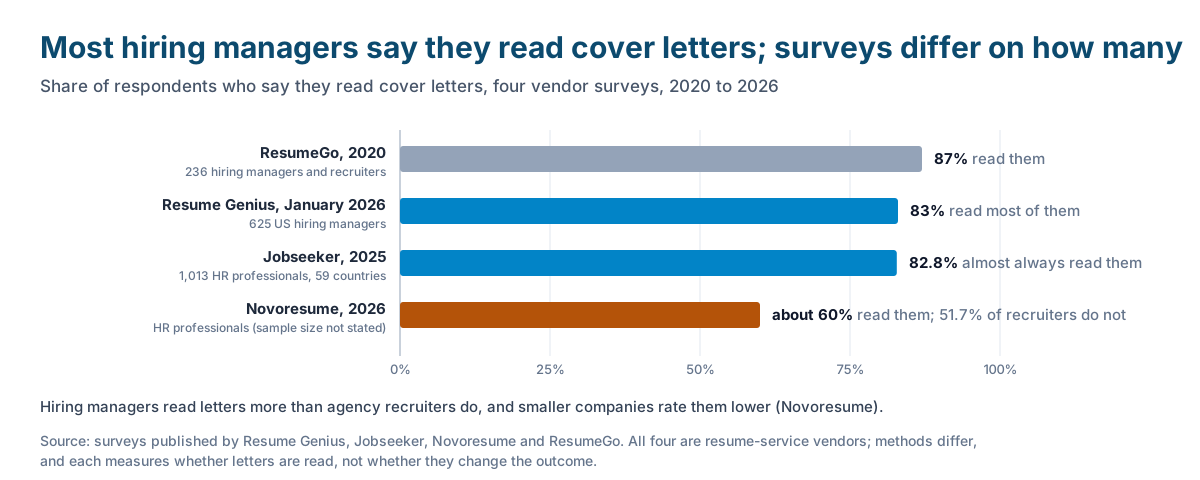
Four surveys, four different numbers, and a reason for the difference.
| Survey | Who was asked | What they said |
|---|---|---|
| Resume Genius, updated January 2026 | 625 US hiring managers | 83% read most cover letters, even where not required; 94% say a letter influences the interview decision; 45% read the letter before the resume |
| Jobseeker, surveyed 2025 | 1,013 HR professionals in 59 countries | 82.8% almost always read them; 53.3% always do |
| Novoresume, 2026 | HR professionals and recruiters | About 60% of HR professionals read them; 51.7% of recruiters do not bother; 44.6% call them nice-to-have but not decisive |
| ResumeGo, 2020 | 236 hiring managers and recruiters | 87% read them |
Two things to know before you trust any of these. All four come from companies that sell resume and cover letter services, so they have a reason to find that letters matter, and none of them measured whether a letter changed an outcome, only whether it was read. The spread between 60% and 87% is mostly about who was asked. Hiring managers, the people who own the vacancy, read letters more than agency recruiters do, and Novoresume found that smaller companies rate them lower than medium and large ones.
The practical reading: the person who decides whether to interview you probably opens the letter, and a measurable minority read it before they read the resume. That is enough to make a bad letter costly and a good one worth twenty minutes. It is not enough to make a generic one worth attaching.
When a cover letter changes the outcome
Five situations, in rough order of how often they apply.
The form requires one. No decision to make. Write it, and make it specific, because a required letter is one the employer has decided to read.
The posting asks for one. “Please include a cover letter” in a posting is a filter. Applications without one are the first to go, and the ones with a generic letter go next.
Something needs explaining. This is the strongest reason to write one. A resume cannot say why a controller is applying for an analytics role, why you are moving to Austin, what you did during a nine-month gap, or that you are authorised to work on STEM OPT until June 2028 and would need sponsorship after that. One honest paragraph answers the question the reader would otherwise have to guess at. For the visa case specifically, see our guide to answering the work authorization questions.
The company is small, or the job is writing. At a twenty-person company the founder reads applications. In a communications, marketing or policy role, the letter is the work sample.
You have a referral. “Priya Shah on your data team suggested I apply” is the most valuable sentence a cover letter can contain, and it has nowhere else to go.
When to skip it, or keep it to three sentences
The volume case is the one that matters for most people reading this. If you are sending thirty applications a week through job boards, the cover letter field is optional on most of them, and the question is whether anything you could write would be specific to that job.
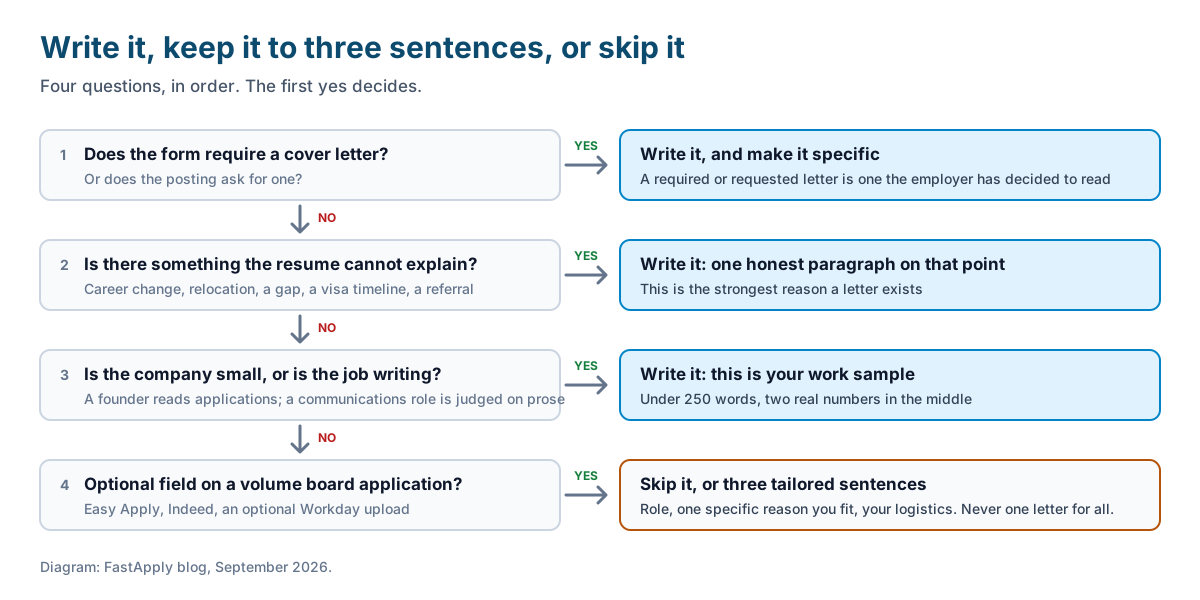
If the answer is no, skip the field. If the answer is yes, three sentences are enough: the role, one specific reason you fit it, and your logistics. Anything longer that is not actually about this job reads as a template, and the surveys above tell you who reads templates.
Where the field appears, by platform:
| Platform | Cover letter field | What to do |
|---|---|---|
| LinkedIn Easy Apply | Rarely present; occasionally a free-text “additional questions” box | Nothing to attach; use the resume summary to carry the one specific sentence |
| Indeed | Optional text or upload | Three tailored sentences, or skip |
| Workday | Usually an optional upload alongside the resume | Attach a short letter only when you have something to explain |
| Greenhouse | A text box or an upload, set per employer | Write it when it is required or the posting asks; otherwise three sentences |
| Lever | Usually an “additional information” text box | Same as Greenhouse |
| Naukri | No cover letter field | Recruiters read the profile and resume headline instead |
| Company career pages | Varies | Follow the posting |
The one thing not to do is attach the same letter everywhere because the field is there. A visitor in our chat asked why a tool had sent “the same CV each time”; the same complaint applies, with more force, to a letter that opens “I am excited to apply for the position at your company.”
The 200-word cover letter
Most of the letters people agonise over are too long. The shape that works is three paragraphs and under 250 words, and it reads the same whether a hiring manager or a founder opens it.
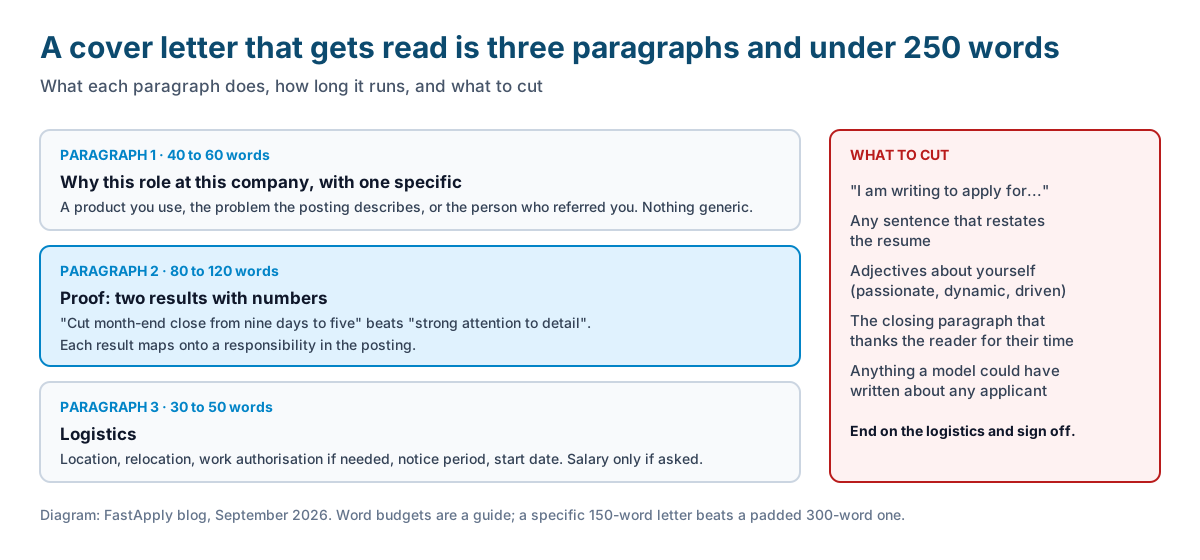
Paragraph one: why this role at this company, with one specific. Name the role and one thing about the company or the posting that you could not have written about anyone else: a product you use, a problem the posting describes, a person who referred you. Forty to sixty words.
Paragraph two: proof. Two things you did that map onto the job, each with a number. “Cut month-end close from nine days to five” beats “strong attention to detail” every time, and it is harder to fake. Eighty to 120 words.
Paragraph three: logistics. Where you are, whether you will relocate, your work authorisation if it needs stating, your notice period, and your start date. If the posting asked for salary expectations, one sentence here, in the form we describe in what to put for desired salary. Thirty to fifty words.
What to cut: “I am writing to apply for”, any sentence that restates the resume, adjectives about yourself, and the closing paragraph that thanks the reader for their time. End on the logistics and sign off.
A template, with the specifics left blank on purpose:
I am applying for the [role] at [company]. [One specific: the product, the problem in the posting, or the person who referred you.]
At [employer] I [result with a number]. Before that I [second result with a number], which is the closest thing to [the main responsibility in the posting] that I have done.
I am based in [city] and [willing to relocate / looking for remote work]. [Work authorisation sentence if needed.] My notice period is [X days], so I could start on [date].
[Name]
Using AI without it showing
Hiring-side commenters say they notice bot-written applications and discount them; one said exactly that in the forum thread we cited in our guide to mass applying with AI. The tell is not that the letter was drafted by a model. It is that nothing in it could only have been written by you.
So use AI for the draft and then add two things it could not know: a result with a real number from your own work, and the specific reason this company. If you cannot think of either, that is the signal to skip the letter rather than send a smooth one. Then read it aloud once; the sentences that sound like a press release are the ones to cut.
On FastApply, the Pro and Elite plans write a cover letter for each job from the posting and your resume, so the first paragraph names the role and the company’s own wording rather than a placeholder. Starter and the free plan apply with the documents you upload. In Copilot mode you can edit the letter on the form before it is submitted, which is where the two human specifics go. The resume gets the same treatment; our guide on tailoring your resume for each job in under two minutes covers that side.
If you are not hearing back
A missing cover letter is rarely the reason. The resume failing to parse, the wrong title targets and applications sent a week after the posting went up are all bigger causes, and we cover them in why you are not hearing back from jobs. If your resume is the problem, fix that first with the ATS resume format guide, and if you are a fresher building one from scratch, the fresher resume format is the place to start. A good letter on top of a resume that nobody can read helps nobody.
Where a letter does belong, FastApply attaches it to the application on Workday, Greenhouse, Lever and 20+ job platforms and ATS systems, and skips the field where the form does not have one.
FAQ
-
Are cover letters still necessary in 2026? Sometimes. They are necessary when the form requires one, when the posting asks for one, and when you have something a resume cannot explain, such as a career change, a relocation, a gap or a visa timeline. On optional fields in high-volume job board applications, a letter with nothing specific to say is better skipped.
-
Do recruiters actually read cover letters? Most hiring managers say they do, but the surveys disagree on how many. Resume Genius (625 US hiring managers, January 2026) found 83% read most of them, Jobseeker (1,013 HR professionals, 2025) found 82.8% almost always do, and Novoresume put the figure for HR professionals at about 60%, with 51.7% of agency recruiters not bothering. All four surveys come from resume-service vendors and measure reading, not outcomes.
-
Should I write a cover letter if it is optional? Only if you can make it specific to that job in three sentences: the role, one concrete reason you fit it, and your logistics. If you would be attaching the same letter you sent everywhere else, skip the field, because the people who read optional letters are the ones most likely to notice a template.
-
How long should a cover letter be? Between 150 and 250 words, in three paragraphs: why this role at this company with one specific detail, two results with numbers that map onto the job, and your logistics such as location, work authorisation, notice period and start date. Cut the opening “I am writing to apply” and the closing thank-you.
-
Can I use AI to write my cover letter? Yes, for the draft. Then add two things the model could not know: a real result with a number from your own work and the specific reason you want this company. Hiring-side readers say they notice generic AI text and discount it, so a letter with nothing personal in it is worse than no letter.
-
Does LinkedIn Easy Apply need a cover letter? Rarely. Most Easy Apply forms have no cover letter field, and the ones that do offer an optional free-text box. Put your one specific sentence in the resume summary instead, and save the full letter for postings that ask for one or for applications on company career pages.
Conclusion
The people who decide on interviews mostly read cover letters, which makes a specific one worth writing and a generic one worth leaving out. Write it when the form or the posting asks, when something needs explaining, or when the company is small enough that the founder is reading. Keep it under 250 words with two real numbers in the middle, and when you cannot make it specific, skip the field and spend the time on the resume instead.
#do i need a cover letter
#do you need a cover letter
#are cover letters necessary
#cover letter 2026
#should i write a cover letter
#cover letter optional
#tailored cover letter

Ekekenta Clinton
Founder, FastApply