Work From Home Jobs for Freshers in 2026: Real Roles, Pay and Scams
Short answer: Real work from home jobs for freshers exist in 2026, mostly in customer support and chat processes, telecalling and inside sales, data entry and back office, content writing, online tutoring, transcription and annotation, social media support and software testing. Listings quote roughly Rs 10,000 to 30,000 a month depending on the role and shift. Every one of them involves an interview or a test. A work from home job that promises no interview, or asks you to pay a registration, training or deposit fee, is a scam, and the only correct response is to stop, verify the company, and report it at cybercrime.gov.in.
One of the requests we read in FastApply’s support chat was, word for word, “no interview work from home job for freshers”. We understand why someone asks. Interviews are stressful, you have no experience to talk about, and the adverts on Telegram promise exactly that. But there is no such job. There are only employers who interview, and people who take your money. This post covers the first kind in detail, and the second kind in enough detail that you can recognise it in ten seconds.
The work from home roles freshers actually get
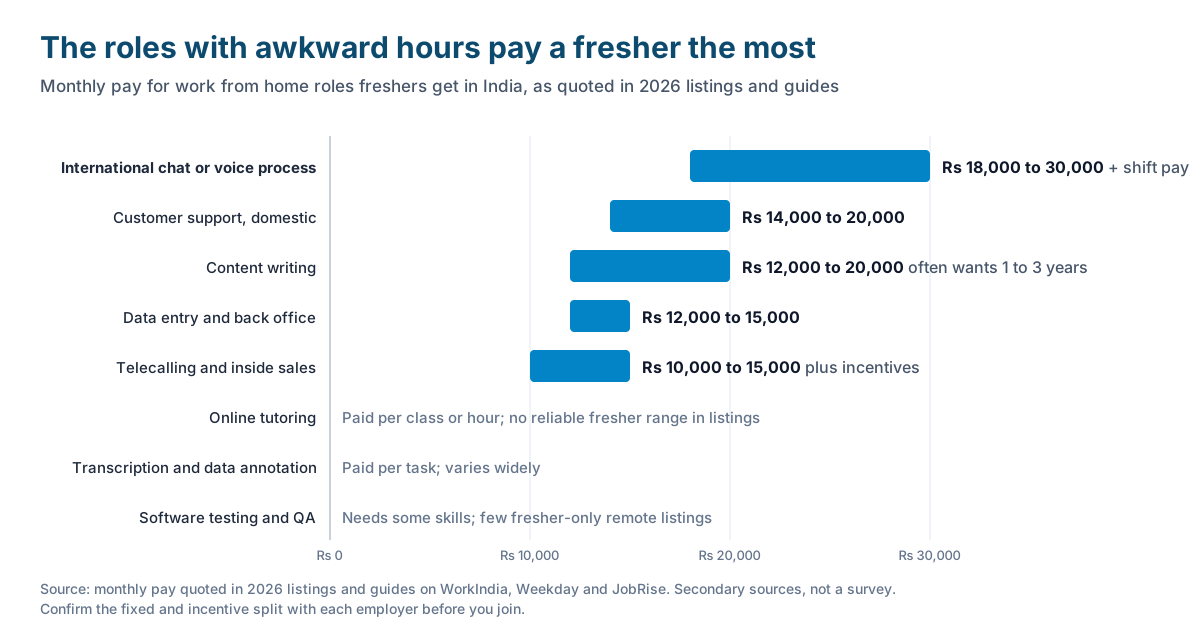
Forget “online jobs” as a category. Employers hire remote freshers for specific functions, and each has its own test, its own shift pattern and its own pay band. These are the eight that show up repeatedly in Indian listings, with the monthly pay quoted in 2026 listings and guides from WorkIndia, Weekday and JobRise. Those are ranges from listings, not a survey, so treat them as directional and ask every employer for the fixed versus incentive split before you join.
| Role | What you do all day | Monthly pay in listings | Test or interview |
|---|---|---|---|
| International chat or voice process | Support customers of a US, UK or Australian client, usually in night or rotational shifts | Rs 18,000 to 30,000, shift allowance on top | Voice and accent round, typing test, HR round |
| Customer support, domestic | Calls, chat and email for Indian clients: banks, e-commerce, telecom | Rs 14,000 to 20,000 | Communication round, typing test |
| Content writing | Blog posts, product descriptions, social copy | Rs 12,000 to 20,000, often wants 1 to 3 years | Writing sample, sometimes paid trial |
| Data entry and back office | Form processing, catalogue updates, document checks | Rs 12,000 to 15,000 | Typing speed and accuracy test |
| Telecalling and inside sales | Outbound calls for loans, insurance, education products | Rs 10,000 to 15,000 plus incentives | Mock call, HR round |
| Online tutoring | Teach school or test-prep subjects over video | Paid per class or hour; no reliable fresher range in listings | Demo class, subject test |
| Transcription and data annotation | Transcribe audio, label images or text for AI projects | Paid per task; varies widely | Accuracy test |
| Software testing and QA | Manual test cases, bug reports, sometimes automation | Needs some skills; few fresher-only remote listings | Aptitude and testing basics |
Two patterns in that table. The higher-paying roles are the ones with inconvenient hours: an international process pays more because you are awake at 3 a.m. for a client in Texas. And the roles that sound easiest (data entry, typing) pay least and attract the most fake postings, because scammers know the demand.
If your degree points at analysis rather than support, the remote entry route is different. Our guide to data analyst jobs for freshers covers it.
Why “no interview” is the scam signal
Think about it from the employer’s side. A company paying Rs 15,000 a month for data entry still loses money on a bad hire: training time, errors, a seat on a client project. So even the simplest remote job gets a typing test and a ten-minute call. An employer that skips every check is not an employer. It is a funnel, and the product is you.
The pattern is the same in every complaint we have read and in the guides from Internshala and Bajaj Finserv on job scams: an advert on Telegram, WhatsApp or a social media post; an offer letter within hours; then a request for money dressed up as a registration fee, a training fee, a security deposit, a laptop kit, or “document verification”. After you pay, the contact disappears. Some versions skip the fee and collect your Aadhaar, PAN and bank details instead, which is worse.
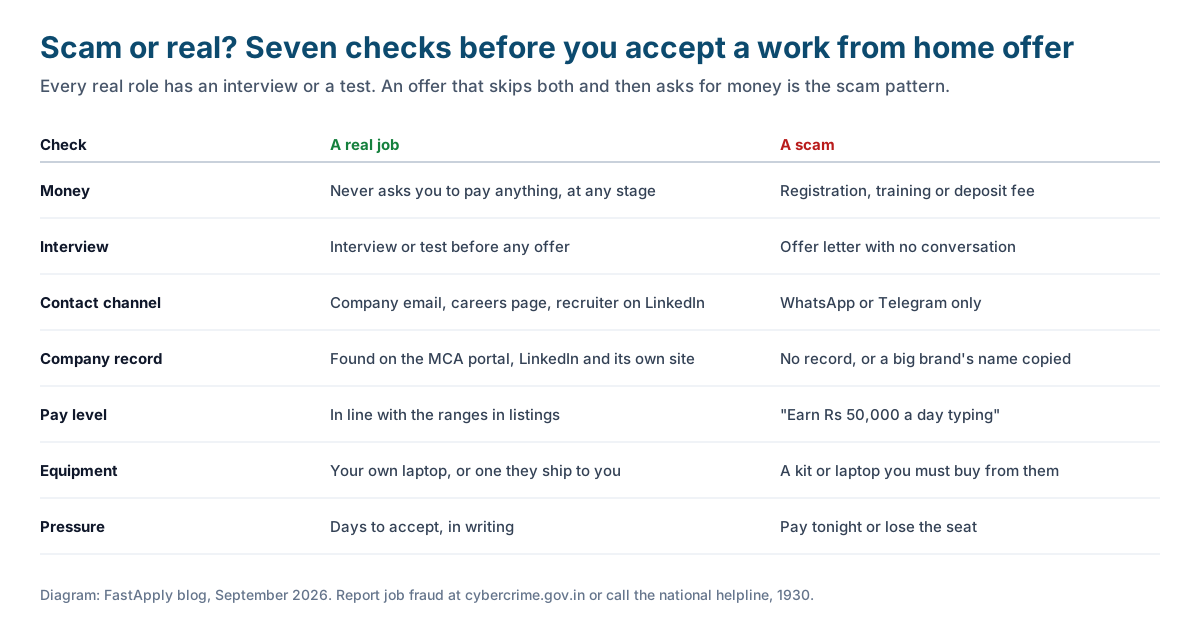
Here are the seven checks. A real job passes all seven. A scam fails at least two, usually the first two.
- Money. A real employer never asks you to pay anything, for any reason, at any stage. Not a registration fee, not training, not a deposit, not a courier charge for the offer letter.
- Interview. A real role has an interview or a test before any offer. An offer letter with no conversation is a red flag on its own.
- Contact channel. Real hiring happens over a company email address, a careers page, or a recruiter whose LinkedIn profile has a history. WhatsApp-only or Telegram-only contact is not hiring.
- Company record. Search the company on the MCA portal (the Ministry of Corporate Affairs master data), on LinkedIn, and on its own website. If the name belongs to a large brand, go to that brand’s official careers page and check whether the role exists there.
- Pay level. Compare the offer with the ranges above. “Earn Rs 50,000 a day typing” is not a job description. It is bait.
- Equipment. You either use your own laptop or the company ships one with a return policy. You never buy a “kit” from them.
- Pressure. Real employers give you days to accept. “Pay by tonight or the seat goes to someone else” is a sales technique, not HR.
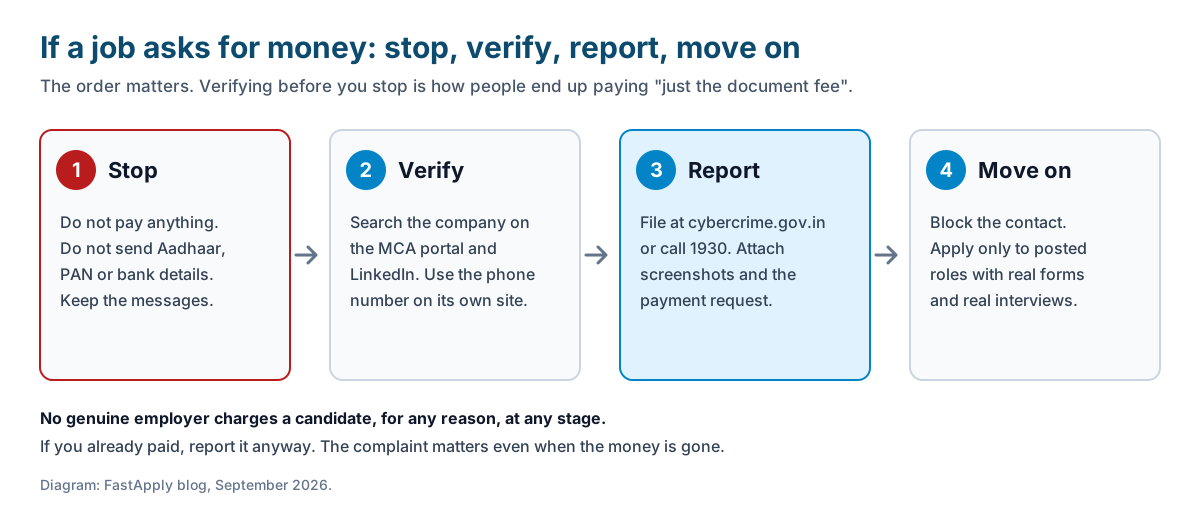
If you have already been asked for money, do four things in order. Stop: do not pay, do not send Aadhaar, PAN or bank details. Verify: check the company as in step 4 above, and call the number on the official site, not the number that messaged you. Report: file at cybercrime.gov.in or call the national helpline on 1930, with screenshots. Move on: block the contact and go back to posted roles with real interviews. The ghost jobs guide covers the quieter cousin of this problem, postings that are real but not actually hiring.
Where the real work from home jobs are posted
The genuine remote fresher roles are posted on the same boards as every other job, behind a filter.
- Naukri. Use the work from home filter together with the experience filter (0 to 1 years). Most domestic customer support, telecalling and back office remote roles for freshers are here. Naukri caps you at 50 applications a day, which is plenty. Our guide to applying on Naukri automatically covers the apply flow.
- LinkedIn. Filter to Remote and set the location to India. International chat and voice processes, content roles and QA roles from product companies tend to be here. Use Easy Apply where it exists.
- Indeed. The Remote filter plus “fresher” in the search. Good for domestic support and data entry from smaller companies.
- Internshala. Work from home internships, many of which convert to a job. For a fresher with no offer, a paid remote internship with a conversion clause is the most reliable door into remote work.
- Apna. Telecalling and support roles from local companies. Verify the employer before any fee request, as above.
- Company careers pages. The large support employers run their own remote hiring: Amazon’s virtual customer service roles, and the BPO groups such as Concentrix, Teleperformance, TTEC and Startek. Check their careers pages directly; the roles are not always cross-posted.
- FastApply’s job board. The job board on fastapply.co has a remote filter across more than 860,000 live listings, by the site’s own count, and every listing links to a real application form.
For a wider list of boards that specialise in remote work, including the ones that skew to experienced roles, see the best remote job boards and work from anywhere jobs. For a ranking of job apps in general, see our best job search apps list.
What you need before you apply
Remote employers screen for setup before they screen for skill, because a candidate who cannot stay connected cannot work.
- A laptop that can run the client’s tools, usually a few years old at most. Some employers ship a device; most domestic ones expect you to have your own.
- A wired or stable broadband line, 50 Mbps or better. Mobile hotspots fail the connectivity check more often than anything else.
- A headset with a microphone for voice roles, and a quiet room. Interviewers listen for background noise during the call itself.
- Shift flexibility. International processes mean night shifts or rotating shifts. If you cannot work nights, filter them out rather than applying and withdrawing.
- The fresher fields, set once. Notice period: Immediate. Current CTC: 0. Expected CTC: the band for your role from the table above, in annual terms (Rs 15,000 a month is Rs 1.8 lakh a year). Our guides to notice period and current and expected CTC for freshers cover the wording.
- One ATS-clean resume. Single column, standard headings, a text-based PDF. The resume for freshers guide has a template.
Apply fast, because remote roles fill fast
Remote postings get more applicants than office postings for the same role, from a wider geography, so the window is shorter. A remote support role posted on Monday morning can close by Wednesday. Three habits help.
Apply within a day of posting. Sort every board by date and work from the newest down. Early applications are read first.
Use a remote-only filter rather than scanning. “Only remote” is one of the most common targeting requests in our support chat, and it is the right instinct. Set the filter on each board, or set it once in a tool and let it skip everything else.
Count replies, not applications. Keep a sheet with the date, company, role, board and reply. If 50 applications bring no reply, change the resume or the role family before sending 50 more. The reply-rate numbers in how many applications it takes to get an interview will tell you whether you are in the normal range.
If you want the repetitive part done for you, FastApply applies on Naukri, LinkedIn and Indeed with a remote-only filter and your fresher details filled the same way on every form, and a review mode so you see the first ten before they go. The free plan is 5 applications with no card. Paid plans in India are Rs 599 a month, or Rs 433 a month on the 90-day plan.
FAQ
-
Are work from home jobs for freshers real? Yes. Customer support and chat processes, telecalling, data entry, content writing, online tutoring, transcription and annotation, and software testing all hire remote freshers in India. Every real one has an interview or a test, and none asks you for money.
-
Which work from home jobs need no experience? Domestic customer support, telecalling, data entry and back office roles are the most common no-experience remote jobs, and they screen with a typing test or a short call rather than a resume history. International chat and voice processes also take freshers if your spoken English passes the voice round.
-
How much do work from home jobs pay freshers? Listings in 2026 quote roughly Rs 10,000 to 15,000 a month for telecalling and data entry, Rs 14,000 to 20,000 for domestic customer support, and Rs 18,000 to 30,000 for international chat or voice processes with shift allowances. These are ranges from listings, not a survey, so confirm the fixed versus incentive split with the employer.
-
Is there any work from home job without an interview? No. Every genuine remote employer runs at least a test or a short call. Offers that skip the interview are the scam category, and they usually ask for a registration, training or deposit fee next.
-
How do I check if a work from home job is fake? Apply the seven checks: no fees, an interview, a company email or careers page rather than WhatsApp only, a company record on the MCA portal and LinkedIn, pay in line with the market, no kit to buy, and no pressure to pay today. If it fails two of these, walk away and report it at cybercrime.gov.in or on 1930.
-
Where are genuine work from home jobs for freshers posted? Naukri with the work from home filter, LinkedIn and Indeed with the remote filter, Internshala for work from home internships, Apna for local telecalling and support, and the careers pages of large support employers such as Amazon, Concentrix, Teleperformance, TTEC and Startek.
Conclusion
The remote jobs a fresher can get are narrower than the adverts suggest and better than the scams imply. They sit in support, sales, data and content roles, they pay Rs 10,000 to 30,000 a month depending on the shift, and they all start with a test or a call. Set your equipment and your form answers up once, apply within a day of posting on the two boards that carry your roles, and treat any request for money as the end of the conversation.
#work from home jobs for freshers
#work from home jobs
#wfh jobs for freshers
#remote jobs for freshers india
#online jobs for freshers
#work from home job scams
#fresher jobs

Ekekenta Clinton
Founder, FastApply